• Video
  • Shop
  • Culture
  • Family
  • Wellness
  • Food
  • Living
  • Style
  • Travel
  • News
  • Book Club
  • Newsletter
  • Privacy Policy
  • Your US State Privacy Rights
  • Children's Online Privacy Policy
  • Interest-Based Ads
  • Terms of Use
  • Do Not Sell My Info
  • Contact Us
  • © 2026 ABC News
  • News

Moore's Law: What's in Store For the Next 50 Years of Computing Power
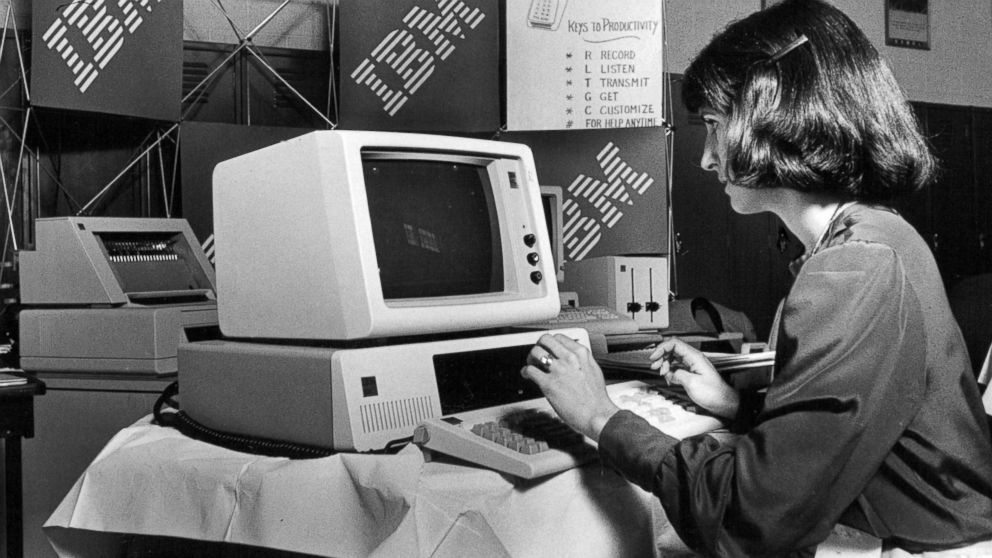
A marketing representative for IBM demonstrates how to use one of the company's computers, May 8, 1983.
Dave Buresh/Denver Post/Getty Images
ByALYSSA NEWCOMB
April 20, 2015, 2:08 PM

— -- Moore's Law, the golden rule of the electronics industry that explains how computers will continue to get faster and cheaper, helped bring about the advent of personal computing and smartphones.

The guiding rule in the computing world that helped bring technology into our everyday lives turned 50 years old on Sunday -- but it may be reaching its edge.

Related Articles

Tag Heuer, Google and Intel to Rival Apple Smartwatch

Related Articles

How 3 Wearables That Came Out on Top in Intel Contest Could Change the World

Related Articles

'Intel' Soars at Almost 10-Year High

In 1965, Gordon Moore, a co-founder of Intel, predicted that the number of tiny electrical switches that could be placed on a computer chip, called transistors, would double approximately every two years.

That has largely held true -- look no further than the computers, cameras, phones and music players that are now condensed into a single smartphone.
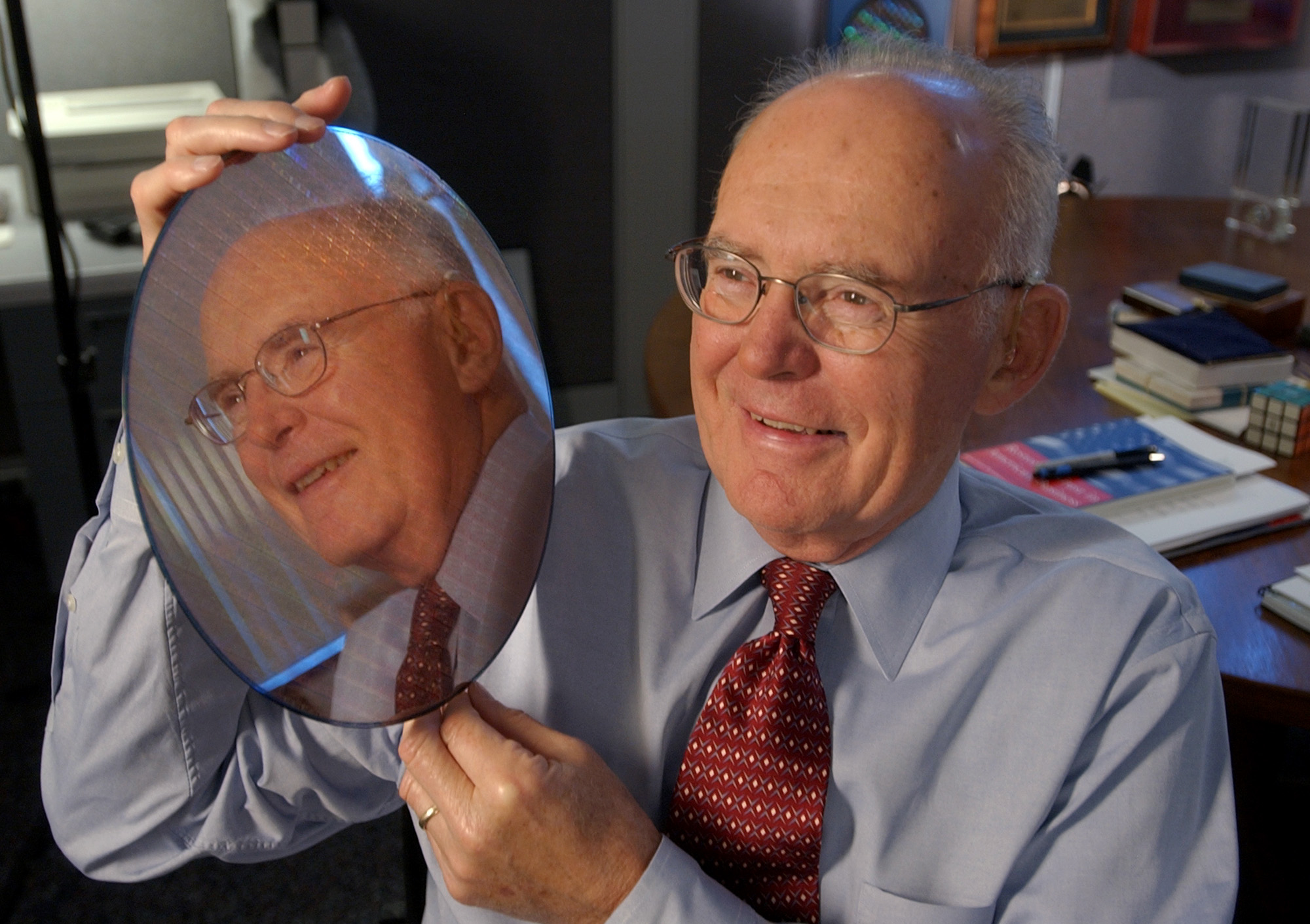
Intel Corp. co-founder Gordon Moore holds up a silicon wafer at Intel headquarters in Santa Clara, Calif., March 9, 2005.

In an interview with IEEE Spectrum last month, Moore said he's been amazed at "how creative the engineers have been in finding ways around what we thought were going to be pretty hard stops."

However he said "now we're getting to the point where it's more and more difficult, and some of the laws are quite fundamental."

In 2013, Robert Colwell, a former Intel electrical engineer, predicted Moore's law would be dead within a decade due to the difficulty of shrinking transistors beyond a certain point to fit more on a chip.

Colwell said it would be difficult to shrink the transistor density beyond either 7nm or 5nm (a unit measuring one billionth of a meter.)

"We will play all the little tricks that we still didn't get around to," he said, according to the BBC. "We'll make better machines for a while, but you can't fix [the loss of] that exponential. A bunch of incremental tweaks isn't going to hack it."

Up Next in News—

What current, future retirees should know about potential Social Security shortfall

June 11, 2026

Fisherman speaks out after catching great white shark

June 11, 2026

Over 1 million Jeep Gladiator, Wrangler vehicles voluntarily recalled

June 10, 2026

Navy base employee critically injured in shark attack in Florida

June 10, 2026

Shop GMA Favorites

ABC will receive a commission for purchases made through these links.

Sponsored Content by Taboola

The latest lifestyle and entertainment news and inspiration for how to live your best life - all from Good Morning America.
  • Contests
  • Terms of Use
  • Privacy Policy
  • Do Not Sell My Info
  • Children’s Online Privacy Policy
  • Advertise with us
  • Your US State Privacy Rights
  • Interest-Based Ads
  • About Nielsen Measurement
  • Press
  • Feedback
  • Shop FAQs
  • ABC News
  • ABC
  • All Videos
  • All Topics
  • Sitemap

© 2026 ABC News
  • Privacy Policy— 
  • Your US State Privacy Rights— 
  • Children's Online Privacy Policy— 
  • Interest-Based Ads— 
  • Terms of Use— 
  • Do Not Sell My Info— 
  • Contact Us— 

© 2026 ABC News