Rhino poaching in Namibia reaches record high

LONDON -- The Namibian government has announced that the number of rhinos poached in the southern African nation reached a record high in 2022 -- rising by 93% since 2021.
There were 87 rhinos killed in 2022 -- 61 black rhinos and 26 white rhinos -- compared to 45 in the previous year, according to new data from Namibia's Ministry of Environment, Forestry and Tourism. Elephant poaching figures however have "steeply" declined, falling from 101 in 2015 to only four in 2022.
Most of the recorded poaching incidents occurred in Etosha, Namibia's largest national park.
"We note with serious concern that our flagship park, Etosha National Park is a poaching hotspot," Romeo Muyanda, chief public relations officer of the Ministry of Environment, Forestry and Tourism, said in a statement.
In June 2022, Namibia's minister of environment and tourism, Pohamba Shifeta, announced the agency was investigating staff at Etosha National Park, some of whom were suspected of working with poaching syndicates that had recently killed 11 rhinos in the park.
"This is not a normal incident of 11 rhinos poached in such a short time," Shifeta said at a press conference at the time, adding the perpetrators had been arrested.
The new data has raised concerns among conservationists across Africa. Namibia is home to the third-largest black rhino population on the continent. According to Save the Rhino International -- a Rhino conservation charity -- there are only 6,195 black rhinos and 15,942 white rhinos remaining in the world.
Nina Fascione, executive director of the International Rhino Foundation, told ABC News she shares Namibia's "serious concern" about the rise in poaching.
"Namibia has become a stronghold for rhinos in Africa with the largest population of black rhinos and the second-largest population of white rhinos in all of Africa," said Fascione.
"Poaching efforts are masterminded by well-funded criminal syndicates seeking to push rhino horn onto the black market to fund other illegal activities [and] as poaching efforts increase around the continent, white rhinos -- the most populous of the rhino species -- continue to decline in numbers," Fascione added.
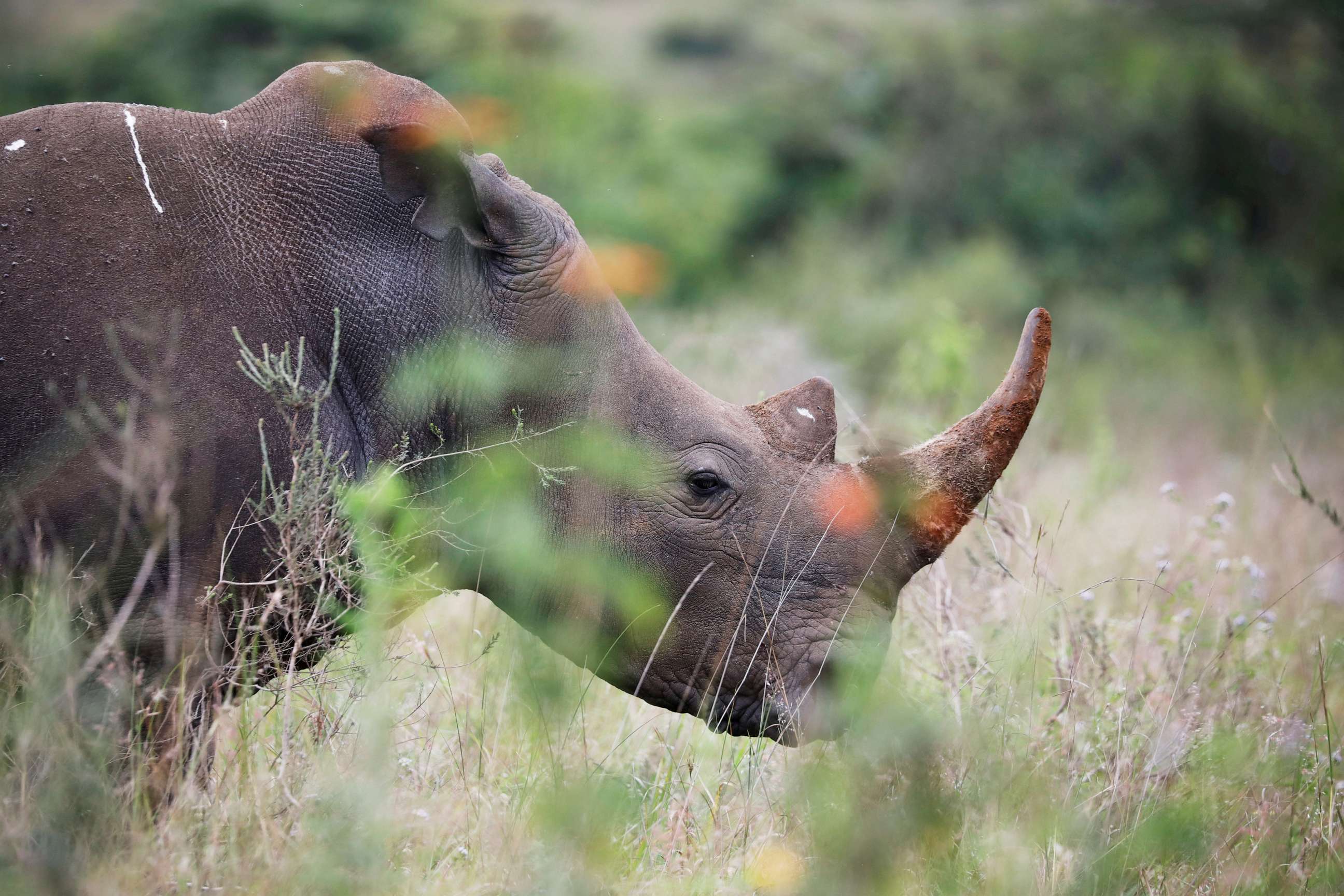
The poaching of rhinos -- one of the world's most endangered species -- saw a brief dramatic decrease across southern Africa during the COVID-19 pandemic, credited largely to lockdowns that reduced activity in national parks. However, as the world has opened up, poaching statistics have revealed a worrying upward trend.
"Travel restrictions during COVID slowed down the poaching a bit but now we see a worrying rise, not only in Namibia but also here in South Africa," Hanno Husch, CEO of Rhino Revolution -- a South Africa-based rhino conservation charity -- told ABC News. "A possible explanation for the sudden increase of poaching could be the fact that there are hardly any rhinos left in the Kruger National Park."
Kruger National Park is South Africa's largest national park, home to one of Africa's largest game reserves.
"Due to the fact that there are hardly any rhino's left in Kruger National Park, which has lost over 70% of their population over the last decade, syndicates are now targeting Etosha, which is four times the size of Kruger."
Paul Naden, conservationist and director of Saving the Survivors, told ABC News that cartels and gangs trying to meet "relentless demand" for rhino horns -- largely from Vietnam and China -- are driving up poaching numbers. Rhino horns are often used in Asia for traditional medicines and remedies, as well as being used as a status symbol to display wealth.
"As the number of rhinos diminishes, the value of the horn increases, further fueling this demand," Naden said. "A worrying state of affairs for Namibia and it should be a wakeup call to the world."