New Delhi air quality worsens during Diwali, despite push for 'green' firecrackers
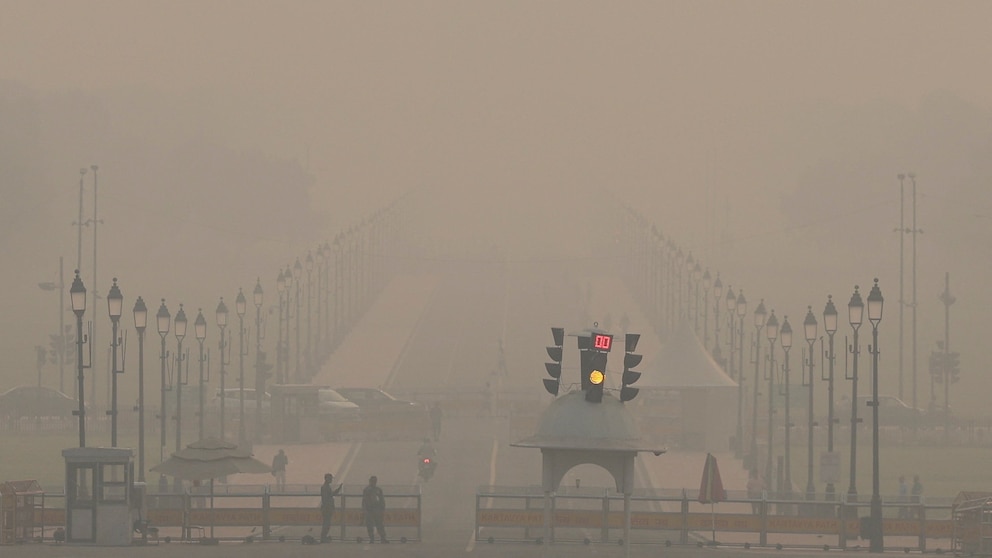
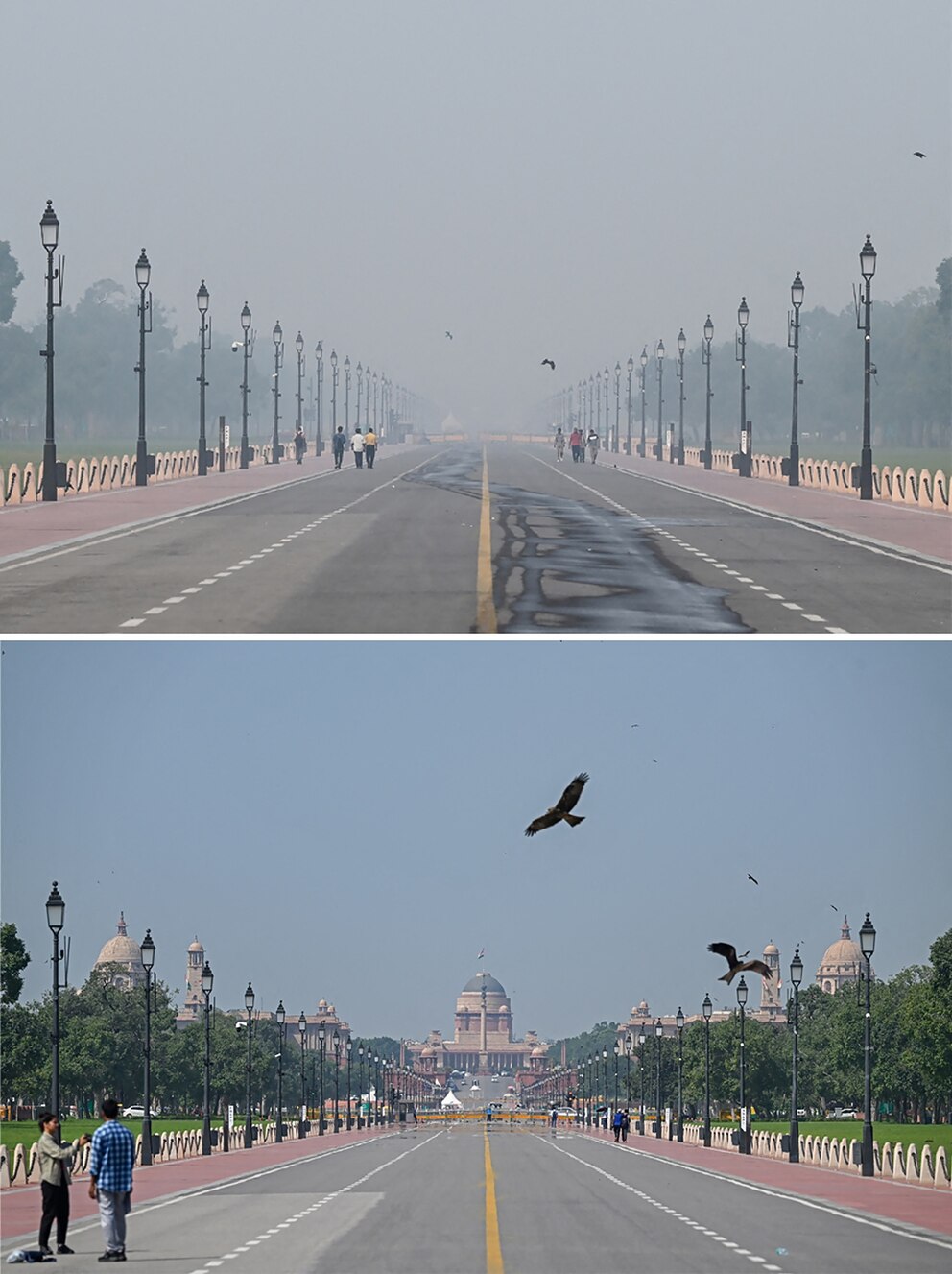
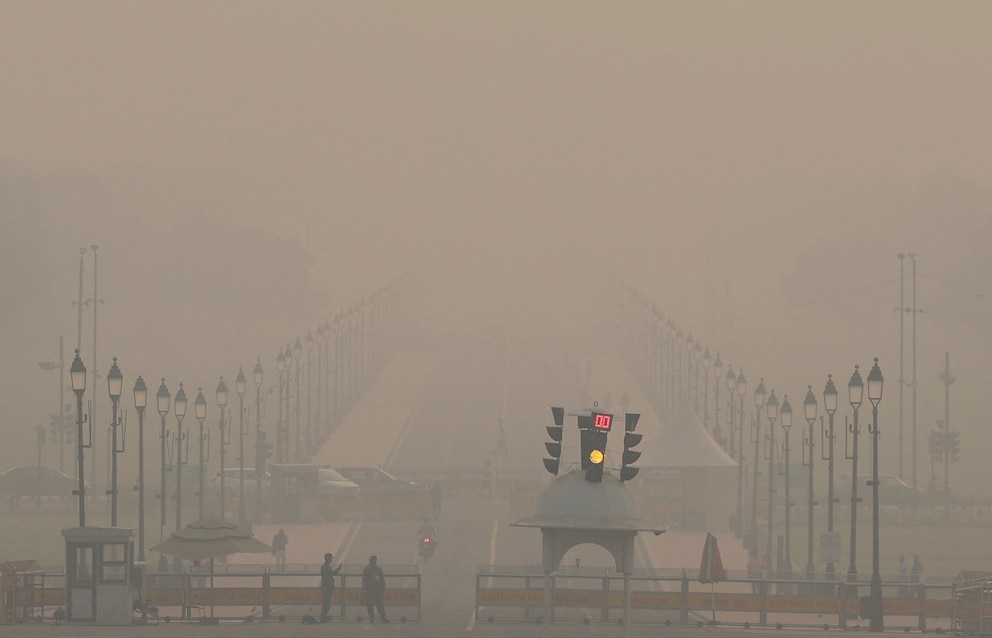
LONDON -- As the celebrations of the Diwali festival come to an end, the city of New Delhi faces air quality in the "very poor" category, as per India’s National Air Quality data.
In the AQI bulletin released on Tuesday, the average AQI was 351, about seven times higher than the "good" limits, which max out at a score of 50. The average inched up to 353 on Wednesday.
The major pollutants are the particulate matter called PM2.5. On the night of the festival, on Monday, Delhi's pollution data showed the PM2.5 number rose to 994 at midnight, against the quality limit of 0-60. And, on Tuesday, the number again went up to 853 at 9 p.m. local time.
These small particles can penetrate deep into the lungs and can be a cause of conditions such as asthma and bronchitis, according to health officials.
Climate Trends, an independent research organization, analyzed the Diwali PM2.5 data from 2021 to 2025. The data shows a sharp rise in pollution levels, with post-Diwali readings averaging around 488, compared to just 156.6 before the festival.
"That’s more than a threefold increase, making 2025 one of the most polluted Diwalis in recent years," Palak Balyan, research lead at Climate Trends, told ABC News. "We need to look at local PM2.5 data; an average doesn’t reflect the impact of local sources."
The spike in unhealthy air comes as India's Supreme Court banned bursting traditional firecrackers, which are known locally as "crackers," in the city of New Delhi. Those firecrackers are popular during the festival. And in mid-October he court allowed the use of "green" crackers and limited even those "green" ones to certain hours.
In a morning reconnaissance call with his team members, Balyan noted that the firecrackers were burst till early Tuesday morning against the Supreme Court ruling.
Several residents and experts deemed the worsened air quality as a failure of the Indian Supreme Court’s experiment with "green" crackers. Several people posted on social media that describing crackers as "green" would be an oxymoron.
"Burning so-called 'green' crackers made no measurable difference compared to regular ones," Balyan said.
Manjinder Singh Sirsa, Delhi’s environment minister, blamed the state government of the adjacent state, and showed videos of stubble burning allegedly orchestrated by their political rival Aam Aadmi Party.
"The Aam Aadmi Party is forcibly gagging farmers and getting stubble burning done in Tarn Taran and Bathinda so that it has an impact inside Delhi," Sirsa said.
The other party had denied any such claims and asked the minister to apologize for the accusation.
Vehicular pollution and burning fires also contribute to the city’s toxic air. The pollution peaks during Diwali, but the air quality remains a cause of health concerns for most part of the year, according to officials.
"This city is essentially uninhabitable from November to January inclusive and barely livable the rest of the year," Parliamentarian Shashi Tharoor wrote on X." "Should it even remain the nation’s capital?"
The pollution was so heavy that it could enter homes that aren’t sealed well, said Chetan Bhattacharji, a Delhi resident, journalist and consultant who works with climate and sustainability organizations.
"Air purifiers were on for some 12-13 hours in our bedrooms and the PM2.5 came down from about 200 indoors to 80-100; every time the door opened it would rise,” Bhattacharji told ABC news.
"There’s a lot of waste burning within and outside the megacity,” he said. "Visit a children's clinic this time of year and you’ll see the effect of high air pollution."