New species of Jurassic-era 'sword dragon' marine reptile discovered

A new species of ancient "sword dragon" marine reptile has been discovered in a set of fossils found in England, according to researchers.
Named Xiphodracon goldencapsis, the new species is an ichthyosaur -- an order of large extinct marine reptiles -- that lived during the Early Jurassic era about 190 million years ago, according to a study published in the journal Papers in Palaeontology on Thursday.
The fossils were found by professional fossil collector Chris Moore in 2001 in the Golden Cap of Charmouth, a region along the English Channel known for the "Jurassic Coast," a World Heritage Site known for its abundance of fossils, Judy Massare, a Professor Emerita of Geology at SUNY Brockport and co-author of the paper, told ABC News.
The set includes a skull with an "enormous" eye socket and a long "sword-like snout," according to a statement by The University of Manchester.
"The fossil is almost perfectly preserved in three dimensions," the news release states.
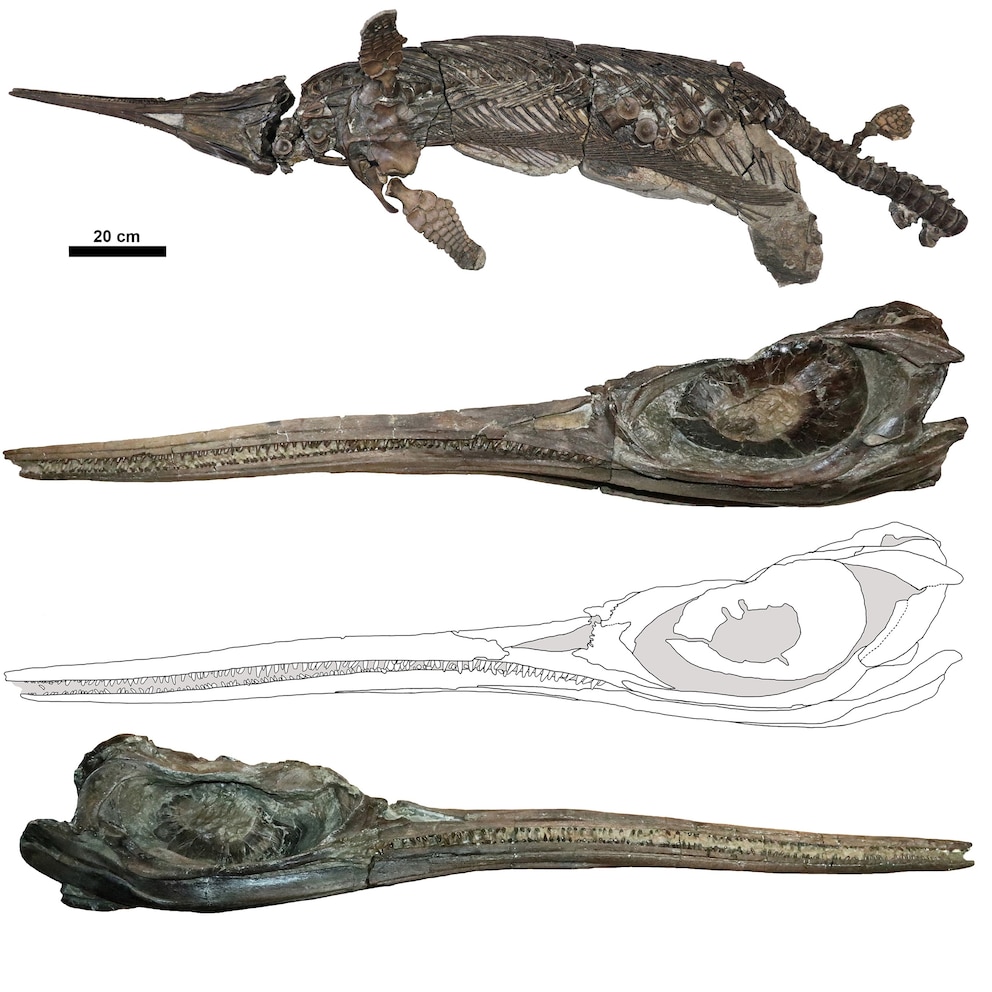
The set remained on display at the Royal Ontario Museum, Canada, but was not studied until the fall of 2024, when researchers were able to examine the specimen. They noticed a few features that were "different" from other ichthyosaurs from the lower Jurassic period, Massare said.
One of the biggest telltales was the "unusual" bones around the external nostrils, as well as a nasal opening that was more round than oval, she said.
In addition, this particular ichthyosaur has a long, slender snout and teeth, said Massare, who specialized in ichthyosaur teeth earlier in her career.
The researchers deduced from the individual's teeth that it likely ate soft, small prey, such as squid-like animals. The stomach mass within the fossil contained some fish-like and cephalopod pieces, Massare said.
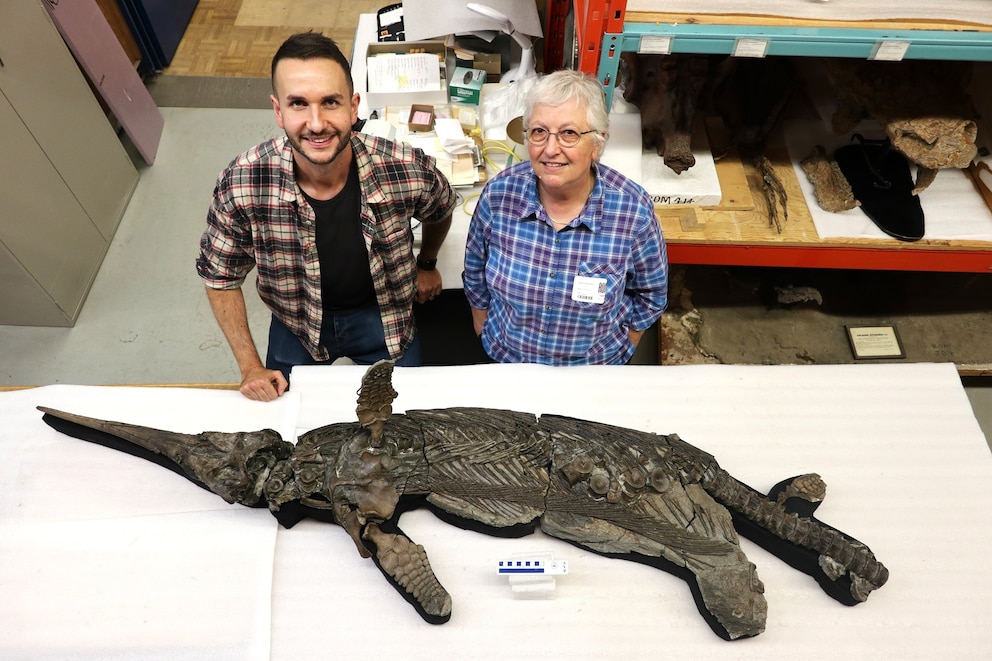
Ichthyosaur fossils have been discovered all over the world over the last 200 years, including several locations in England, southern Germany, British Columbia in Canada and central Wyoming in the U.S., Massare said. Thousands of ichthyosaur fossils have been found along the U.K.'s Jurassic Coast alone, according to the researchers.
"They're found everywhere, but the ones that have been most collected and most studied are the English ones," she said.
Jurassic-era ichthyosaurs are known for their long-snouts and their dolphin-like bodies, Massare said.
They were active predators in the ocean and swam like dolphins, although their tails moved from side to side rather than up and down, Massare said.
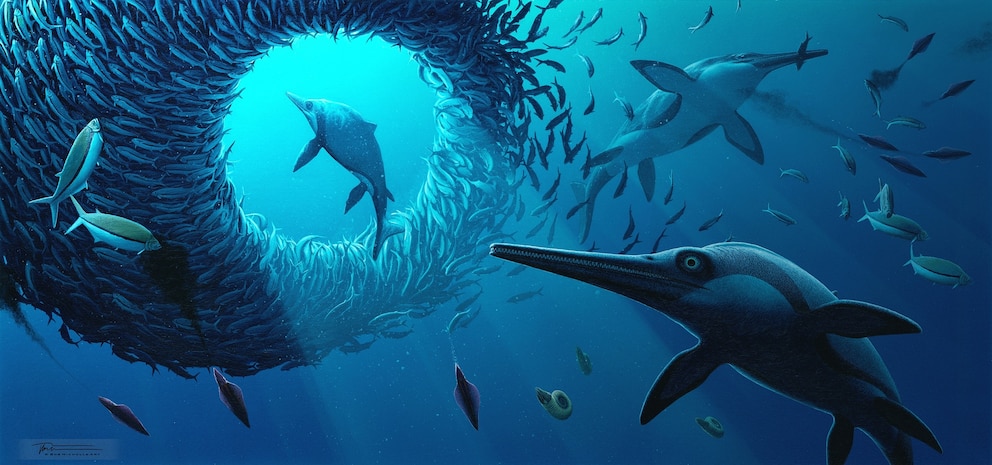
The X. goldencapsis specimen was likely nearly 10 feet long and lived during a time that several ichthyosaur families were going extinct, Dean Lomax, an honorary researcher at The University of Manchester and lead author of the paper, said in a statement.
Ichthyosaurs that lived between 193 million and 184 million years ago were "incredibly rare," according to the release.
"It is probably the world's most complete prehistoric reptile from the Pliensbachian period," the researchers said.