NOAA forecasts a wet south and warmer north as El Nino impacts winter weather in the US
As a potentially historic El Nino continues to strengthen, the National Oceanic and Atmospheric Administration (NOAA) says it will have a major influence on the upcoming winter season across the United States.
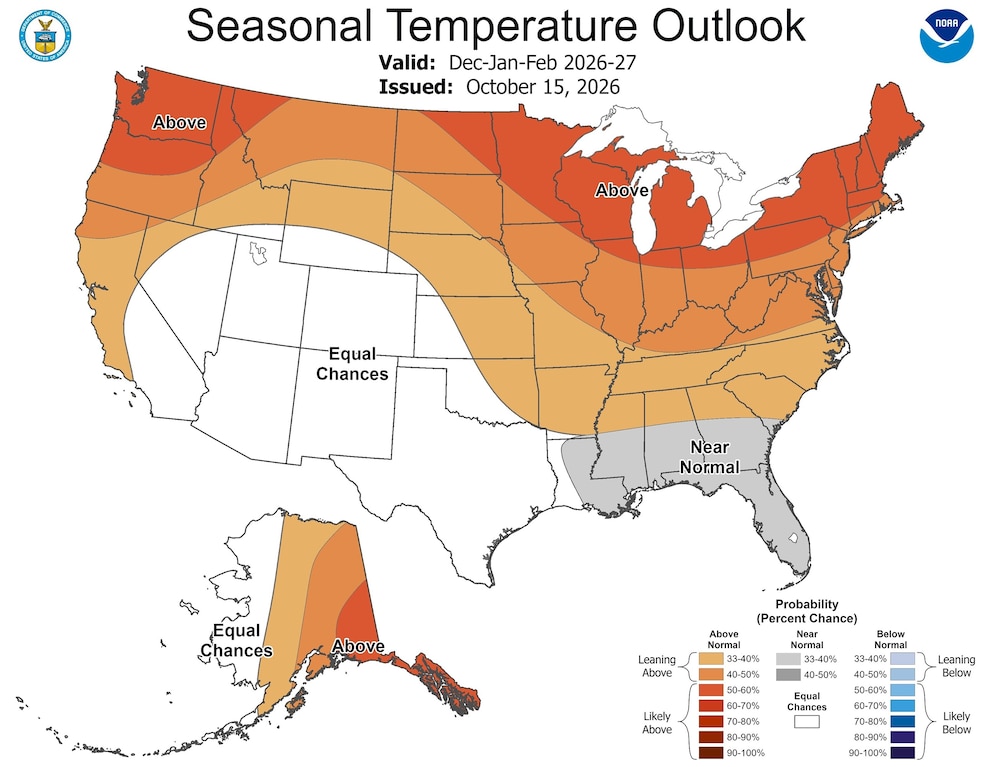
The agency released its winter outlook on Thursday for Dec. 2026 to Feb. 2027, which calls for warmer-than-average conditions across the northern tier of the U.S. and wetter-than- average conditions across the South.
El Nino has its strongest effects on the Northern Hemisphere during winter, and this outlook aligns with what can typically be expected during this weather event.
"As we know from decades of observations, a very strong El Nino will likely bring a southward and eastward shift to the jet stream for the contiguous U.S., which tilts the odds toward stormier weather across the South," Ken Graham, director of NOAA's National Weather Service, said in a news release announcing the forecast.
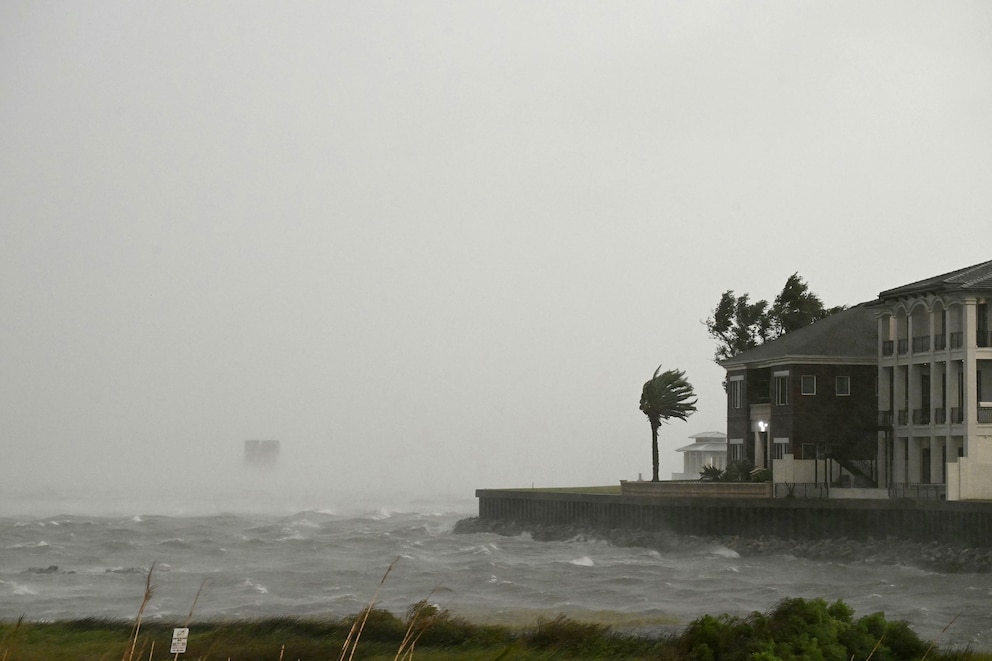
The director said that while above average precipitation in the south could bring relief to drought, too much precipitation can cause flash flooding and mudslides.
El Nino refers to the warmer-than-average phase of the El Nino--Southern Oscillation (ENSO), a natural cycle where sea surface temperatures across the central and eastern equatorial Pacific Ocean rise and fall. The cooler-than-average phase is called La Nina, while near-average conditions are known as ENSO-neutral.
NOAA says impacts from El Nino, like La Nina, tend to be most consistent and pronounced from late autumn through early spring after the event's onset. Many of its associated effects can lag behind the event's onset.
The agency remains highly confident that a very strong El Nino will be in place during the upcoming Northern Hemisphere winter season.
Experts caution that the impacts on weather patterns are nuanced. Each season is different, and typical El Nino conditions don't always materialize.
"It is really important to emphasize that even if this ends up being a historic El Nino, there will be impacts in some locations that do not align with the expected El Nino impact," Michelle L'Heureux, a physical scientist at NOAA's Climate Prediction Center, told ABC News. "This is why our seasonal forecasts are expressed in terms of probabilities."
"You can think of El Nino as setting preferred pathways for weather systems to repeat over certain locations, but it is not going to tell every weather system exactly what to do and where to go," L'Heureux explained.
Warmer-than-average across the northern tier
According to NOAA's outlook, warmer-than-average temperatures are favored across the northern tier of the U.S., including much of the Northeast, Upper Midwest and Northwest Pacific Coast, Alaska, Puerto Rico and U.S. Virgin Islands.
Near-average conditions are likely across much of the Southwest, Southern Plains and Southeast.
Wetter-than-average in the South
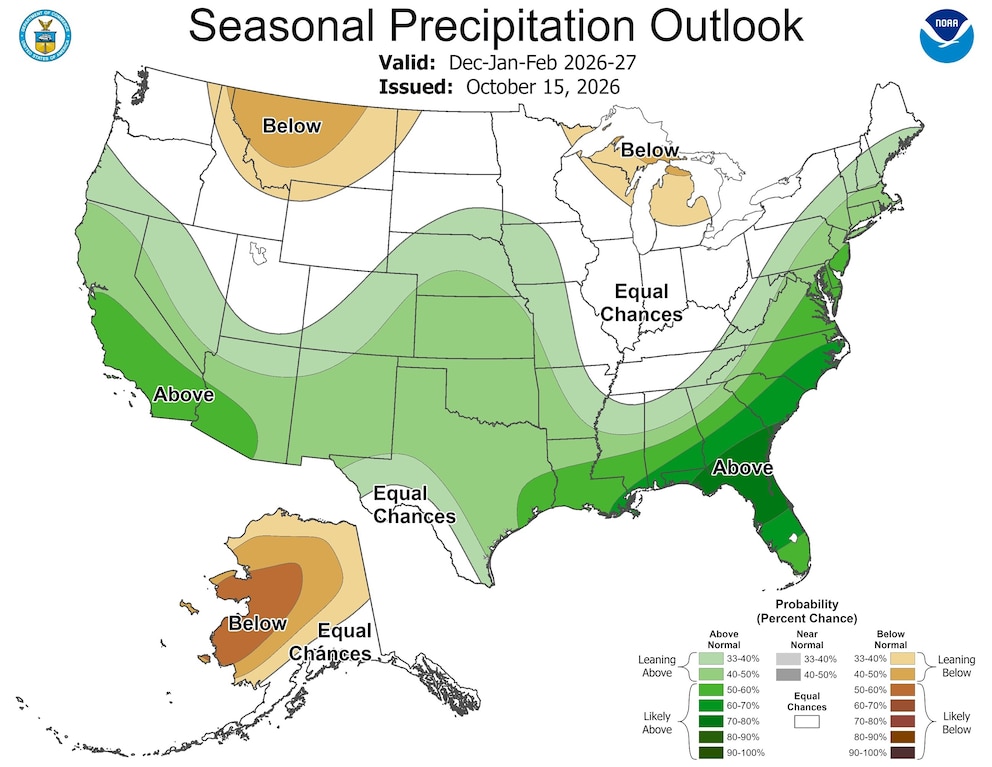
Wetter-than-average conditions are most likely from parts of California to the south-central Rockies, the southern Plains, Gulf Coast, Southeast and lower mid-Atlantic.
The wetter-than-average conditions will likely improve drought conditions throughout much of the Southwest, southern Plains, Southeast and New England.
NOAA sees the strongest probabilities for higher-than-normal precipitation in Florida, with significant chances of a very wet winter in parts of California and Arizona.
About the outlook
NOAA's seasonal outlooks predict the likelihood that average temperature and precipitation for a particular area will end up above, below or near average during the 3-month meteorological season. It does not provide seasonal snowfall projections, as reliable snow forecasts are generally limited to about one week in advance.
The outlook does not detail temperature and precipitation variations over days, weeks, or a single month within the three months included in its forecast.
For example, December in a particular region could feature typical winter conditions; however, January and February could end up well above average, pushing the 3-month average above average for the entire season.
What this means for a local area depends largely on that location's typical climate.