North Carolina Law Denying Public Access to Police Body Camera Footage Causes Criticism
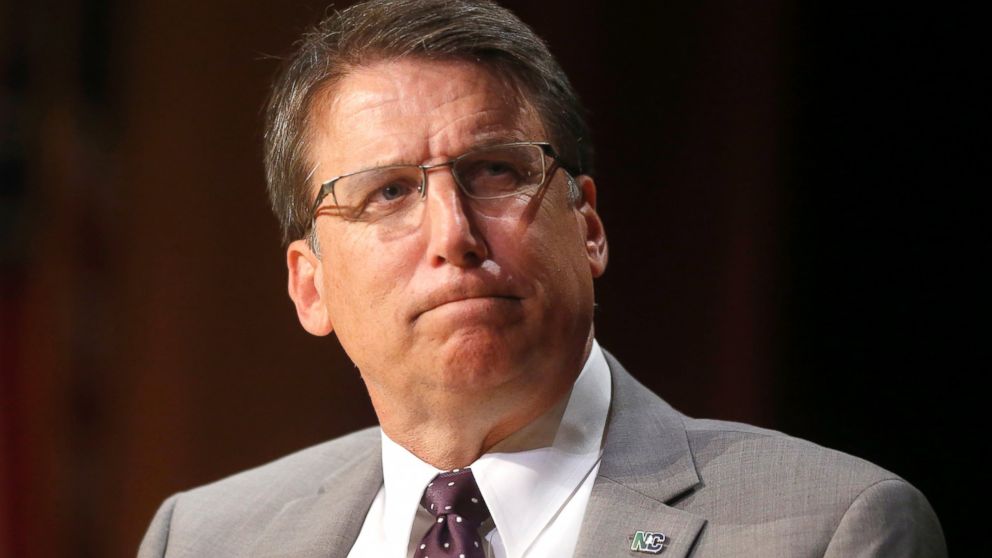
— -- A new law signed by North Carolina Governor Pat McCrory on Monday that denies public access to police body camera and dashcam footage is being criticized by civil rights activists as opposing the purpose of the community-funded technology.
The law, formally known as House Bill 972, is described as "an act to provide that body-worn camera and dashboard camera recordings are not public records" and legislation to provide "transparency between our law enforcement officers and citizens" by the North Carolina General Assembly.
"We are initiating a necessary balance to gain public trust, while also respecting the rights of our public safety of officers," McCrory said in a press conference on Monday. "Technology can mislead and misinform, which causes other issues and problems within our community."
McCrory said rules surrounding access to the camera footage in the state were previously left to individual police departments and said that it was "better to have rules and guidelines rather than no rules and guidelines at all," regarding the use of body camera technology.
Individual police departments are still able to release body camera footage at their own discretion under the new law. But, by blocking public access to the footage, activists are concerned that mistrust will grow further between police and the communities they serve.
"People who are the subject of body camera footage should be able to access that footage," Susanna Birdsong, the Policy Counsel for the American Civil Liberties Union of North Carolina, told ABC News. She added that her organization believes the access should also extend to representatives of the subject, including members of the subject's family.
In instances where there is a discussion of use of force by police, Birdsong believes the footage should be available to the public.
She went on to categorize the bill as a threat to transparency and said that it could work against the stated purpose of the technology -- to create "more accountability" of police officers -- that is funded by communities. She said that HB 972 will force people who want to receive access to body camera footage to take their cases to court, something that people in lower income communities may not be able to afford.
Graham Wilson, a spokesperson from the governor's office, told ABC News that Gov. McCrory's press conference explained the potential benefits of the bill and declined to comment further.
Akiba Byrd, a member of PACT, a police watchdog group in Raleigh, North Carolina, shared Birdsong's point of view when speaking about the bill, and expressed concerns that it would be used for "surveillance" rather than transparency.
Byrd cited the shooting death of Akiel Denkins by Raleigh Police Senior Officer D.C. Twiddy as an example of a case where public access to body camera footage would benefit the community. Raleigh does not employ body camera technology, she said.
In April, the Wake County DA's office decided that Twiddy shot Denkins on Feb. 29th of this year "as a matter of last resort" and did not press charges. The decision was unsatisfactory to Denkins' family, who believes that Twiddy pursued Denkins unfairly, according to Byrd, who is advocating on their behalf to bring greater attention to the case.
The Raleigh Police Department did not respond to ABC News' for a request for comment about the Denkins shooting or questions about the use of body camera technology.
The new North Carolina law could constitute a "major step backward" in the effort to build trust between the police and the community they serve in the state, according to Michele Jawando, Vice President of Legal Progress at the Center for American Progress, who spoke to ABC News yesterday about potential reforms that could reduce police shootings.
She referenced the role of video in the shooting deaths of Alton Sterling in Baton Rouge, Louisiana and Philando Castile in St. Paul, Minnesota as examples of how public access to footage can better inform the public about incidents of police violence.
"Those videos changed the conversation about incidents of police violence," she said.