Political differences may have shortened Thanksgiving dinners in 2016: Study
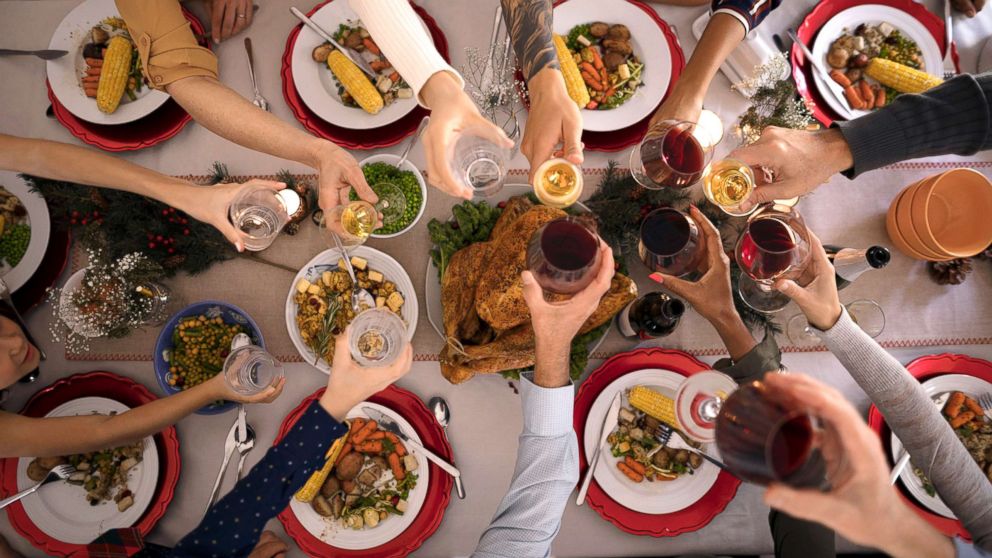
Though Thanksgiving is one of the holidays where families and friends most commonly come together for a meal, a new study says that the politics surrounding the 2016 Presidential election changed the length of Thanksgiving dinners that year.
“Political polarization is increasingly degrading our close connections with friends and family,” said Keith Chen, economist and corresponding author of the study. In 2016, more than 55 percent of both Democrats and Republicans admitted strong negative feelings towards someone from the opposing party, according to data from the Pew Research Center. This was up from about 19 percent in the mid-1990s.
Compared to data from previous years, those in Democratic precincts shortened their visit to Republican precinct hosts by 20 to 40 minutes, and Republicans shortened their visit to Democrat precinct hosts by 50 to 70 minutes. Increased advertising in the traveler’s home precinct shortened dinner by 2.6 minutes for every 1,000 ads.
Researchers used anonymous data from the smartphone locations of more than 10 million Americans who left their homes on Thanksgiving Day and returned home later. They used these numbers, in combination with precinct-level voting results for the 2016 presidential election, to determine the average length of stay during Thanksgiving dinner. The statistical equation also took into account that there were a certain number of Democrats visiting Democrats and Republicans visiting Republicans as well.
Professor Jay Van Bavel, associate professor of psychology and neural science at NYU who was not a part of the original study, said it’s natural to be unnerved by close friends and family with viewpoints that clash with our own.
"This deep-rooted tendency emerges very powerfully in politics because our political affiliations serve a number of other important goals, including the need to belong, obtain a sense of status, and feel morally worthy," he told ABC News.
As political polarization appears to increase in this country, it may be inevitable to avoid those with opposing political views, even if they’re family. Van Bavel said that people should try to center conversations on a common identity and shared reality -- which could maybe save the summer reunion.
Chantel Strachan, MD, is an internal medicine resident from the University of Connecticut who works in the ABC News Medical Unit.