Presidential HIV council warns proposed cuts could reverse decades of progress

Carole Treston had been a nurse early in her career when she and her mother traveled to Washington, D.C., and saw the AIDS Memorial Quilt laid out across the National Mall.
The quilt, first displayed on the Mall in 1987, had become a living memorial to people lost during the AIDS epidemic. Treston, now the executive director of the Association of Nurses in AIDS Care and a member of the Presidential Advisory Council on HIV and AIDS (PACHA), still remembers the quiet that fell over her mother as they walked.
They moved slowly between the rows of hand-stitched panels, each honoring a life cut short. Her mother stopped in front of a section filled with birth years close to Treston’s own.
“She said, ‘most of these have birth dates around the same as you,’” Treston recalled nearly four decades later. She described those early years of the epidemic as “very daunting, there was no hope, there was just an acceptance of death and loss.”
For many younger Americans, the epidemic’s earliest grief-stricken years exist mainly in documentaries and history lessons. They have grown up in a world with antiretroviral therapy, prevention medication and the possibility of an undetectable viral load.
As the country marks World AIDS Day, advocates warn that distance from those early epidemic years can obscure how fragile progress remains. With Congress still negotiating next year’s budget, proposed cuts to HIV programs have heightened those concerns.
Several PACHA members released a letter, shared exclusively with ABC News, urging the White House and Congress to protect funding, saying the reductions could reverse decades of work.
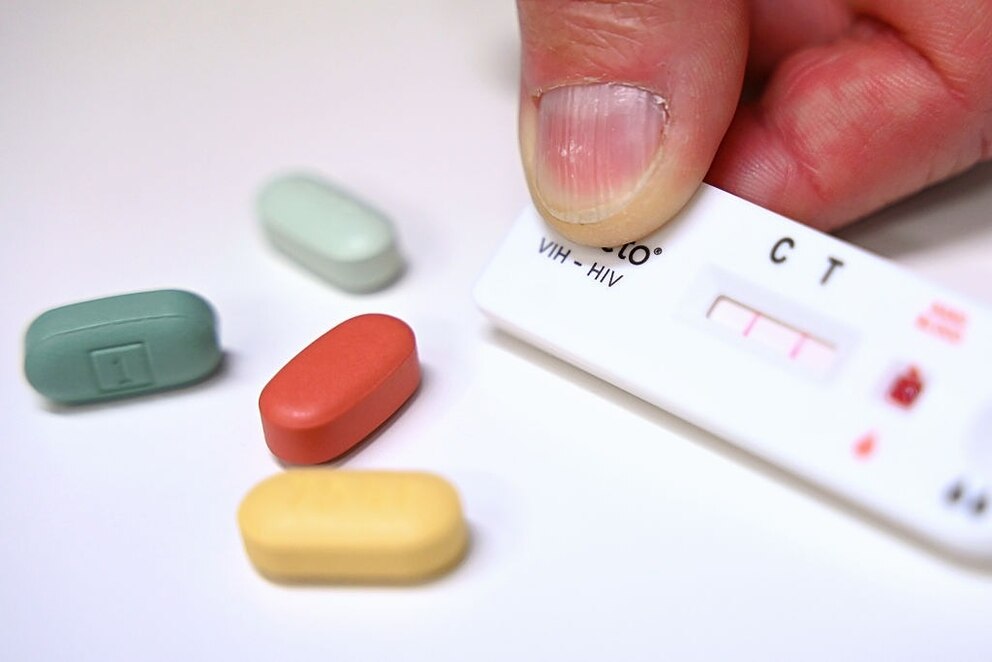
The council, which advises the Department of Health and Human Services on HIV policy, is made up of researchers, clinicians and community leaders. Multiple members also told ABC News the council has not met this year, raising questions about its ability to carry out its advisory role.
In the letter, members warn that “Although progress has been made, the United States continues to experience over 30,000 new HIV cases every year. Without continued investment, progress toward ending the HIV epidemic will stall, cases will increase again, and the health of Americans will suffer.”
They point to the bipartisan Ending the HIV Epidemic initiative, launched in 2019, which helped drive a 12% drop in new infections. Fully funding the program, the council says, could save up to $100 billion in health care costs by 2030. But members say House proposals would eliminate funding for domestic and global HIV efforts, cut more than $1 billion from the Centers for Disease Control and Prevention and remove key parts of the Ryan White Program, which supports people living with HIV.
In a statement, White House spokesman Kush Desai said, “PACHA is a largely symbolic body whose members are engaging in another useless PR exercise that has no connection to the Trump administration’s robust work to tackle HIV and AIDS.”
“HHS is strengthening efforts to end the HIV epidemic by advancing next-generation HIV prevention and treatment options, strengthening viral suppression nationwide via HRSA’s Ryan White program, supporting emergency preparedness, and expanding access to trusted HIV information,” Desai added.
For Treston, who has treated patients since 1986, the prospect of losing momentum feels painfully familiar, despite modern preventive tools that didn’t exist in those early years.
Another PACHA member, Tori Cooper, said the stakes are not abstract but matters of life and death for the communities she serves. A longtime HIV advocate, she works as director of strategic outreach and training for the Human Rights Campaign.
“We know that when people have HIV and it goes untreated, they die, and often they die horrible, painful deaths,” Cooper said. “And I'm not just talking about people who do ‘dirty things’ or ‘nasty things.’ I'm talking about people who perhaps were born living with HIV, or people who got it and didn't even know that they had it, or didn't know that their partners had it, folks who have been in monogamous relationships for years, it's all kinds of folks,” she said.
Cooper said she fears a rise in preventable illness if people cannot reach clinics or afford care.
“Because people aren't able to get tested to confirm an HIV diagnosis, that means they're not getting the care that they need to get to an undetectable viral load,” she said. “If they have detectable viral loads, then it makes it easier to pass HIV along to their sexual partners or during childbirth or through accidents or injury.”
Dr. Philip Chan, an HIV physician in Rhode Island who drafted the first version of the letter, echoed those concerns.
“HIV is not a partisan issue,” Chan said. “HIV, similar to many other infectious diseases, does not discriminate based on, sex, religion, political party, it is important that we keep up our efforts to address this otherwise, more people will continue to be infected.”
Chan noted that Ending the HIV Epidemic began under the Trump administration with the goal of ending new HIV infections by 75% by 2025 and 90% by 2030. He said progress could be lost without continued investment.
For Treston, the quilt remains a reminder of the lives her generation lost, but she believes the country still has an opportunity to avoid repeating the past. She points to the bipartisan legacy of HIV policy, from early federal HIV bills to PEPFAR to the Ryan White Program, as proof that the United States can protect its progress if it chooses to.
“We have the tools to stop new HIV infections and keep people who are already positive healthy,” she said. “We can end the HIV epidemic, but only if we continue the federal support that made these gains possible.”