Public schools at risk over states' projected budget deficits due to coronavirus
States face an estimated $615 billion budget deficit over the next three years due to the economic fallout from COVID-19 -- a shortfall that could rival the deficits seen after the 2008 recession and could threaten to throw the nation's public schools into crisis, according to projections by the Center on Budget and Policy Priorities, which were provided to lawmakers on Monday.
The estimates, featured in testimony for a hearing by the congressional House Education and Labor Committee, are particularly worrisome for schools in low-income areas that more frequently rely on state funds over funding from local property taxes.
"State funding typically reduces disparities between wealthy and poor school districts, so cuts in that funding magnify those disparities," said Michael Leachman, CBPP's vice president for state fiscal policy, in his prepared statement.
The coronavirus pandemic and subsequent economic collapse have devastated impoverished communities and people of color -- and the projected deficit could indicate more hardship ahead in areas that have already felt the brunt of the pandemic.
Thousands of schools across the country, while central to states' economic reopening plans, were already in need of critical infrastructure upgrades prior to the pandemic. Now, schools are being asked to do even more with less -- from providing online instruction to buying hand sanitizer, while being forced to cut district jobs.
Los Angeles Unified School District Superintendent Austin Beutner said in a June 3 update to the school community that there will be "considerable extra costs for schools to implement appropriate return to school plans."
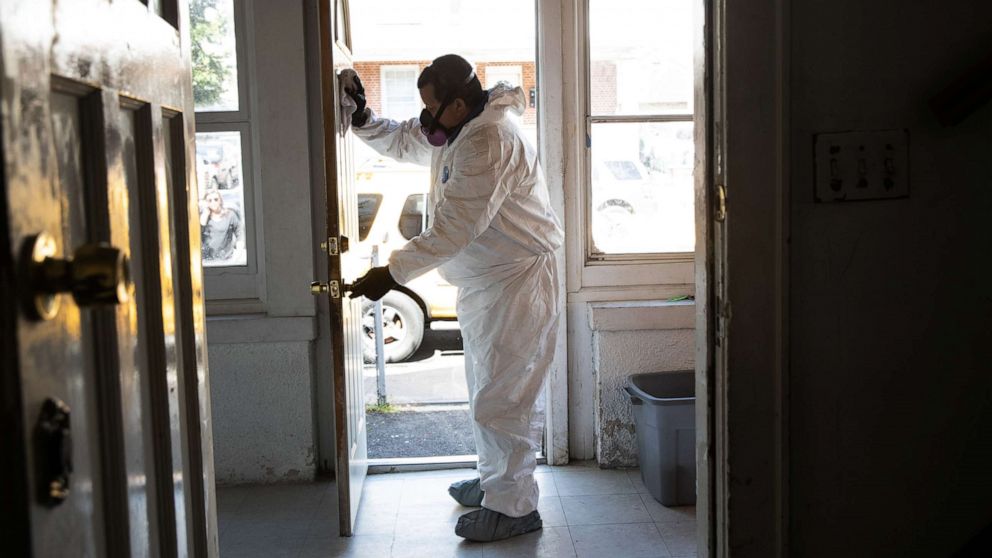
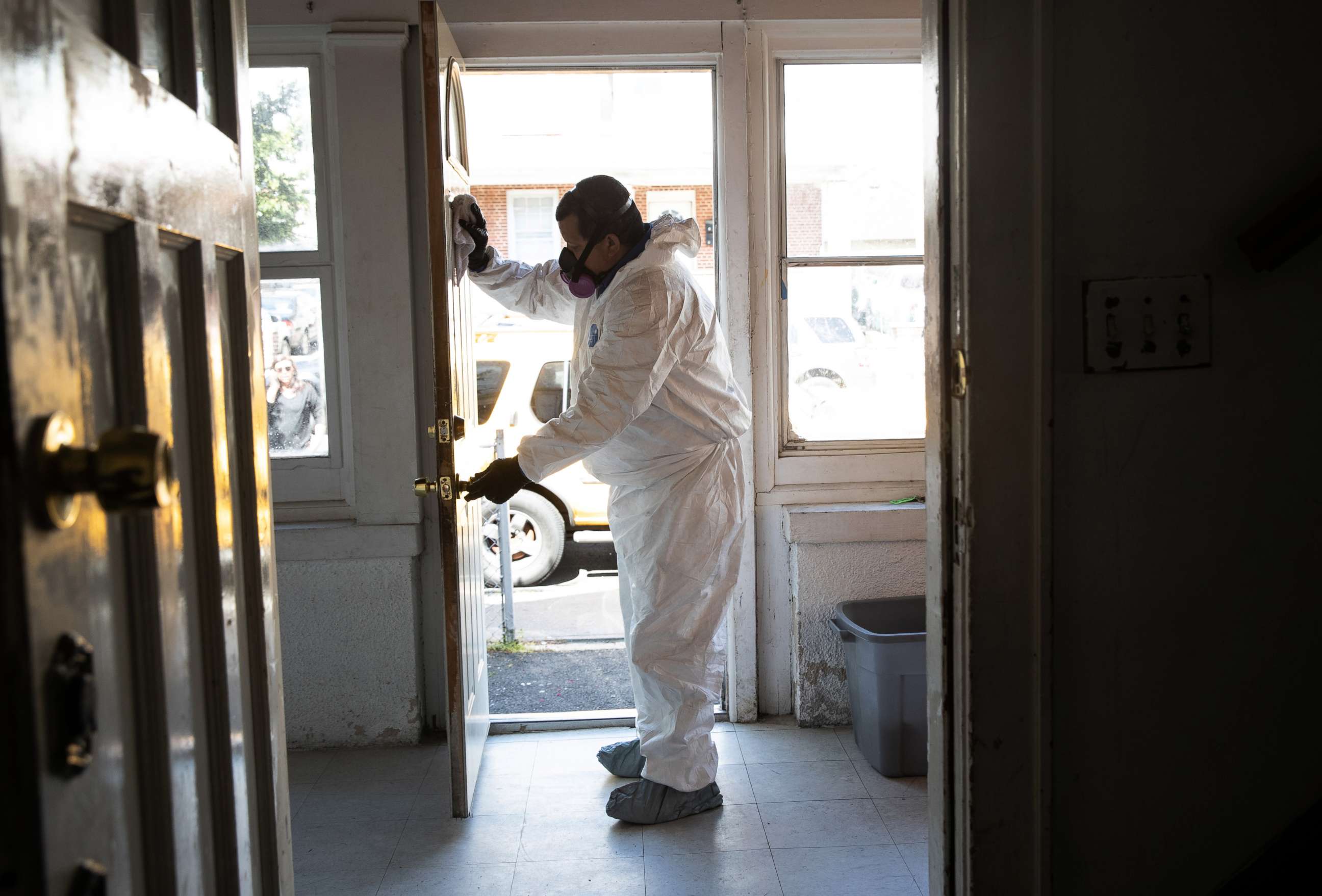
Supplies to regularly sanitize school buildings and personal protective equipment for staff and students are just some of the extra costs that schools will have to face as they look to reopen amid the pandemic.
"How much money will the state provide to pay for these additional needs in schools?" he asked.
Beutner said there's no way to return to school facilities without risk.
"The term 'safely reopen' is misleading. The risk from the virus will not be zero until there's a vaccine or a treatment which is 100% effective," he added.
The pressure to make do comes at a time when schools are already under strain, as many education budgets never fully recovered after the economic collapse of more than a decade ago, Leachman noted in his prepared written testimony.
"By 2011, 17 states had cut per-student funding by more than 10%," Leachman said. "Local school districts responded to the loss of state aid by cutting teachers, librarians and other staff, scaling back counseling and other services and even shortening the school year. Even by 2014 -- five years after the recession ended -- state support for K-12 schools in most states remained below pre-recession levels."
There were 77,000 fewer education sector jobs at the beginning of the COVID-19 pandemic compared to "when the Great Recession started forcing layoffs," despite there being 1.5 million more children, Leachman said in his written testimony.
The Cleveland Metropolitan School District, for example, faces a potential loss of up to $127 million in state and local revenue in the upcoming year, including $23 million in K-12, Chief Executive Officer Eric Gordon said in his prepared opening statement.
"If this worst-case scenario were to occur, I will have no choice but to make deep, devastating cuts to my district this coming winter and to implement those cuts for the second semester," Gordon said.
His school district serves nearly 38,000 students, and Cleveland has one of the highest child poverty rates in the country, he said in his statement, citing census data.
The vast majority of students -- 86% of them -- are children of color, including 64% African American and 16% Hispanic, he said.
"Those cuts, including school building closures, reductions of force at all levels of the organization, elimination of student transportation, and all extra-curricular activities, elimination of art, music, physical education, and other classes from K-8 schools and of electives from high schools, would essentially wipe out the 10 years of growth my team and I have generated in Cleveland," he added.
Since the COVID-19 pandemic began, there's also already been a severe loss in education sector jobs, according to National Education Association Vice President Becky Pringle.
"According to the Bureau of Labor Statistics, nearly 500,000 public education jobs have already been lost because of the cuts. By comparison, 300,000 education jobs were lost due to the Great Recession," Pringle said in her written statement Monday.
She added: "In other words, COVID-19 has done more damage in three months than a recession that lasted for a year and a half. If this damage goes unchecked, nearly 2 million educators -- one-fifth of the workforce -- could lose their jobs over the next three years, according to NEA's analysis. The 'COVID-19' recession could be six times worse for education than the 2008 financial crisis."
In addition, reopening schools in the fall will be made more complicated due to the fact that "our school buildings, on average, are more than 40 years old," said Pringle.
ABC News previously reported on a study released by the Government Accountability Office that found in a national survey, "about half (an estimated 54%) of public school districts need to update or replace multiple building systems or features in their schools," including an estimated 36,000 schools that need to update or replace heating, ventilation and air conditioning systems.
The House Education and Labor Committee previously said if the systems are not operating correctly, they could fail to meet the Center for Disease Control and Prevention's guidelines for safely reopening, as ensuring ventilation works properly is part of the CDC's K-12 guidance for reopening.
Pringle said the funding provided by the CARES Act was not enough, especially considering "the huge fiscal crisis states and local governments face and their escalating COVID-related expenses."
In all the discussions about reopening schools, "it is crucial that we treat racial and social justice as an imperative, so that we don't inflict more harm on the students and communities that can least afford to bear it," Pringle said.
Gordon, in his testimony, stressed a similar point about rampant and systemic inequality, adding that "these inequities were not caused by the coronavirus."
"A number of people have said to me over the past several weeks how sorry they are to see the inequities, like food insecurity, lack of access to the internet, housing insecurity, job insecurity, and more, that were caused by COVID-19," Gordon said.
"I want to make it absolutely clear that these inequities were not caused by the coronavirus," he added. "Those inequities have existed in my community and in communities across the country for decades. All COVID-19 did was to starkly expose them for all to see. And the evidence is clear that these inequities are most acute in communities of color."
What to know about the coronavirus:
- How it started and how to protect yourself: Coronavirus explained
- What to do if you have symptoms: Coronavirus symptoms
- Tracking the spread in the U.S. and worldwide: Coronavirus map
Tune into ABC at 1 p.m. ET and ABC News Live at 4 p.m. ET every weekday for special coverage of the novel coronavirus with the full ABC News team, including the latest news, context and analysis.