Puma populations are on the rise in Patagonia, now targeting penguins as prey
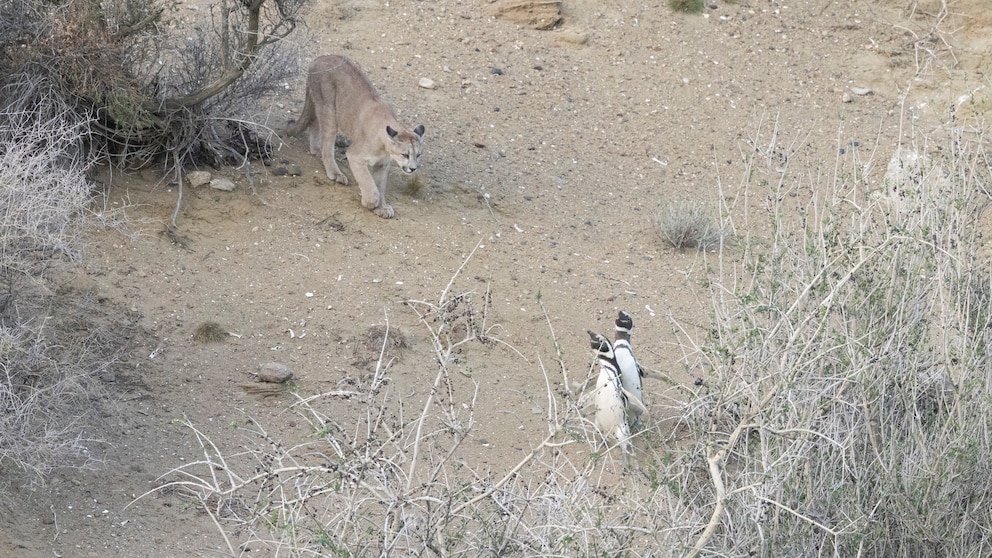
Wildlife conservation efforts in the Patagonia region of Argentina have been so successful that rebounding populations of pumas have found an unexpected new main source of prey: Magellanic penguins.
Pumas largely disappeared from the region about a century ago as they were hunted to near-extinction by sheep farmers attempting to protect the animals from predation. But GPS and camera data now reveal the highest density of the big cat ever recorded, according to a paper published Wednesday in Royal Society Journals.
The large populations are clustered around colonies of Magellanic penguins that live on the coast for six months out of the year -- from about September to March, Emiliano Donadio, an ecologist and science director of Rewild Argentina, a conservation nonprofit, told ABC News. The current puma density is estimated to be 13.2 cats for every 100 square kilometers, or about 38 square miles, according to the paper.
The populations of penguins flourished in the pumas' absence, but now they are easy targets for the large cats, said Mitchell Serota, a manager of ecology at Duke Farms, a center of the Doris Duke Foundation, and lead author of the paper.
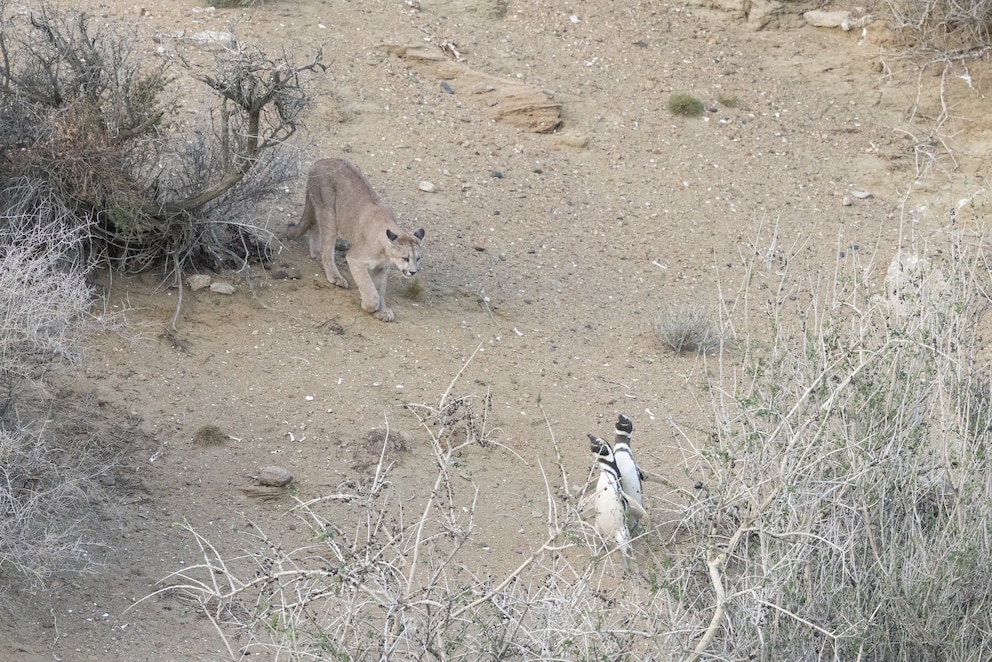
Pumas, the apex predator of the region, were treated as "vermin" during the early 20th century, when widespread sheep ranching was one of the main industries in Argentina, said Donadio, one of the paper's co-authors. Sheep farming was a prominent industry in Argentina until the 1908s, but has since dwindled, he added.
"With those predators gone, Magellanic penguins were able to establish these large breeding colonies on the mainland," said Serota, who conducted the research as a PhD candidate at the University of California, Berkeley.
Pumas are an "incredibly resilient species," Serota said. They can be found as far north as Canada and as far south as South America. Across their range, they consume more than 200 prey species.
"It is surprising that they've adapted so markedly in this way, but also maybe should have been expected," Serota said.
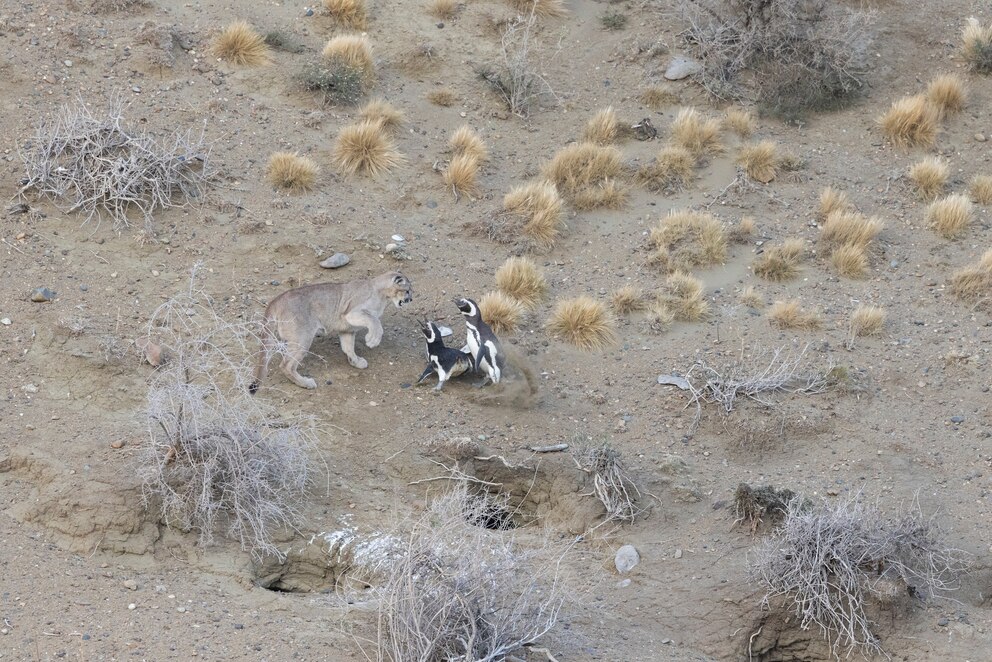
Protections for wildlife, including ranches that were donated to Argentina's national park service and converted to the Monte Leon National Park in 2004, gave pumas an opportunity to rebound, Donadio said. Other wildlife species recovered as well, including foxes and guanacos.
It is possible that pumas were preying on penguins prior to their near-disappearance, but nowhere near the extent to which they are being preyed upon now, Serota said.
"We set up a camera trap grid across the park, and we quickly saw that there were really high puma detections near the penguin colony, which sort of raised alarm bells for us that, 'Oh, maybe there's something more important happening here.'"
Penguin species worldwide are generally on offshore islands, where terrestrial predation is not a factor, Serota said. But since these Magellanic penguins established colonies along Argentina's coast, they became a "very abundant" -- and defenseless -- resource for pumas, Serota said.
The penguins are predictable -- always in the same place -- and do not require a high investment of energy to kill, Donadio said.
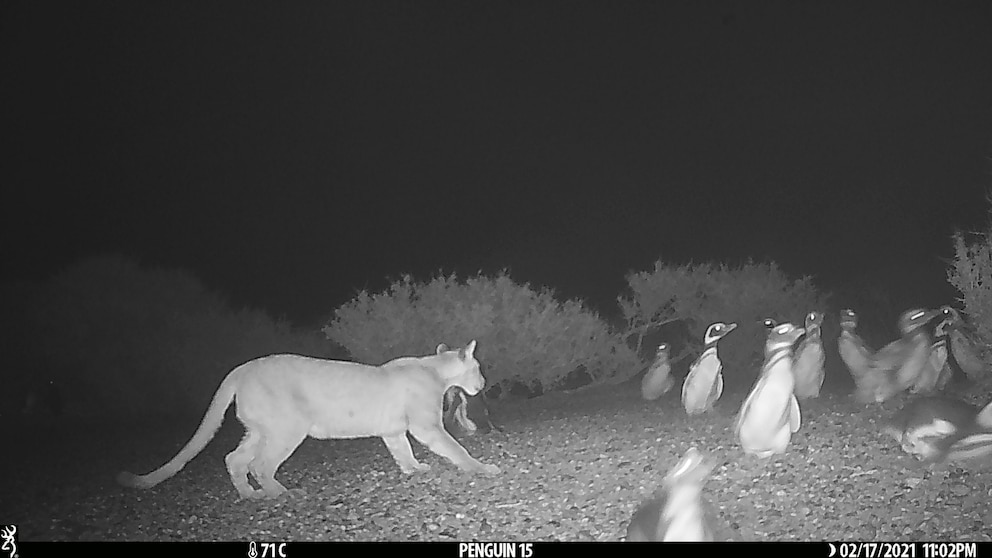
In the parts of the year when penguins are not present, the pumas revert to one of their historical sources of prey: guanacos, which are essentially large llamas and are much more difficult for individual pumas to hunt, Donadio said.
"They just pay more attention to the penguins because they are easier and less dangerous to hunt," Donadio said.
In addition, the increase in puma density coincided with the highest penguin density ever recorded, Serota said. And the population appears to be stable, or even increasing, he added.
Rangers from Monte Leon National Park provided logistical support for the research to be conducted, Donadio said. The new research highlights how ecosystems continue to shift as a result of human influence and conservation efforts, according to the researchers.
"Restoring wildlife in today's changed landscapes doesn't simply rewind ecosystems to the past," Serota said. "It can create entirely new interactions that reshape animal behavior and populations in unexpected ways."