• Video
  • Shop
  • Culture
  • Family
  • Wellness
  • Food
  • Living
  • Style
  • Travel
  • News
  • Book Club
  • Newsletter
  • Privacy Policy
  • Your US State Privacy Rights
  • Children's Online Privacy Policy
  • Interest-Based Ads
  • Terms of Use
  • Do Not Sell My Info
  • Contact Us
  • © 2026 ABC News
  • News

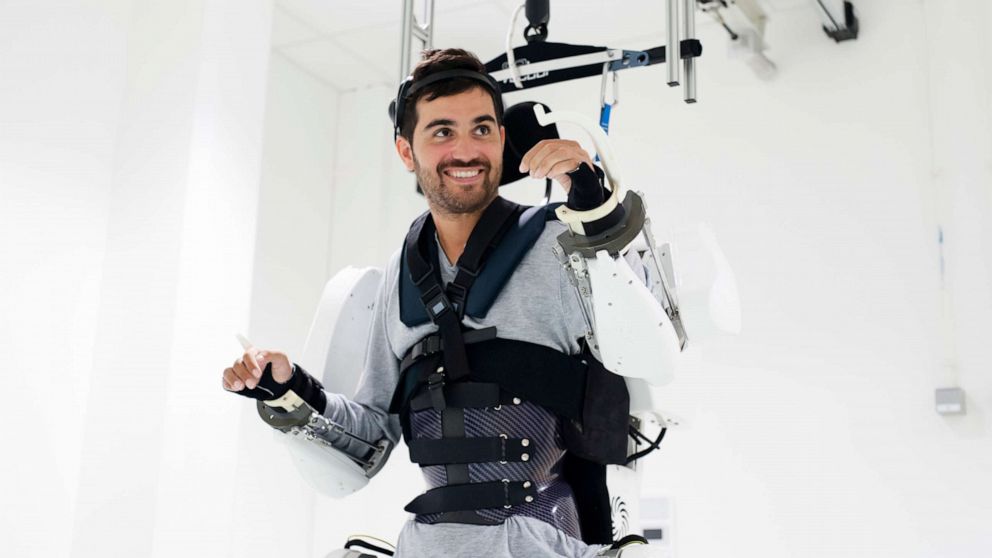
Quadriplegic man walks with an exoskeleton he controls with his brain

1:02
Clinatec Endowment Fund
Exoskeleton helps quadriplegic man walk
Juliette Treillet/Fonds De Dotat/EPA via Shutterstock
Catherine Thorbecke
ByCatherine Thorbecke
October 04, 2019, 5:34 PM

A quadriplegic man was able to move his arms and walk using an exoskeleton controlled by signals sent from his brain and a harness suspended from the ceiling, French researchers said in a new study.

The research centered on a 28-year-old man who was paralyzed from the shoulders down, and his first steps and arm movements were the culmination of a two-year project that was published in The Lancet Neurology journal on Thursday.

An exoskeleton allowed him to move all four of his paralyzed limbs by recording and then decoding his brain signals.
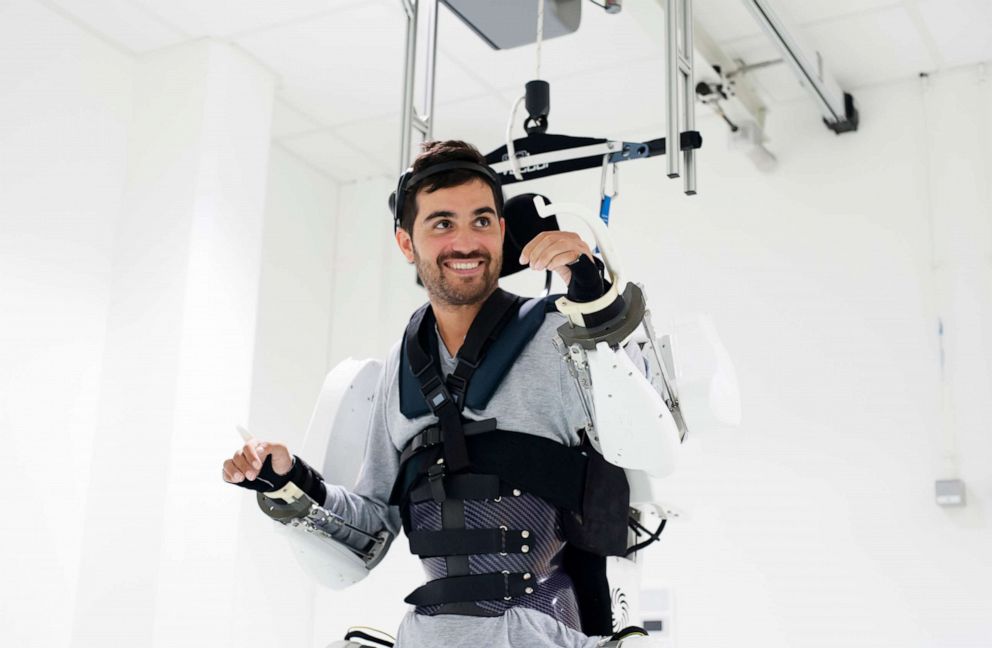
A Thibault, a paralyzed man was able to move all four of his paralyzed limbs with a mind-controlled exoskeleton suit because of two implants placed on the surface of his brain in Paris, Oct. 4, 2019.
Juliette Treillet/Fonds De Dotat/EPA via Shutterstock

"Ours' is the first semi-invasive wireless brain-computer system designed for long term use to activate all four limbs," Alim-Louis Benabid, the executive board president of the biomedical research center Clinatec and a professor emeritus at the University of Grenoble in France, said in a statement announcing the findings.

Related Articles

(MORE: After 7 years in wheelchair, groom walks down aisle on his wedding day)

"Previous brain-computer studies have used more invasive recording devices implanted beneath the outermost membrane of the brain, where they eventually stop working," he added. "They have also been connected to wires, limited to creating movement in just one limb, or have focused on restoring movement to patients' own muscles."
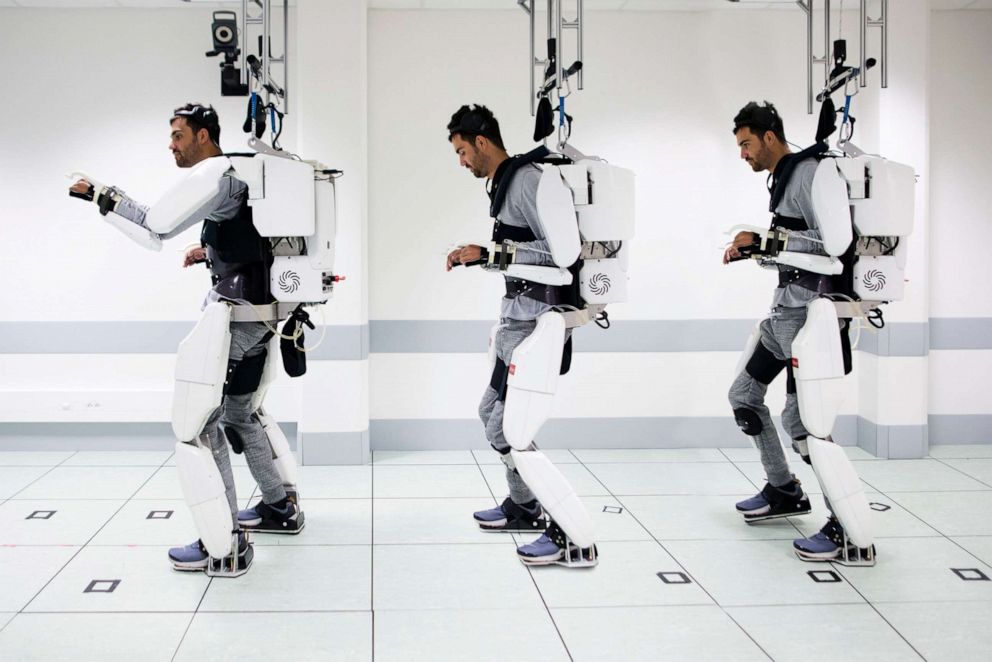
PHOTO: A Thibault, a paralyzed man was able to move all four of his paralyzed limbs with a mind-controlled exoskeleton suit because of  two implants placed on the surface of his brain in Paris, Oct. 4, 2019.
A Thibault, a paralyzed man was able to move all four of his paralyzed limbs with a mind-controlled exoskeleton suit because of two implants placed on the surface of his brain in Paris, Oct. 4, 2019.
Juliette Treillet/Fonds De Dotat/EPA via Shutterstock

The mind-controlled exoskeleton works by implanting recording devices into the patient and collecting brain signals. These signals were then sent through a decoding algorithm that translated the signals into the movements. From there, it sent the movement commands to the exoskeleton to carry them out.

Related Articles

(MORE: Man who was paralyzed is able to walk again thanks to technology)

Over the two years of the study, the patient trained the device to understand an increasing number of his thoughts, thus increasing the number of movement commands it could pick up simply from his brain signals.
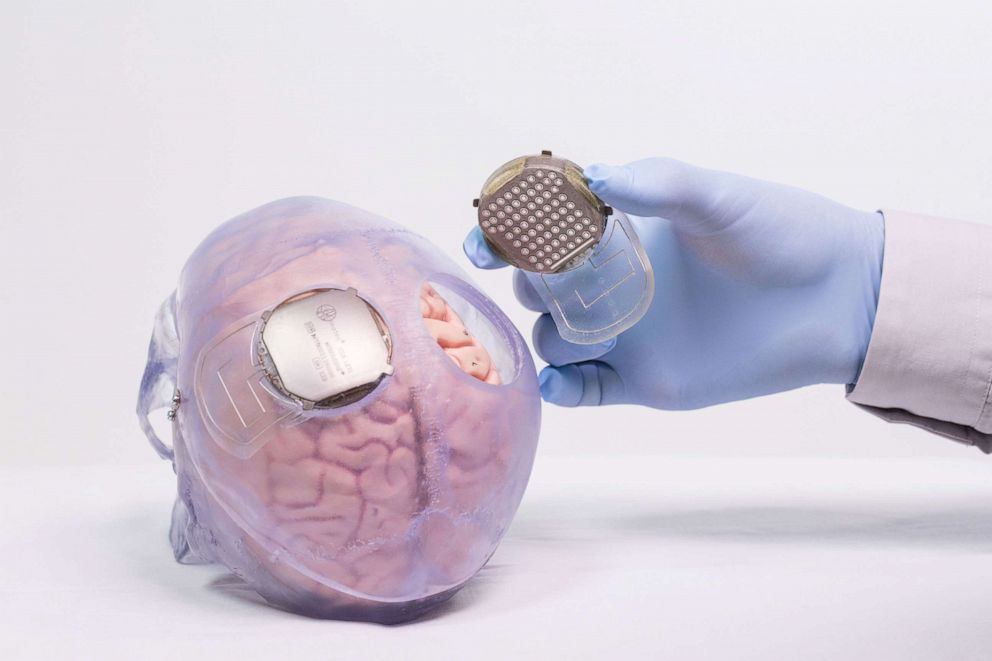
Electrodes on implants read brain activity and beam the instructions to a nearby computer.
Juliette Treillet/Fonds De Dotat/EPA via Shutterstock

"Our findings could move us a step closer to helping tetraplegic patients to drive computers using brain signals alone, perhaps starting with driving wheelchairs using brain activity instead of joysticks and progressing to developing an exoskeleton for increased mobility," Stephan Chabardes, neurosurgeon from the Centre Hospitalier Universitaire de Grenoble of Grenoble-Alpes, France, added in a statement.
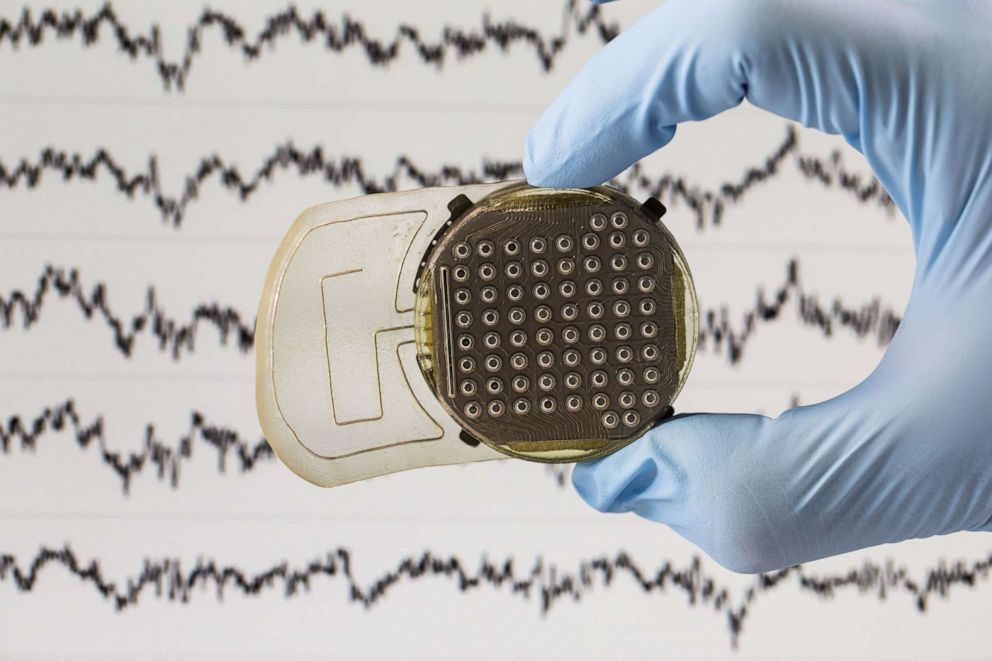
Electrodes on implants read brain activity and beam the instructions to a nearby computer.
Juliette Treillet/Fonds De Dotat/EPA via Shutterstock

While researchers warned that the device is still a long way from becoming widely available, the early findings offered hope that it could have the potential to improve paralyzed patients' quality of life and independence.

Researchers say their next step is to figure out how to let the patient walk without requiring the harness.


Up Next in News—

Texas education board votes to make Bible passages required reading

June 26, 2026

Microsoft joins Apple in raising prices as fans await new 'Grand Theft Auto' game

June 25, 2026

Prosecutors drop rape charge against Harvey Weinstein, avoiding 4th trial

June 25, 2026

New York Knicks fan no longer employed by former company, fined after taking Knicks-themed trash can

June 24, 2026

Shop GMA Favorites

ABC will receive a commission for purchases made through these links.

Sponsored Content by Taboola

The latest lifestyle and entertainment news and inspiration for how to live your best life - all from Good Morning America.
  • Contests
  • Terms of Use
  • Privacy Policy
  • Do Not Sell My Info
  • Children’s Online Privacy Policy
  • Advertise with us
  • Your US State Privacy Rights
  • Interest-Based Ads
  • About Nielsen Measurement
  • Press
  • Feedback
  • Shop FAQs
  • ABC News
  • ABC
  • All Videos
  • All Topics
  • Sitemap

© 2026 ABC News
  • Privacy Policy— 
  • Your US State Privacy Rights— 
  • Children's Online Privacy Policy— 
  • Interest-Based Ads— 
  • Terms of Use— 
  • Do Not Sell My Info— 
  • Contact Us— 

© 2026 ABC News