Radio Problems Cited in Deaths of 19 Firefighters
Sept. 28, 2013— -- Fire experts have cited "challenging" radio communications, among a number of other problems in a new report on the deaths of 19 elite firefighters killed while battling the Arizona wildfires in June.
The report released today detailed that some radios were not equipped with appropraite tone guards, "radio traffic was heavy" and there was a 30-minute gap in communications shortly before a raging inferno overwhelmed the men.
At a news conference where some families and friends of the Granite Mountain Hotshots crew gathered at Prescott, Ariz., High School on Saturday, Arizona State Forester Scott Hunt said the findings shed light on the events of June 30, but that some of what happened that day will remain a mystery.
"We can't talk to the 19 people who would be best able to give us some of that insight," said Hunt. "Not all the facts are known or will ever be known. Even after in-depth analysis some questions remain unanswered."
The Investigation into the deaths was conducted by a task force composed of 12 local and national inter-agency fire experts, led by Florida Forester Jim Karels.
The communication problems led to confusion about where the team was actually located and what they were doing when they were overcome by the raging wildfire.
But in the end investigators said the firefighters were not negligent or reckless as they tried protecting an area that hadn't burned in nearly 50 years.
"Radio communications was a challenge," Karels said. "Started out early in the morning with a tone guard programming issue."
Karels said fire fighters worked around the issue, but that more problems started to crop up. He said he could not determine whether the outcome would have been different had there not been a communications blackout.
The roughly 120-page report commissioned by the Arizona State Forestry Division detailed the exact conditions that fueled the Yarnell Hill fire, which included erratic and gusting winds, triple-digit temperatures and extreme drought.
The blaze was the deadliest for firefighters since the Sept. 11 terror attacks, destroyed more than 100 homes and spread across 13 square miles before it was fully contained 10 days later.
Only one of the 20-member Granite Mountains crew survived the fire that was sparked by lightning from thunder storms brewing over the area on June 28. He had become separated from his team members earlier that day.
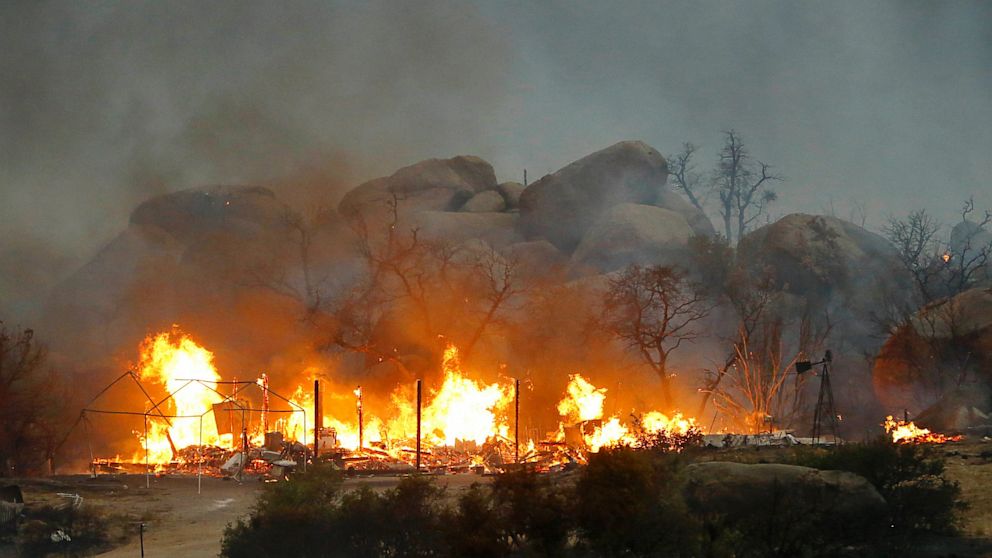
It remains unknown exactly why the other firefighters left the rim and descended into the dry brush-filled canyon, quickly becoming trapped by a blistering inferno that split boulders and torched surrounding trees, the report said.
The men were travelling through unburned territory toward a safety zone when shifting winds provoked a 90-degree direction change in the direction of the fire and the flames, moving fast across chaparral shrubs and dry grass, cut off their escape route.
The fire crew, all aged from 21 to 43 years old, only had two minutes to improvise a shelter site using chain saws and burning out.
They deployed personal tent-like emergency shields in a last-resort bid to survive, but the fire, which burned rapidly, moving 10 to 12 miles an hour and at temperatures up to 200 degrees Farenheit, swept through the area and made direct flame contact with the site.
The crew's bodies were recovered shortly after the fire subsided.
Investigators believe the crew was "attempting to reposition so they could reengage" in firefighting efforts, which led them down the two-track road into the canyon.
On the day the crew was killed, six U.S. Forest Service air tankers had been requested to help control the fire, but were issued with "unable to fill" requests because of a critical shortage of large tankers used to fight wildfires and dangerous conditions at the time.