• Video
  • Shop
  • Culture
  • Family
  • Wellness
  • Food
  • Living
  • Style
  • Travel
  • News
  • Book Club
  • Newsletter
  • Privacy Policy
  • Your US State Privacy Rights
  • Children's Online Privacy Policy
  • Interest-Based Ads
  • Terms of Use
  • Do Not Sell My Info
  • Contact Us
  • © 2026 ABC News
  • News

Rare Venomous Sea Snake Washes Up on California Beach During El Nino
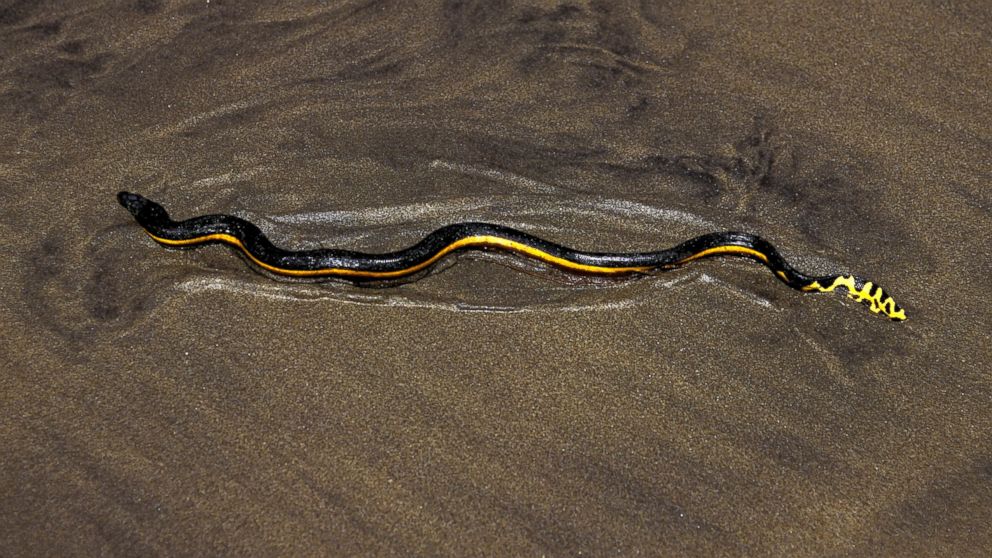
A yellow-bellied sea snake is pictured in this undated stock photo.
Alamy
ByGILLIAN MOHNEY
December 20, 2015, 6:27 PM

— -- An environmental group aiming to help clean up beaches in California made a startling and scary discovery when they ran across a venomous yellow-bellied sea snake.

The snake was found on Bolsa Chica State Beach, approximately 30 miles south of Los Angeles by members of the Surfrider Foundation. According to the group the poisonous snake has been found just two other times in California, once in the 1970s and once earlier this year.

Related Articles

Watch Tesla's Snake-Like Charger Slither Into a Model S

Related Articles

Beachgoer Stunned to Find Venomous Snake on Shore

The environmental group said the snake may have washed up on the shore due to warmer waters related to the El Nino weather event.

"They can swim backward and forward and can stay underwater for up to three hours," the group wrote on YouTube. "There is belief that the El Niño temperature change could have enticed the creature to swim north in search of small fish and eels, which they use their venom to paralyze."

The snake was already dead when it was found by beachcombers.
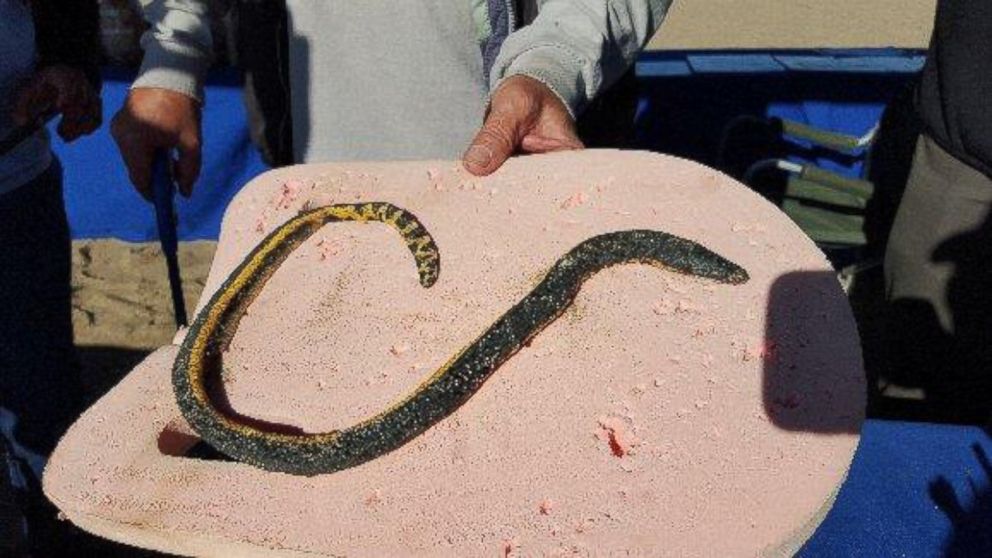
Surfrider Foundation in San Clemente, Calif. posted this photo of a poisonous sea snake to their Facebook on Dec. 19, 2015.

In October of this year another yellow-bellied sea snake was found on another Southern California beach. While that snake was found alive, it died shortly thereafter.

Greg Pauly, assistant curator of herpetology at the Natural History Museum of Los Angeles County, told ABC News that it is rare for a person to get a lethal dose from these snakes because their mouth is so small and they usually prey on small fish. However he recommended people keep their distance from the animal.

Pauly said the snake is normally found in tropical waters, but the warmer temperatures likely mean there are more snakes in the region.

"We were expecting this," Pauly told ABC News in October. "It's a rare event, but it was also somewhat predictable given that we are currently experiencing a fairly dramatic El Nino year."

ABC News' Emily Shapiro contributed to this report.

Up Next in News—

Gas station clerk speaks out after foiling alleged kidnapping

April 15, 2026

Oklahoma high school principal takes down would-be shooter, hailed as hero

April 15, 2026

Family seeks answers after influencer Ashlee Jenae is found dead on vacation in Tanzania

April 15, 2026

Couple shares warning after nearly losing down payment in mortgage fraud

April 10, 2026

Shop GMA Favorites

ABC will receive a commission for purchases made through these links.

Sponsored Content by Taboola

The latest lifestyle and entertainment news and inspiration for how to live your best life - all from Good Morning America.
  • Contests
  • Terms of Use
  • Privacy Policy
  • Do Not Sell My Info
  • Children’s Online Privacy Policy
  • Advertise with us
  • Your US State Privacy Rights
  • Interest-Based Ads
  • About Nielsen Measurement
  • Press
  • Feedback
  • Shop FAQs
  • ABC News
  • ABC
  • All Videos
  • All Topics
  • Sitemap

© 2026 ABC News
  • Privacy Policy— 
  • Your US State Privacy Rights— 
  • Children's Online Privacy Policy— 
  • Interest-Based Ads— 
  • Terms of Use— 
  • Do Not Sell My Info— 
  • Contact Us— 

© 2026 ABC News