Here's how research to help insomniacs could end up improving your vacation photos
This is an Inside Science story.
When showing off vacation photos to a friend, how many times have you uttered the phrase "You really had to be there" or "It looked much better in person"? No matter how much smartphone cameras advance, digital photos often pale in comparison to the vibrant images before our eyes.
One reason for this disparity is that many devices fail to accurately capture real-life colors. Digital colors are usually defined in an algorithm as combinations of red, green and blue (RGB), but the way these primary colors are produced -- and appear to the human eye -- differs among devices.
Now, researchers from China have developed a new approach to digitizing color that could help improve the realism of cameras, displays and LED lighting. Instead of using RGB combinations to form a color space, the new set of algorithms produces colors based on standards set by the International Commission on Illumination (CIE), a device-independent system that takes into account how humans perceive colors. The study, published in the journal Optica, directly maps the electrical signals of a given device to the CIE color space.
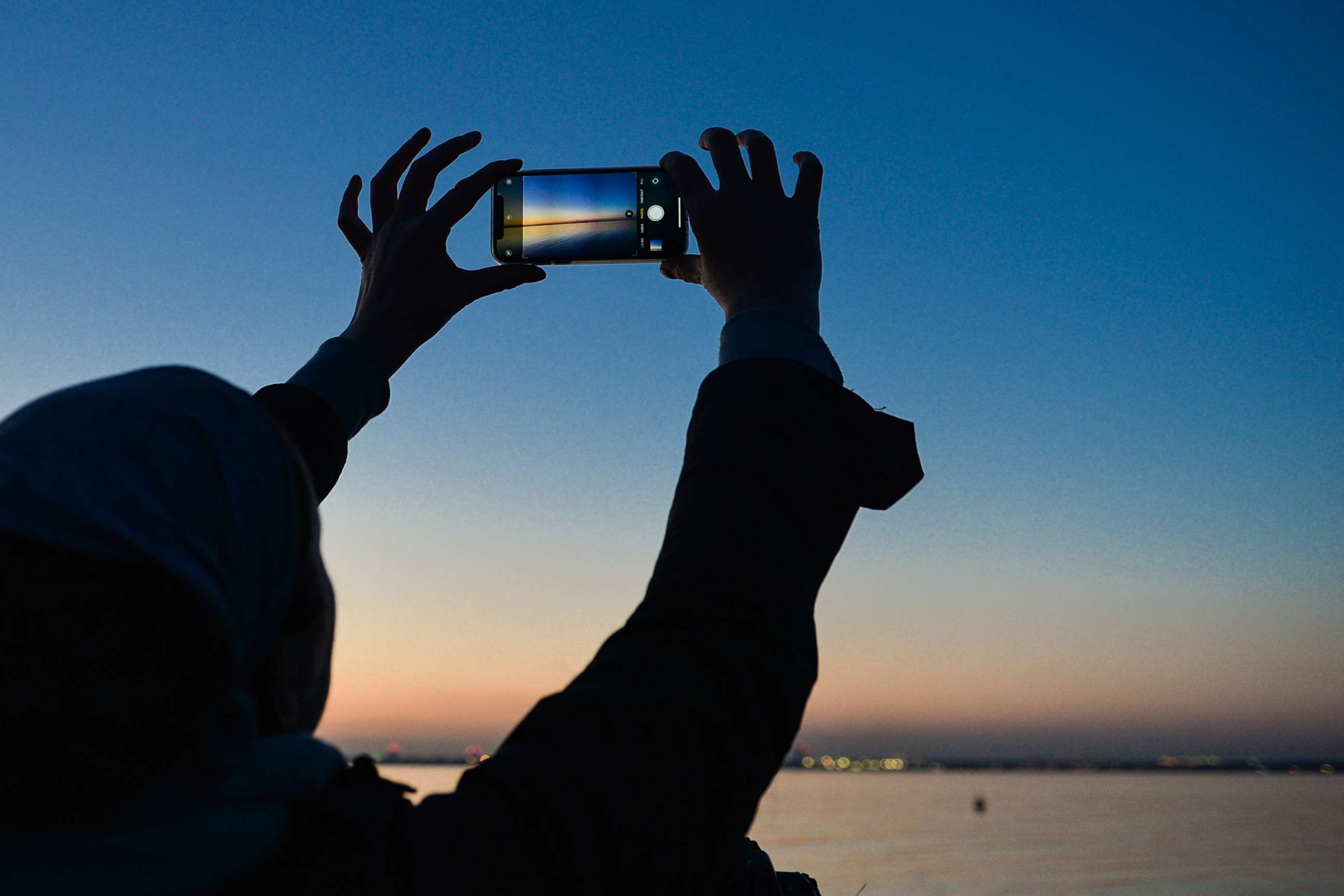
"Imagine that one day you are using a CIE-based digital camera to record a wonderful scene in a CIE-format image file. You will also be able to transfer the digital file to a computer with a CIE-based display to show your friends the happy time," said study author Jiyong Wang of Westlake University. "In this way, the scenes in our eyes can be stored and reproduced to a maximum extent of reality."
About a decade ago, Wang and his colleagues began this line of research with a very different goal in mind. They aimed to provide precision light therapy to people suffering from insomnia or depression. The idea was to stimulate melatonin secretion and regulate their circadian rhythms. Since some wavelengths of light work better than others, the researchers started working on algorithms to better control the colors of LEDs.
They chose to work with the CIE color space because it is device-independent, meaning that the same values should be perceived as the same color by a standard observer even if different devices are used. Validation experiments to mimic lighting, display and sensing applications demonstrated that chromaticity, a measure of colorfulness separate from brightness, could be controlled with much more precision than the human eye can detect.
"The method is ready to be applied in LED lights and commercialized displays, in order to achieve a natural lighting and a higher dynamic range, respectively," said Wang. "The state-of-art, near-eye displays, such as virtual reality and augmented reality glasses, will be also benefit from this method to enhance the sense of reality."
Inside Science is an editorially independent nonprofit print, electronic and video journalism news service owned and operated by the American Institute of Physics.