A rocky 'wonderland' in Arizona is poised to be the next US national park
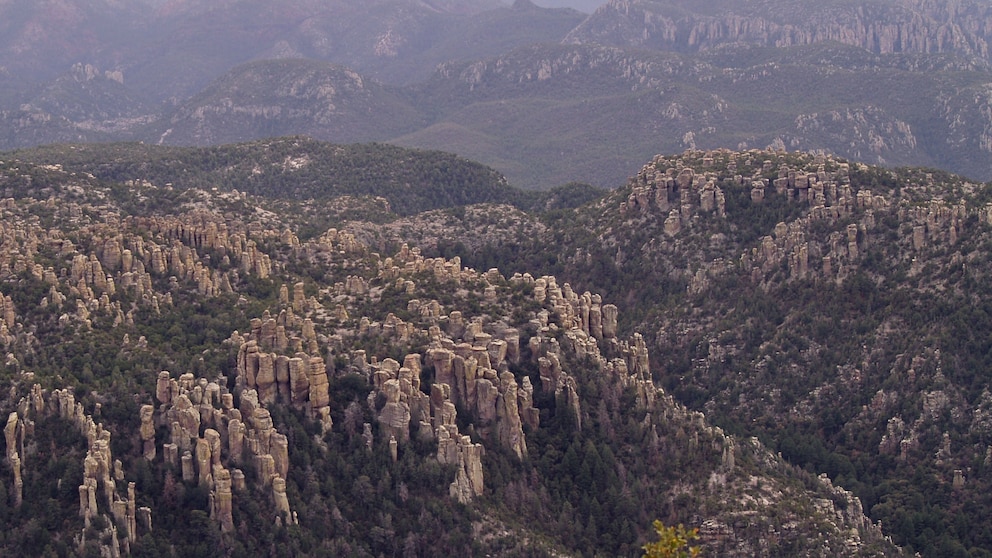
An area of towering rock spires in southeastern Arizona known among Native Americans as the Land of Standing-Up Rocks is poised to become the nation's newest national park.
Legislation to create Chiricahua National Park is expected to be sent to the White House in coming days for President Donald Trump’s signature. It passed Congress with bipartisan backing and would be the 64th U.S. national park.
The 19-square-mile (49-square kilometer) site is within the historical territory of the Chiricahua Apache tribes. It was designated a national monument in the 1920s to preserve hundreds of pinnacle-shaped rocks formed from an ancient volcanic eruption.
“We’re the Grand Canyon state, so we know about this kind of landscape,” Arizona Rep. Juan Ciscomani, the Republican sponsor of the Chiricahua National Park Act, said Wednesday. “It's hard to compare anything to the Grand Canyon, but Chiricahua holds its own. This is something that really hasn’t been discovered.”
National Park Service officials declined to say if additional staff would be hired to address an expected increase in visitors as the new designation elevates the site's profile.
The park service has undergone deep cuts to its workforce under Trump. Maintenance projects at many sites — including Chiricahua — were ranked “low priority” by officials who have instead focused on projects wanted by the White House, including repairs to the Lincoln Memorial Reflecting Pool.
For centuries the site of the proposed park was home to the Apache, nomadic tribes who often resisted European newcomers to North America. They clashed with settlers until surrendering to U.S. troops in 1886 and being forcibly removed to the San Carlos Apache reservation.
The bill creating Chiricahua National Park preserves tribal access for traditional ceremonies. It allows temporary public closures within the park to protect those cultural uses, although Ciscomani said specifics have not been decided.
San Carlos Apache tribal leaders did not take a formal position on the national park designation, a spokesperson said Wednesday. In response to questions from The Associated Press, the tribe provided its 2024 testimony before Congress, where San Carlos Apache Deputy Attorney General Justine Jimmie asked for uninterrupted access to the site.
“National parks have become so packed with tourists,” Jimmie said. “In contrast, we go to our cultural areas in what are now parks to seek sanctuary, pray, and perform ceremonies.”
Early settlers called the site Wonderland of Rocks. The name Chiricahua comes from the surrounding mountains.
The area has evidence of thousands of years of human use, according to the park service. That spans from prehistoric people to Buffalo Soldiers — U.S. troops who were Black and stationed at the monument site after the Civil War, during a government campaign against Apache leaders Geronimo and Cochise.
President Calvin Coolidge named the site a national monument in 1924 under the federal Antiquities Act. President Franklin D. Roosevelt expanded it in 1938.
It gets roughly 60,000 visitors annually.
National monuments are designed to protect specific locations and objects, such as archaeological or historical sites, whereas national parks have a broader purpose including recreation and the preservation of vast expanses of wilderness. Parks and monuments alike are managed by the park service.
Chiricahua would be the first new national park since New River Gorge National Park and Preserve in West Virginia in 2021.
The mayor of nearby Willcox, Arizona, Greg Hancock, said the change could bring more customers to its hotels, restaurants and small businesses.
The monument has a visitor center, campground and hiking trails. Park service officials declined to say if any immediate changes were planned.
The Congressional Budget Office said it would cost less than $500,000 to establish the park, but did not specify how that might be spent.
House lawmakers approved the park's creation in a voice vote in March. The Senate passed it Sept. 30 by unanimous consent.