Scientists are racing against time to save Scarlet, an ailing, 3-year-old killer whale that has gone missing
Scientists and researchers are in a race against time, struggling to save an ailing 3-year-old killer whale named Scarlet which has gone missing.
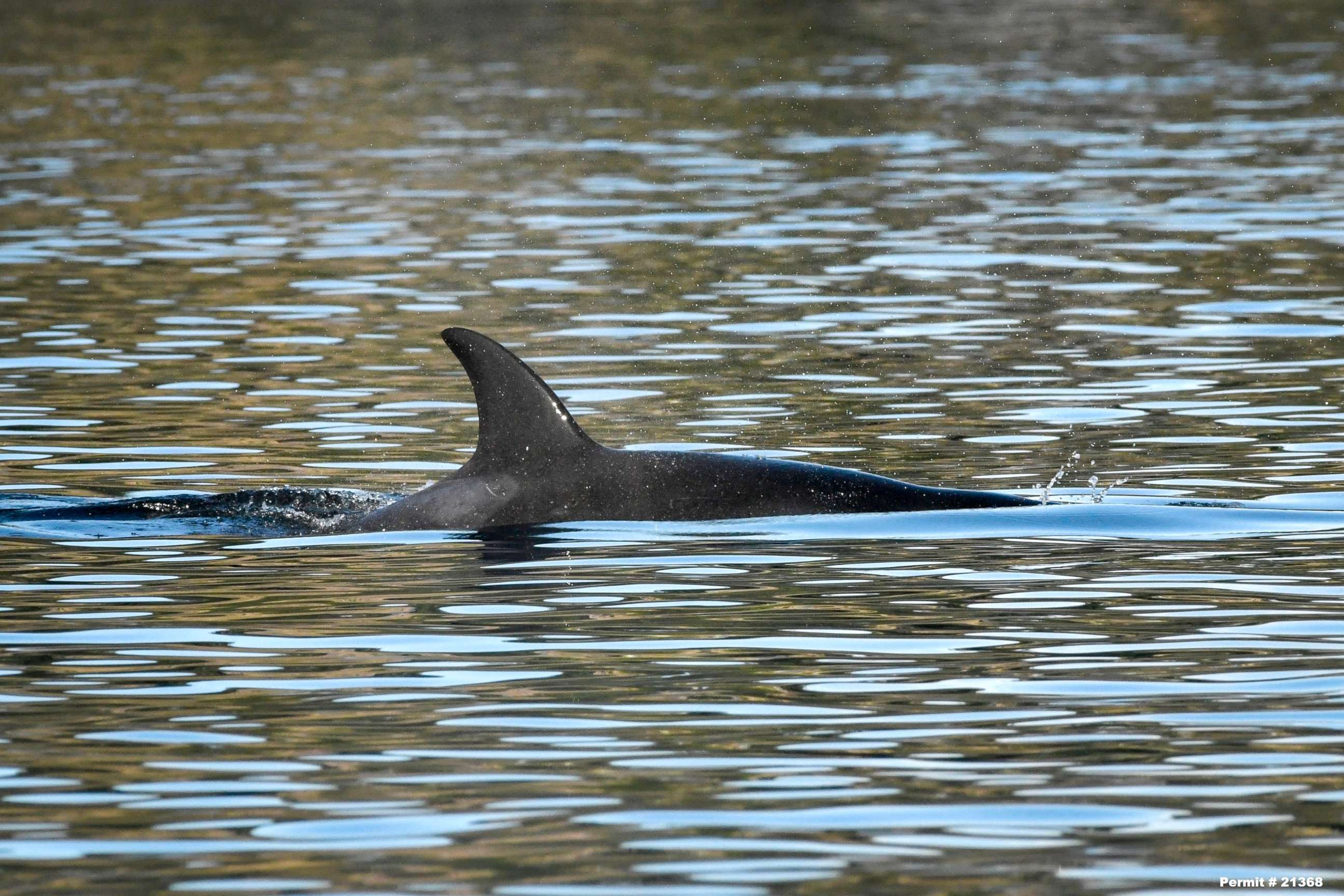
The youngest of the group, the southern resident killer whale that's known to marine scientists as J50 hasn’t been seen for days, and even before she vanished, experts were worried about her deteriorating health.
"It is very possible that she has succumbed at this point and that we may never see her again," Teri Rowles, marine mammal health and stranding coordinator for National Oceanic Atmospheric Administration (NOAA) Fisheries, told journalists during a press phone briefing Tuesday.
Scarlet is the youngest southern resident killer whale among a group of 75 that feed in the waters off of Alaska and northern California, but when scientists were last able to evaluate her condition, she was underweight and had an infection, Rowles said during the press call.
NOAA and the Center for Whale Research cite multiple factors threatening the killer whales, including a diminishing Chinook salmon population -- which is their preferred fish -- as well as increased pollution, water traffic, and increased noise -- which stresses out the whales and interferes their ability to reproduce.
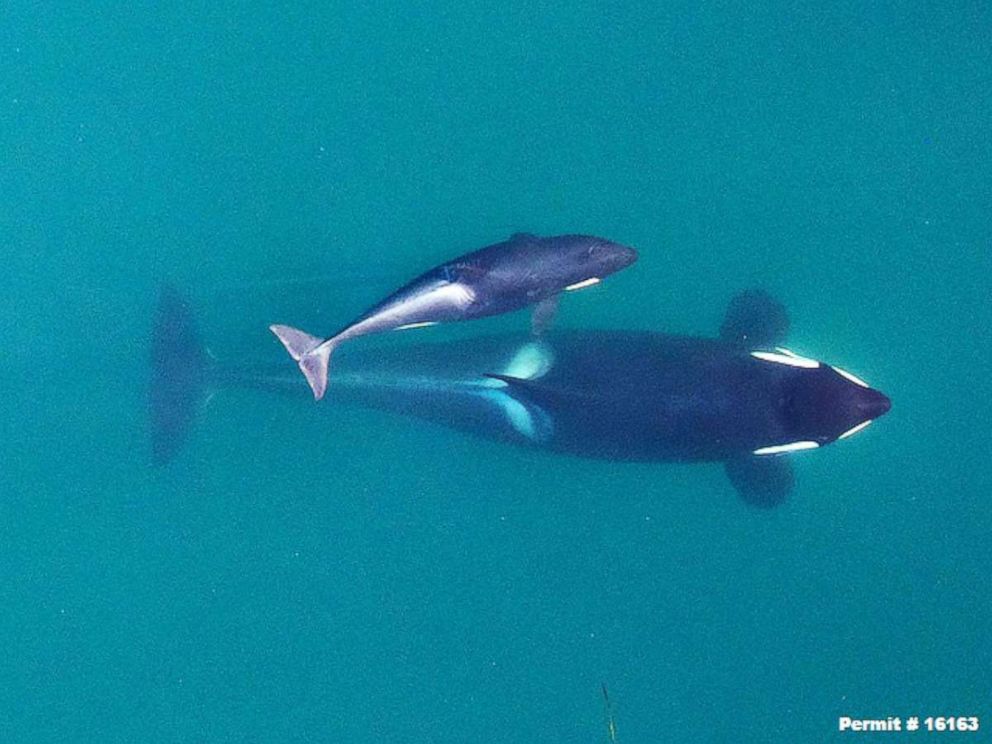
There are now only 75 southern resident killer whales that live in the waters along the U.S. west coast from Alaska to California, according to Ken Balcomb of the Center for Whale Research. Those numbers have remained stagnant, Balcomb said. Rather than producing their average six to nine offspring per year, the group of 75 has not produced any offspring in the last three years.
That changed in late July, when a female member of the group -- known as J35, or Tahlequah -- gave birth to a calf, but the baby whale only lived for 30 minutes. In a remarkable demonstration of maternal affection viewed around the world, 30-year-old Tahlequah, went into mourning, sometimes carrying the dead baby calf on her back for hundreds of miles over the course of at least 10 days.
NOAA has a plan to try and nurse Scarlet back to health, but it’s a complicated one that depends on her condition.
NOAA Fisheries and partner organizations are exploring options ranging from no intervention to providing medical treatment, potentially delivered inside a live Chinook salmon -- which would then be fed to Scarlet. This tactic has never before been attempted in the wild, NOAA fisheries experts wrote on the agency's website.
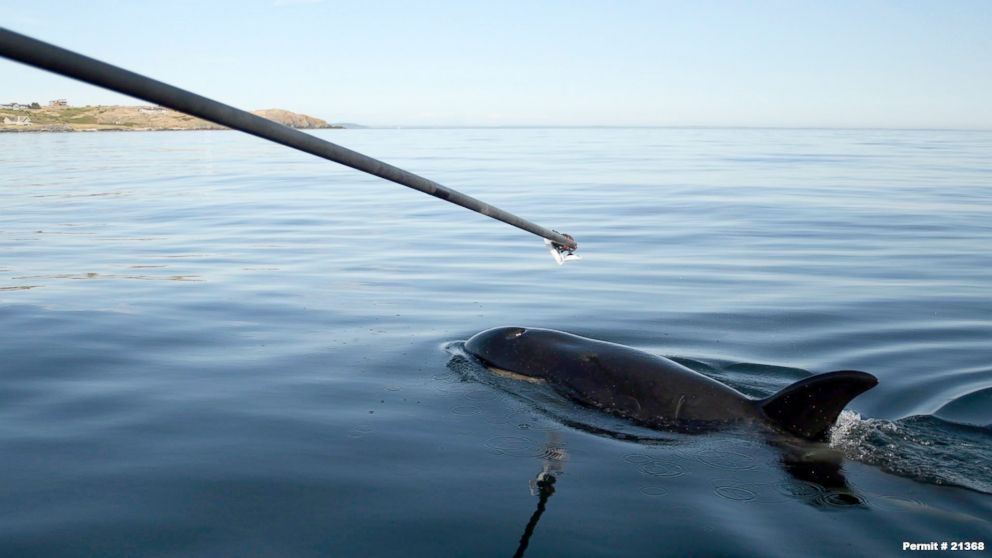
Experts might also have to inject Scarlet with either a dart gun or a pole that contains antibiotics and other medications, or feed the whale's medicine to the live Chinook salmon and then release the salmon near Scarlet in hopes that she would eat the fish.
“What they're working on this morning...to determine which method they're going to use, [is] based on the dose that they have configured for her,” Rowles told ABC News on Tuesday.
Part of the challenge of using the pole would be that marine mammal experts would have to be in very close proximity to the animal.
“That requires a closer approach,” Rowles said of the pole option.
Rowles said that while the research boats are out in the water searching for Scarlet, they have to keep a distance at least 200 yards to make sure that they don’t further stress the sick, young whale or other whales.
If they choose to use medicated fish as part of the treatment plan, the boat containing the Chinook salmon will be placed in front of J50, Rolwes said.
“The fish would be distributed into the water in front of her,” she said.