Scientists turn lead into gold for 1st time, but only for a split second

In a breakthrough that would make medieval alchemists envious, scientists at Europe's Large Hadron Collider have successfully transformed lead into gold, producing 89,000 atoms per second.
The Large Hadron Collider (LHC) is a giant particle accelerator that smashes atoms together at super-high speeds. Scientists there have found a way to knock three tiny particles called protons out of lead atoms, turning them into gold atoms.
The team behind this discovery, called the ALICE collaboration, used a unique way to create gold. Instead of crashing lead atoms head-on, they looked at what happens when the atoms just barely miss each other. Researchers explained that when this happens, powerful electromagnetic fields around the atoms can cause them to change into different elements.
"It's impressive that our detectors can handle both major collisions that create thousands of particles and these smaller events that make just a few particles at a time," Marco Van Leeuwen, who leads the ALICE project, said in a press release.
How much gold did they make?
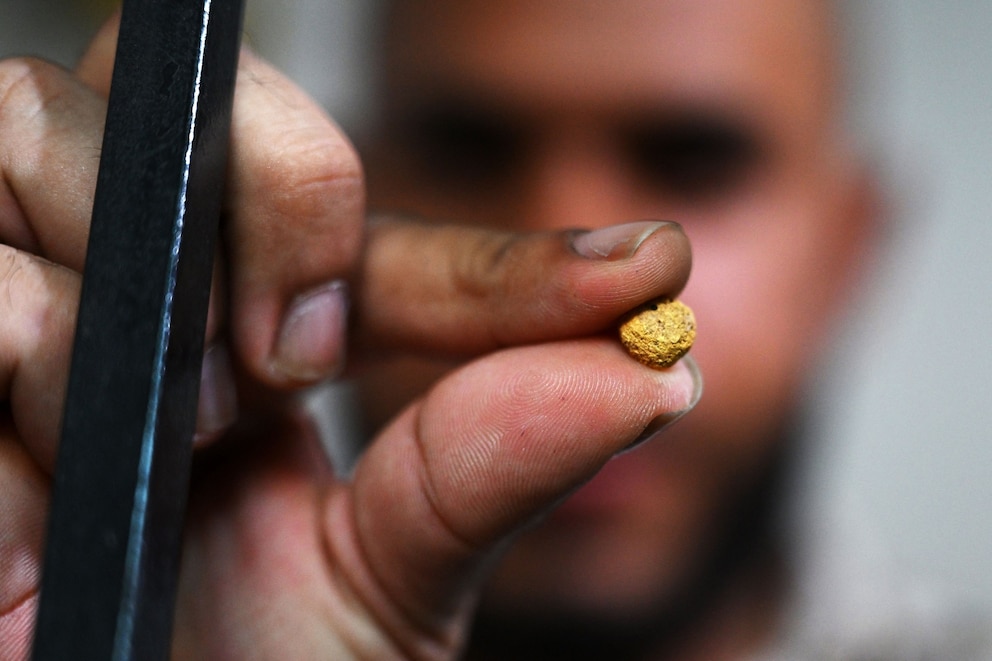
During one period of experiments from 2015 to 2018, the scientists created about 86 billion gold atoms. That sounds like a lot, but when you add up all that gold, scientists said it only weighs about 29 picograms, which is less than a trillionth of a gram. You'd need trillions of times more to make even a tiny piece of jewelry.
The machine can create about 89,000 gold atoms every second, but each atom only exists for a tiny fraction of a second before breaking apart. Recent upgrades to the machine have almost doubled the amount of gold it can make, but it's still far from practical use.
According to Uliana Dmitrieva, a scientist for the ALICE collaboration, this is the first time scientists have been able to detect and study gold production at the LHC in this way.
"Thanks to the unique capabilities of the ALICE ZDCs, the present analysis is the first to systematically detect and analyse the signature of gold production at the LHC experimentally," Dmitrieva said in the release.
The research isn't just about making gold
John Jowett, another scientist on the team, said that these experiments help them understand how particles behave, which is important for improving the LHC and building future particle colliders.
"The results also test and improve theoretical models of electromagnetic dissociation, which, beyond their intrinsic physics interest, are used to understand and predict beam losses that are a major limit on the performance of the LHC and future colliders," Jowett said in the release.