Same-Sex Couples May One Day Have Biological Children, Researchers Say
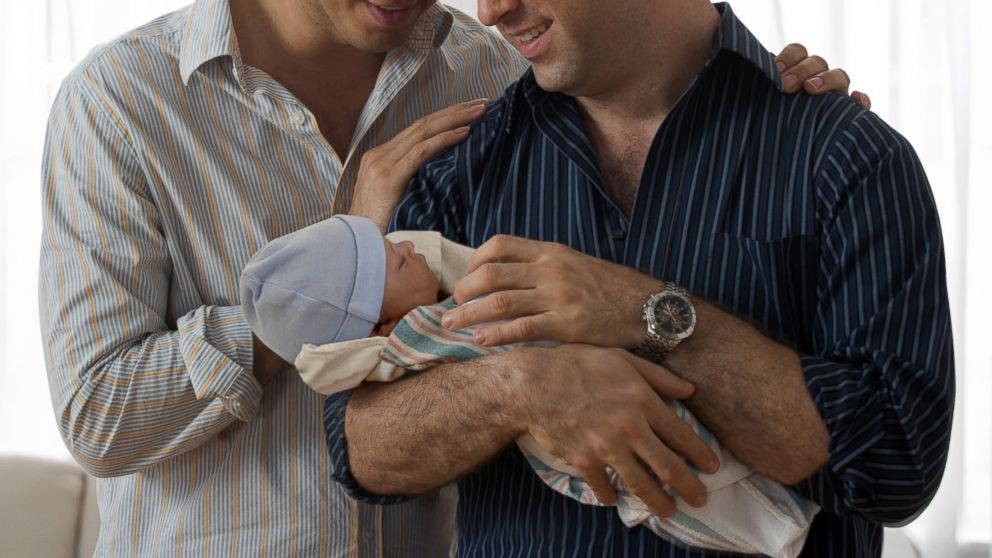
— -- A stem cell research breakthrough might someday allow same-sex couples to have their own biological children.
Researchers at Cambridge University in England have taken the first steps towards creating artificial sperm and eggs by reprogramming skin cells from adults and converting them into embryonic-like stem cells. The team then compared the engineered stem cells with human cells from fetuses to confirm they were in fact, identical.
The researchers published their findings in the journal Cell earlier this week, stressing that it’s early days for this type of research.
“We have succeeded in the first and most important step of the process,” Dr. Jacob Hanna, an investigator with the Weizmann Institute of Science in Israel, told ABC News.
Hanna said the team will now attempt to complete the process by creating fully developed artificial sperm and eggs, either in a dish or by implanting them in a rodent. Once this is achieved, the technique could become useful for any individual with fertility problems, he said, including couples of the same sex.
"It has already caused interest from gay groups because of the possibility of making egg and sperm cells from parents of the same sex," Hanna said.
However, the prospect of creating a baby by these artificial means alone is probably a long way off, Hanna said.
“It is really important to emphasize that while this scenario might be technically possible and feasible, it is remote at this stage and many challenges need to be overcome,” he said. “Further, there are very serious ethical and safety issues to be considered when and if such scenarios become considered in the distant future.”
The research was funded by the Wellcome Trust and the Britain Israel Research and Academic Exchange Partnership.