Spiders may have evolved in the ocean before adapting to land, well-preserved fossil reveals
One of the creepiest, crawliest creatures of the Earth may have been swimming before adapting to live on land, new research suggests.
Spiders and their arachnid relatives may have actually originated in the sea, according to analysis of an "exquisitely preserved" fossil that lived 500 million years ago. The findings were published Tuesday in the journal Current Biology.
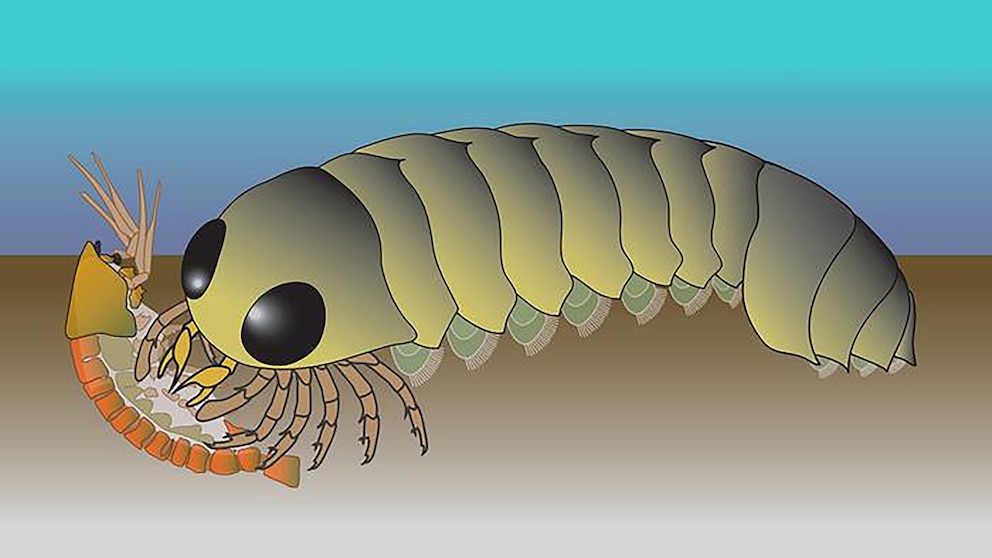
Researchers at the University of Arizona completed a detailed analysis of the brain and central nervous system of an extinct animal called Mollisonia symmetrica, according to the study. The species was previously thought to represent an ancestral member of a specific group of arthropods called chelicerates that lived during the Cambrian period -- between 540 and 485 million years ago. Chelicerates were believed to be ancestors to modern-day horseshoe crabs.
However, the scientists were surprised to discover that the neural arrangements in Mollisonia's fossilized brain are not organized like those in horseshoe crabs. Instead, they are organized the same way as in modern spiders and their relatives, the researchers said.
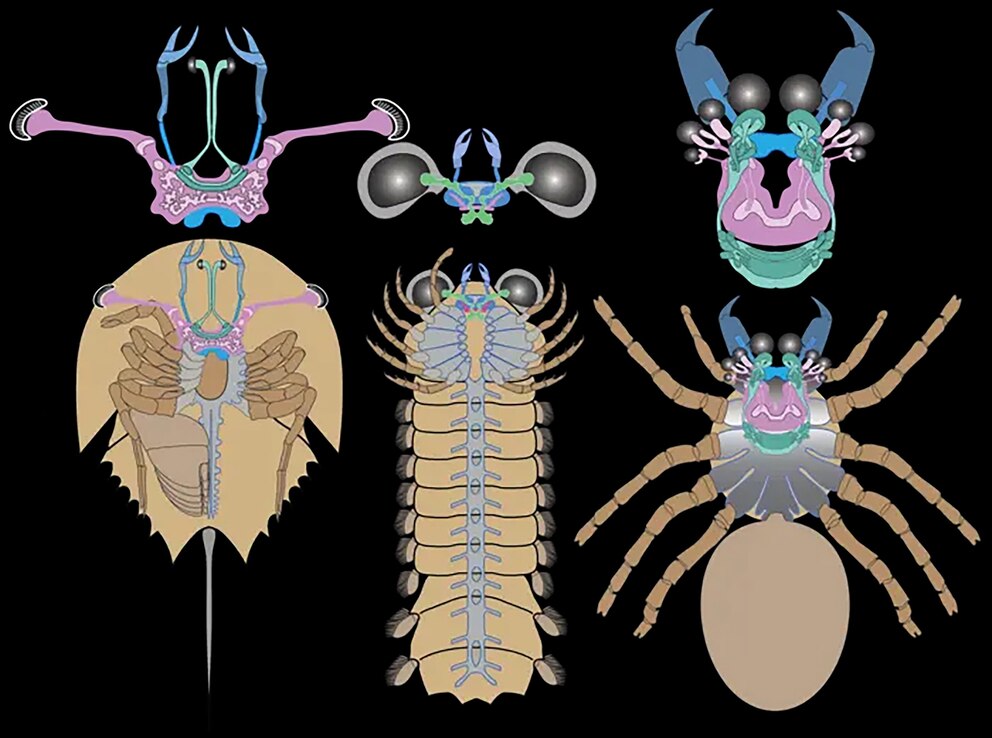
The anterior part of Mollisonia’s body -- the prosoma -- contains a radiating pattern of segmental ganglia that control the movements of five pairs of segmental appendages, the researchers said. In addition, an unsegmented brain extends short nerves to a pair of pincer-like "claws," similar to the fangs of spiders and other arachnids.
The decisive feature that demonstrates the fossil was likely an early arachnid is the unique organization of the brain -- a reverse of the front-to-back arrangement found in present-day crustaceans, insects, centipedes and horseshoe crabs, the researchers said.
It's as if the brain has been "flipped backwards," which is what is seen in modern spiders," said Nick Strausfeld, a regents professor at the University of Arizona and lead author of the paper, in a statement.
This may be a crucial evolutionary development, as studies of existing spider brains suggest that a back-to-front arrangement in the brain provides shortcuts from neuronal control centers to underlying circuits, which control the spider's movements, said Frank Hirth, a reader of evolutionary neuroscience at King’s College London and co-author of the paper.
The arrangement likely helps the spiders hunt stealthily and dexterity for the spinning of webs.
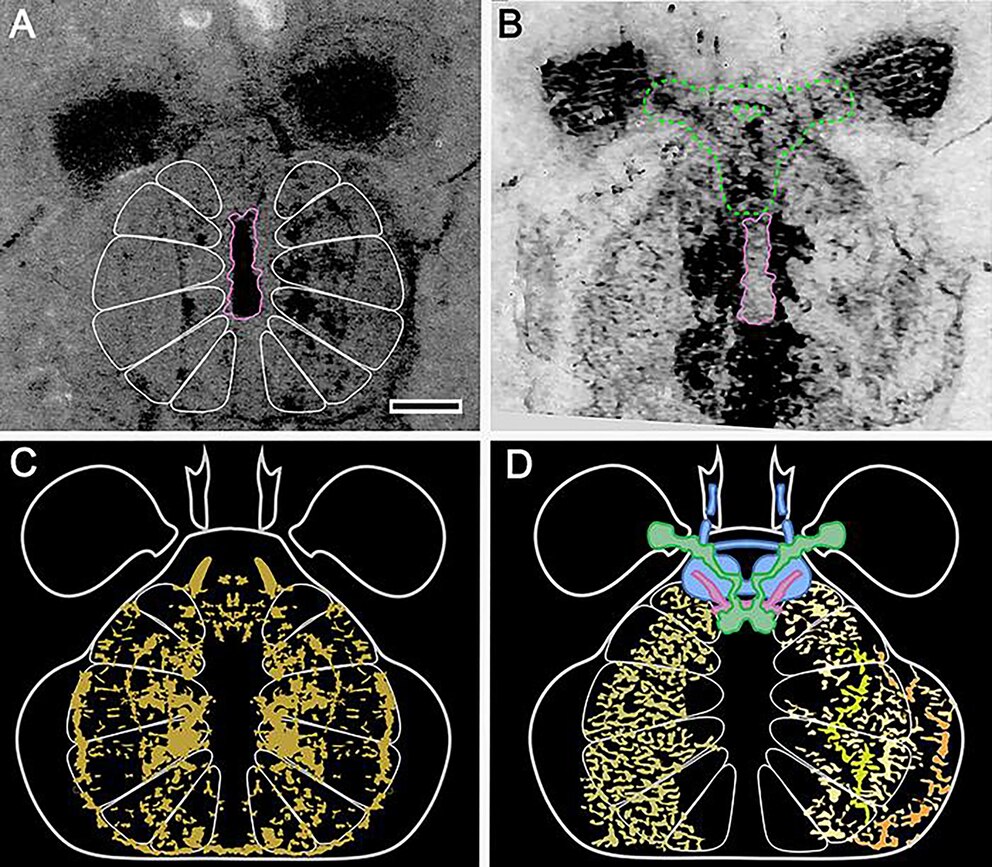
The arachnid brain is "unlike any other brain" on Earth, Strausfeld said.
"This is a major step in evolution, which appears to be exclusive to arachnids," Hirth said.
Spiders and scorpions have existed for about 400 million years with little change -- dominating the Earth as the most successful group of arthropodan predators.
The finding challenges the widely held belief that diversification occurred only after a common ancestor had moved to the shore, according to the study. Previous fossil records appeared to indicate that arachnids lived and diversified exclusively on land.
"It is still vigorously debated where and when arachnids first appeared, and what kind of chelicerates were their ancestors, and whether these were marine or semi-aquatic like horseshoe crabs," Strausfeld said.
While the Mollisonia outwardly resembles some other early chelicerates from the time period, its body was composed of two parts: a rounded "carapace" in the front and a sturdy segmented trunk ending in a tail-like structure, the analysis found. Some researchers had previously compared its body composition to that of scorpions, but no one had previously claimed that it was anything "more exotic" than a chelicerate.
The first creatures to come onto land were likely millipede-like anthropods and other ancestral, insect-like creatures -- an evolutionary branch of crustaceans, Strausfeld said.
Early insects and millipedes were likely part of the Mollisonia-like arachnid's daily diet when they adapted to land, he added.
The first arachnids on land may have also contributed to the evolution of insect wings, a "critical defense mechanism," Strausfeld said.
The Mollisonia's lineage likely gave rise to spiders, scorpions, sun spiders, vinegarroons and whip scorpions, the researchers said.