Sustainable initiatives play crucial role in Super Bowl LX
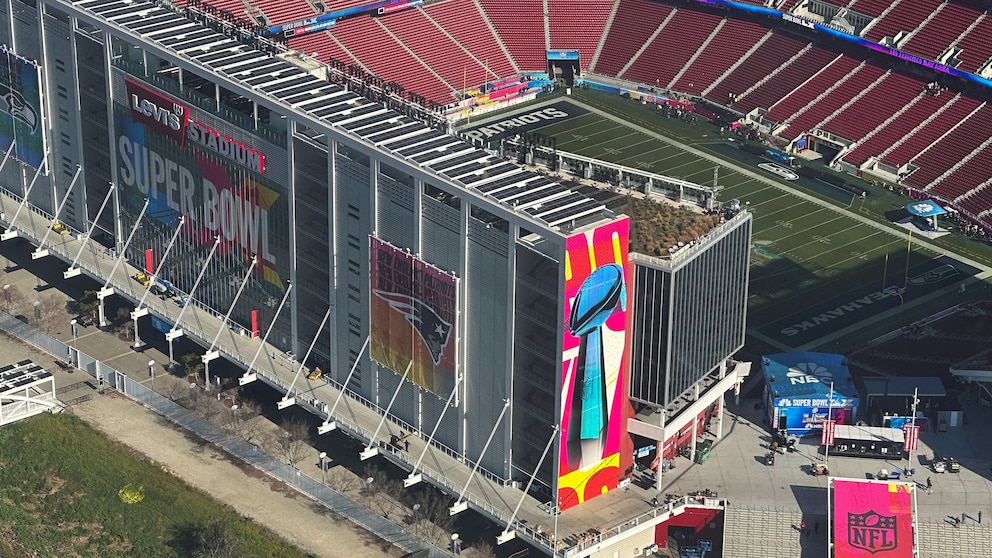
Sustainability will be at the forefront of the upcoming Super Bowl LX.
By the time the Seattle Seahawks and New England Patriots kick off for Sunday's big game at Levi's Stadium in Santa Clara, California, organizers will have worked to minimize the carbon footprint of America's most-watched sporting event.
Sustainability is now a "core focus" at the National Football League, which is aiming to reduce the environmental impacts from each of its events, the organization said.
"The NFL strives to not only make each Super Bowl more sustainable than the last but to also leave a lasting 'green legacy' in the host's community," the league said in a statement.
Fans attending the game and other Super Bowl events are encouraged by the NFL to reduce waste by making sure recyclables are empty with no foods or liquids remaining and by keeping plastic bags and wraps out of recycling.
The NFL also encouraged fans to travel sustainably by either walking or utilizing public transport, such as the VTA, BART, Caltrain and SFMTA. If those options are not available, consider an electric vehicle rideshare.
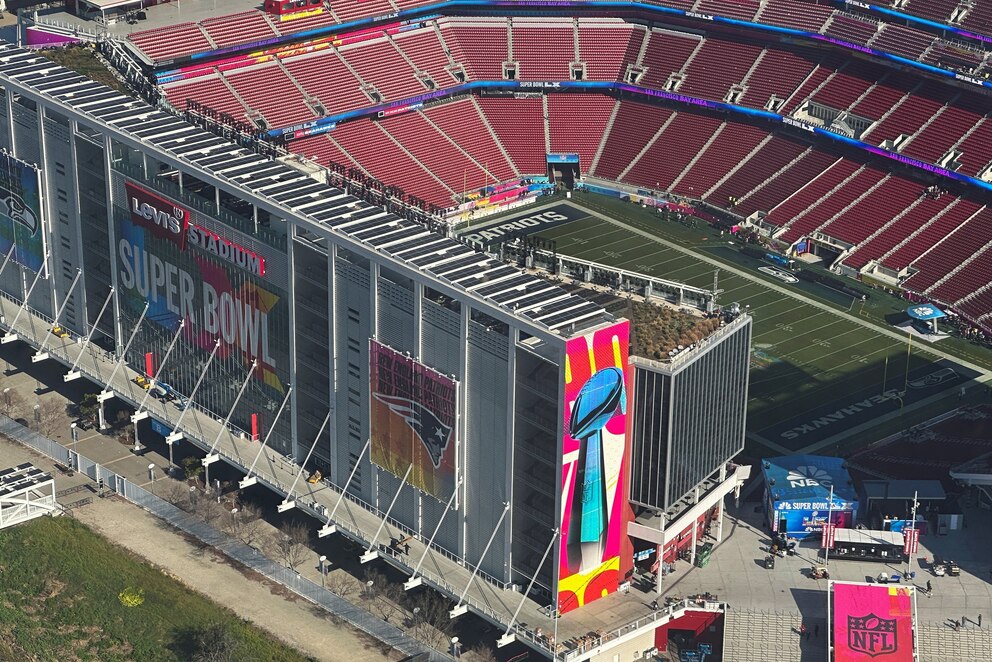
Levi's Stadium itself was built with sustainability in mind, having opened in 2014.
In addition to ample public transit access, the host arena is equipped with solar-powered infrastructure, electric vehicle charging stations and water-saving upgrades that cut emissions and keep fans cool, according to the California Government Office of Land Use and Climate Innovation.
San Francisco International Airport is also playing a role in encouraging sustainability for the Super Bowl. It was one of the first U.S. airports to offer sustainable aviation fuel (SAF) -- a jet fuel made from waste cooking oil or other sustainable sources instead of fossil fuels, 4AIR President Kennedy Ricci said. 4AIR is a sustainability company that assists private aviation in implementing environmentally conscious programs.
"SAF allows aircraft to reduce carbon emissions without any required engine or fueling modifications," Ricci said in a statement sent to ABC News, adding that the Bay Area remains one of the top locations in which private jet customers are using sustainable fuels.
Sustainable fuel currently accounts for about 1% of all fuel sold at SFO, but the airport has a goal to hit 5%.
The NFL is also improving recycling efforts, both for fans and behind the scenes. An extra 200 recycling bins have been added around the stadium and surrounding campus, and "sustainability staff" have been deployed to assist fans, the NFL said. Additional sorting of waste bins will take place behind the scenes to minimize contamination and maximize recycling, according to the league.
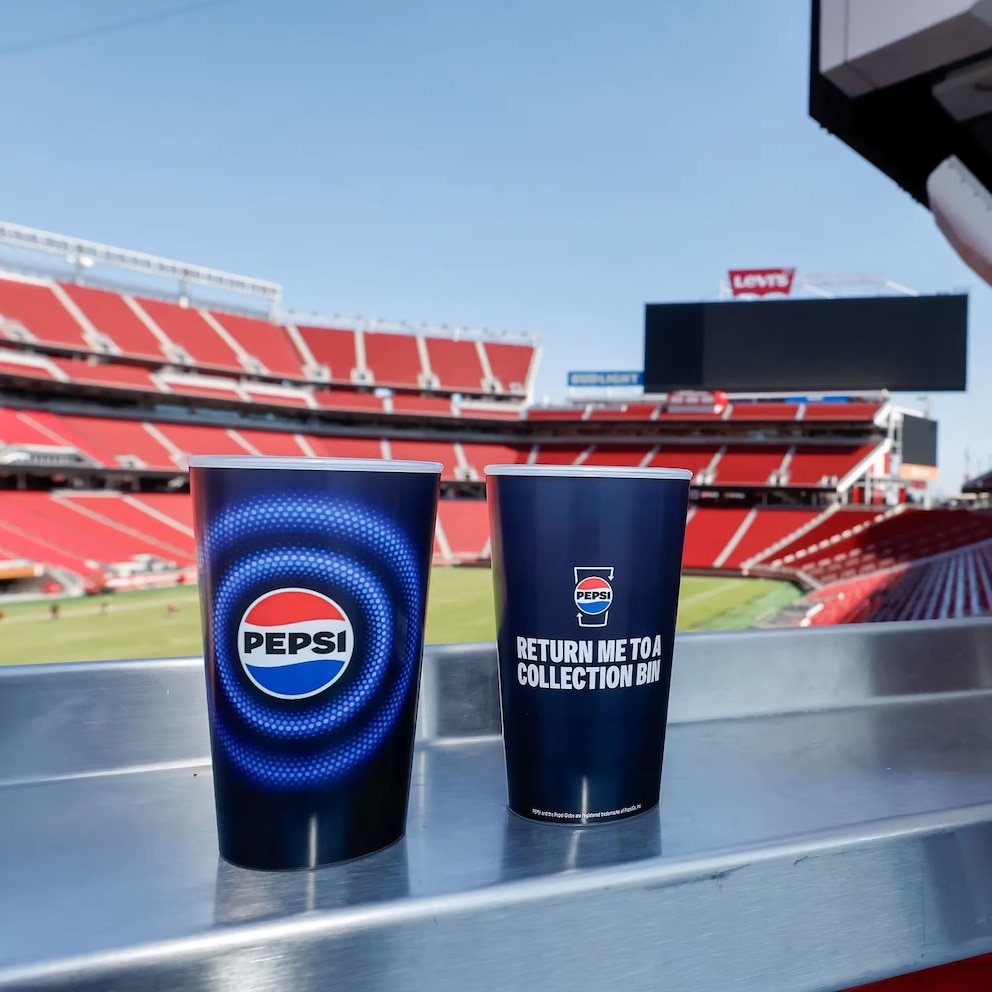
PepsiCo will provide reusable cups in an effort to reduce single-use plastic, continuing a pilot program the company launched with the San Francisco 49ers for the 2025 to 2026 season, the company said.
Fans can drop cups into special bins on the concourse so they can be collected, cleaned and reused, the company said.
"Every little bit helps, whether we're talking about carbon or plastics or transportation," Lincoln Bleveans, executive director of Stanford University's Department of Sustainability, Utilities and Infrastructure, told ABC News.
Allowing fans to become familiar with options to live more sustainably -- especially on a stage as large as the Super Bowl -- is incredibly important for reducing individual carbon footprint and normalizing planet-friendly initiatives, Bleveans added.
"Seeing it in that sort of environment, perhaps experiencing it for the first time ... you are thinking about the way you're you're both buying food and disposing of waste," he said.
People who will be watching from home also have the power to be a part of a more sustainable future, said Priscila Báez, associate director of events and outreach at Georgetown University's Earth Commons Institute -- a hub for environmental and sustainability innovation.
The most impactful thing people can do at home is reducing waste at the source -- more so than composting and recycling, Bleveans noted.
Therefore, if you are planning on hosting a Super Bowl party at home, skip the plastic utensils and dinnerware, Báez told ABC News.
"It goes a really long way in terms of keeping plastic out of the environment and and out of the landfill," Bleveans said.
Keeping an accurate count of your guest list is also imperative to reducing waste, Báez said. Food accounts for about 24% of all municipal solid waste sent to landfills, and it creates methane when it breaks down -- a dangerous greenhouse gas that is 25 to 28 times more potent for global warming than carbon dioxide, according to the U.S. Environmental Protection Agency. For any food that is not consumed, composting will be essential to reduce the greenhouse gases emitted from the breakdown, according to Báez.
In addition, making food at home will help to eliminate the wasteful packaging that takeout is wrapped in, Báez noted.

Bleveans also suggested incorporating more vegetables than meat-based dishes to further cut down on emissions from food.
"Bring the flavor, bring the texture, bring the the joy of the food, but find ways to make vegetables a larger part of that," he said, adding that he especially enjoys fried cauliflower topped with buffalo sauce.
In addition to reducing carbon footprint, this type of meal planning can also reduce cost and offer healthier alternatives, Bleveans said.
After the game is over, the NFL will be donating materials and food to more than 30 local organizations, such as schools and banks. Last year's donations equated to more than $800,000 in food and materials, and the NFL expects to meet or exceed that figure this year as well, it said.
The NFL hopes to leave a lasting "green legacy" in the Bay Area through its new initiatives, it said.
"At the end of the day, it's a shared effort," Báez said.
ABC News' Dan Peck contributed to this report.