A timeline of the U.S.-Canada trade dispute
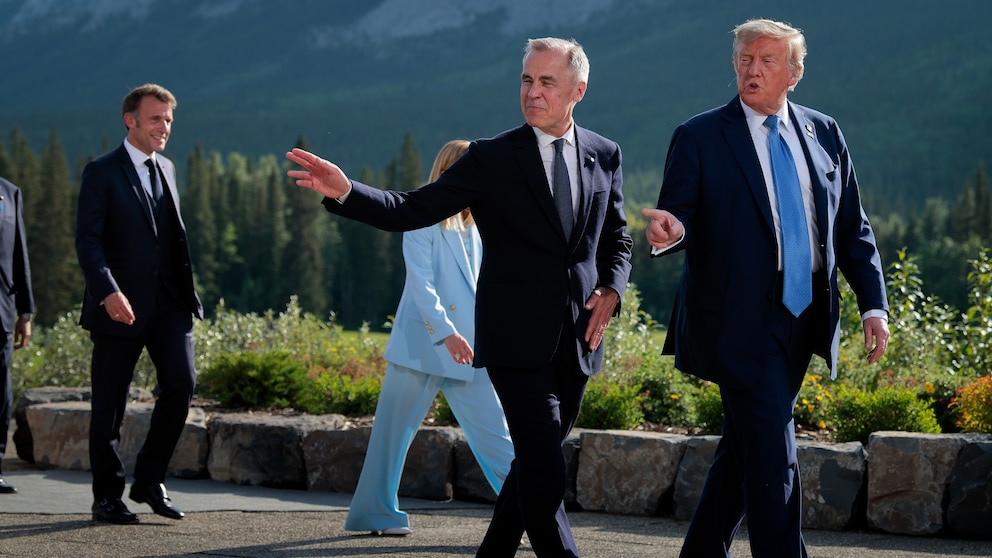
On-again, off-again trade talks between the U.S. and Canada have emerged as the latest flashpoint in fraught economic relations between the two countries since President Donald Trump took office.
Canadian Prime Minister Mark Carney said late Sunday that trade discussions had resumed after Canada set aside plans for a Digital Service Tax, which would have imposed a 3% levy on U.S. technology companies. Days earlier, Trump suspended talks over the tax. The two sides previously set a deadline of July 21 for a trade deal.
Below is a timeline of the U.S-Canada trade dispute, and where it stands now.
Nov. 25, 2024 – Less than three weeks after his election victory, Trump announced on Truth Social plans to place 25% tariffs on all imports from Canada and Mexico, citing an alleged failure to secure their respective borders with the U.S.
Jan. 20 – Trump signed a memo calling on Cabinet members to "assess the unlawful migration and fentanyl flows" from Canada, Mexico and China. Afterward, officials should "recommend appropriate trade and national security measures to resolve that emergency," the memo said.
Feb. 1 – Trump ordered 25% tariffs on goods from Mexico and Canada, as well as 10% tariffs on imports from China. The White House said the tariffs would take effect on Feb. 4.
Feb. 3 – Trump announced a one-month pause of tariffs on Canada and Mexico after reaching agreements with each country that included commitments to bolster border enforcement.
Feb. 27 – Trump affirmed plans to impose 25% tariffs on Canada and Mexico when the one-month delay expires on March 4.
March 3 – Speaking at the White House, Trump reiterated plans to move forward with a fresh round of tariffs the following day. Within minutes, the stock market tumbled. The S&P 500 closed down 1.7%, its worst trading day since December.
March 4 – Tariffs on goods from Canada, Mexico and China took effect at 12:01 a.m. ET. A near-instant trade war broke out. China and Canada each responded with retaliatory tariffs, vowing additional measures. Mexican President Claudia Sheinbaum slammed Trump's tariffs but said she would hold off on retaliatory measures until after a conversation with him.
March 5 – Trump ordered a one-month delay of auto tariffs after a request from the "Big 3" U.S. automakers: Ford, General Motors and Stellantis, the parent company of Jeep and Chrysler.
March 6 – Trump signed executive orders temporarily pausing tariffs on Canadian and Mexican goods compliant with the United States-Mexico-Canada Agreement, or USMCA, a free trade agreement.
March 9 – Canada selected new Prime Minister-elect Mark Carney. In his acceptance speech, Carney addressed Trump's tariffs on Canada and the threat posed by Trump, calling the events the "greatest crisis of our lifetimes."
March 11 – Ontario Premier Doug Ford threatened to impose a 25% surcharge on electricity from the province sent to U.S. customers in response to earlier U.S. tariffs on Canadian goods. In response, Trump threatened to double steel and aluminum tariffs specifically for Canada.
March 12 – The U.S. imposed 25% tariffs on all steel and aluminum imports. Trump opted against doubling the levy for Canada after an agreement was reached and Ford pulled back his threat to impose the electricity surcharge. Canada announced retaliatory tariffs on about $20.7 billion in U.S. goods.
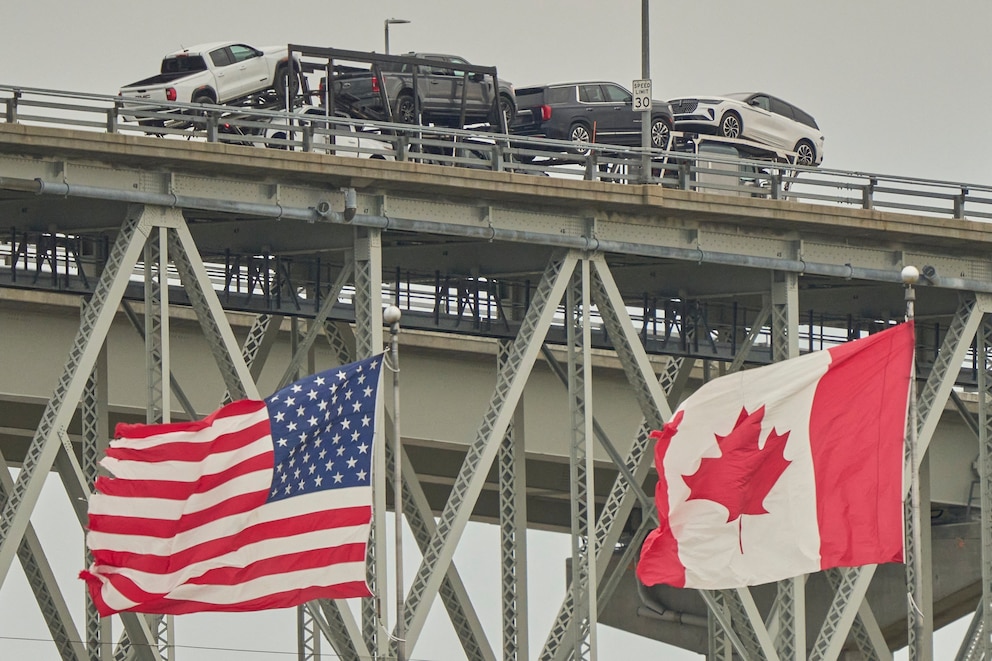
April 2 – Trump announces “Liberation Day” tariffs, but Canada is excluded from a steep set of so-called reciprocal tariffs as well as a universal 10% tariff on nearly all imports.
April 3 – Tariffs of 25% on vehicles imported into the U.S. took effect. Mexico and Canada make up the top two U.S. trading partners for both finished motor vehicles, accounting for nearly half of all U.S. imports, according to an analysis of data from the U.S. International Trade Commission by Cato Institute, a right-leaning think tank. Carney slammed the policy, saying it signaled the end of a “system of global trade anchored on the United States.”
April 9 – Canada slapped 25% retaliatory tariffs on non-USMCA compliant vehicles from the U.S.
April 15 – In an effort to ease tariff-related business impacts, Canada issued a six-month pause on levies for U.S. goods that are used in Canadian manufacturing, processing and food and beverage packaging, as well as those used for public health and national security initiatives.
April 28 – Liberals won the most seats in Canadian parliament, cementing the party’s hold on power and Carney’s role as prime minister. In a social media post early in the day, Trump suggested that Canadians should vote for him in order for Canada to become the 51st state.
May 6 – Carney visited Trump in the Oval Office, telling him Canada is "not for sale" after Trump repeated his assertion it should become the 51st state.
May 28 – Two separate federal courts invalidated some of Trump’s steepest tariffs, including 25% tariffs on Canadian goods. The rulings centered on Trump's unprecedented invocation of the International Economic Emergency Powers Act as a legal justification for levies.
May 29 – A federal appeals court moved to temporarily reinstate the tariffs outlawed a day earlier.
June 2 – Trump ratcheted up a tax on all foreign steel and aluminum from 25% to 50%.
June 16 – At the G7 summit in Alberta, Canada, Carney and Trump said the U.S. and Canada would reach a trade deal within 30 days.
June 27 – Trump said he would suspend the U.S.-Canada trade talks as a result of Canada’s plans to move forward with a tax on U.S. technology companies.
June 29 – Carney said trade talks between the U.S. and Canada had resumed after Canada retracted its plan to tax tech firms.