What does Trump mean by 'nuclear testing?'
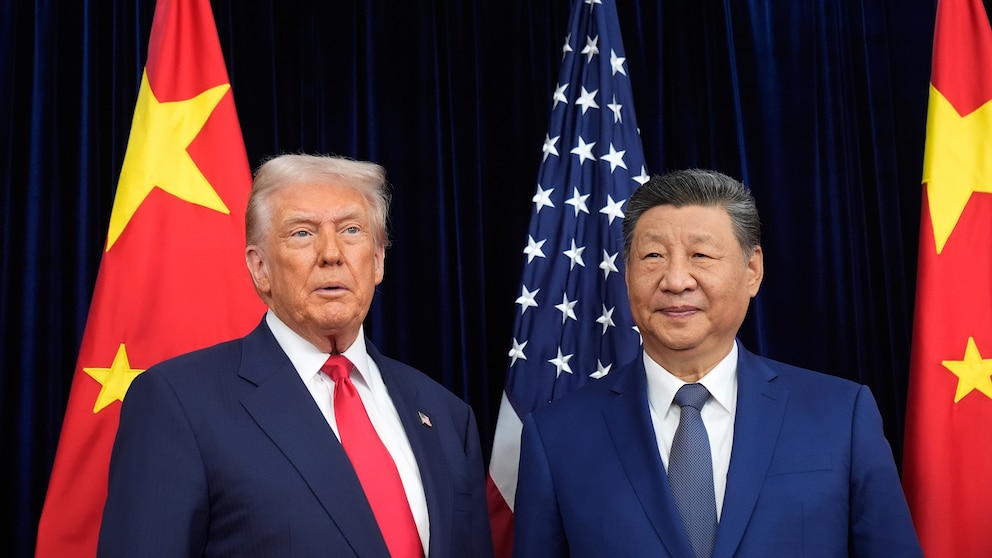
President Donald Trump raised questions Wednesday night about a decades-old U.S. prohibition on testing its nuclear weapons by detonating them, a prospect which experts say is dangerous to populations and would open a door for adversaries to test and sharpen their most powerful weapons.
Minutes before a meeting with Chinese President Xi Jinping, Trump posted on his social media platform that he "instructed the Department of War to start testing our Nuclear Weapons on an equal basis."
"That process will begin immediately," the president added.
Interpreting the president social media comments
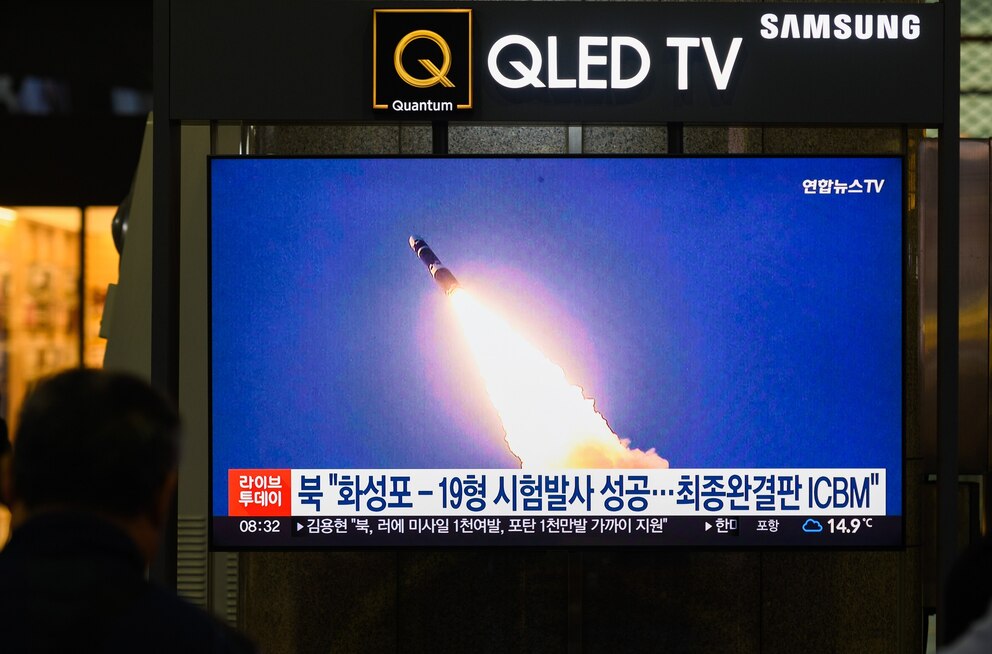
The White House would not clarify whether Trump referred to explosive testing of nuclear weapons -- which only North Korea has undertaken in the 21st century -- or to the testing of platforms that could deliver a nuclear weapon, which is routine.
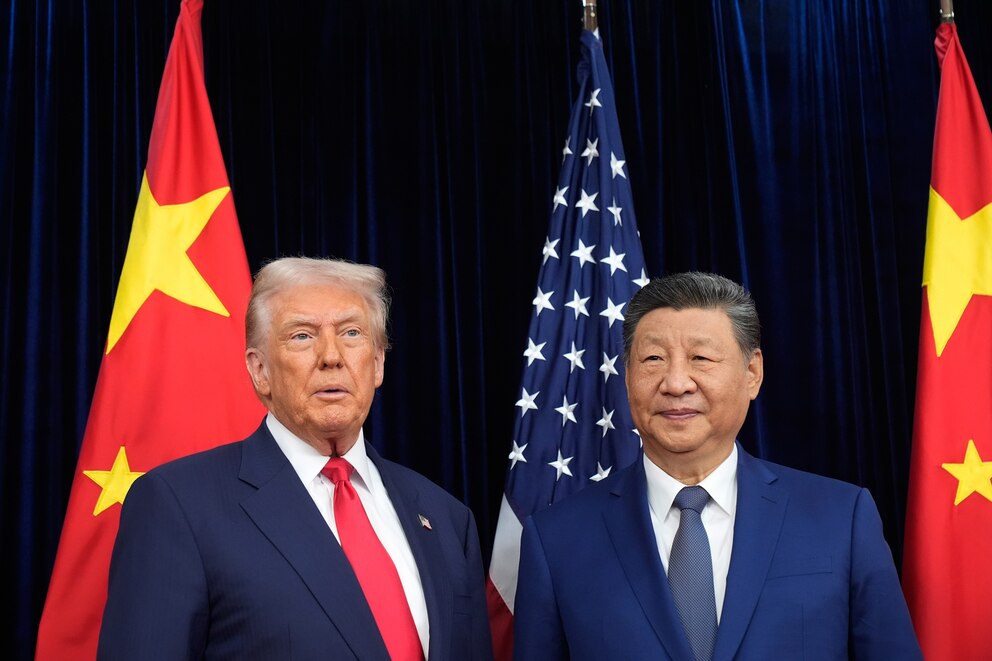
Vice President JD Vance, asked Thursday about what Trump meant, said the president’s social media post "speaks for itself."
“We have a big arsenal ... Sometimes you've got to test it to make sure that it's functioning and working properly," Vance said.
Vice Adm. Richard Correll, in his confirmation hearing Thursday to be commander of U.S. Strategic Command that oversees the combat deployment of nuclear weapons, emphasized the president's reference to testing on an "equal basis."
"I wouldn’t presume the president’s words meant nuclear testing," Correll said, pointing to the president's reference to testing on an "equal basis."
"Neither China nor Russia has conducted a nuclear explosive test. So I'm not reading anything into it or reading anything out," he said, implying that the U.S. would not look to thaw a 30-year freeze on the nuclear test explosions.
Pressed by ABC News about the post, however, the White House would only say it was "potentially" the case that Trump was referring to testing that fits within current norms.
Nuclear control consensus 'at an inflection point'
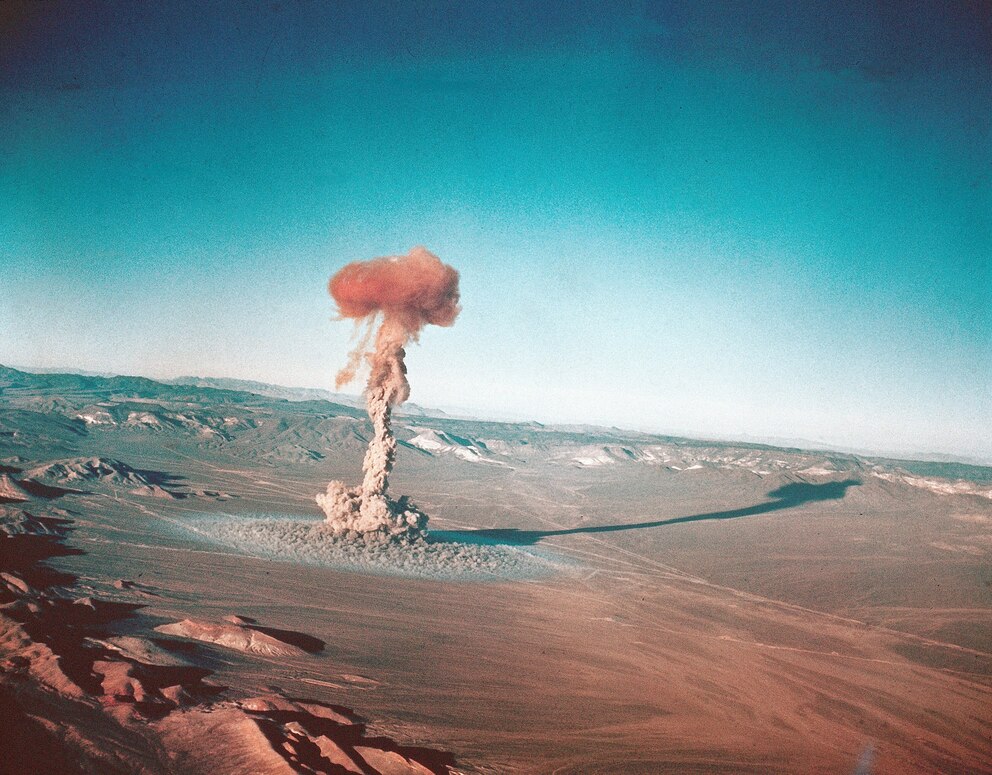
The U.S. last tested a nuclear weapon in 1992 before President George H.W. Bush signed a ban on nuclear testing -- including under the ground. The U.S. and Russia are both signatories to the Comprehensive Nuclear-Test Ban Treaty of 1996, which banned all test explosions.
But the treaty is not in force because it did not gather enough countries to ratify it, including the U.S. and Russia. Still, a rejection of nuclear explosives has taken hold as a norm.
Experts say the U.S. has worked as a part of a global consensus combatting the proliferation of nuclear weapons -- a key pillar of which is a commitment not to explode nuclear weapons as a part of testing.
"The nonproliferation regime is at an inflection point," said Kelsey Davenport, director for nonproliferation policy at the Arms Control Association.
"If any state tests at this point, it could open the door for other countries to see a path forward to developing a viable nuclear deterrent, particularly if a state that tests [has] signed the Comprehensive Nuclear Test Ban Treaty," she said.
That "would undercut the long-held norm against nuclear testing that has bound every state except North Korea," Davenport said.
Who wins if nuclear testing returns?
It wasn't immediately clear what prompted Trump to signal a policy turn on nuclear testing. He recently called Russian military tests of potentially nuclear-capable arms "inappropriate," noting aloud the location of U.S. nuclear capabilities near Russia.
In response to Trump's latest comment, the Kremlin said its exercises in the last week were routine and warned that Russia would follow suit if the U.S. resumed testing.
"That is not a nuclear test in any way," said Dmitry Peskov, spokesperson for Russian President Vladimir Putin who has increasingly rattled the nuclear saber since Russia invaded Ukraine.
"If someone deviates from the moratorium, Russia will act accordingly," Peskov said.
If the U.S. "opens the door to nuclear testing," Davenport said Russia and China would have "more opportunities to test and refine those warhead designs."
"The computing power of the U.S. National Labs really gives the United States an edge here, but resuming nuclear testing could allow states like Russia and China to catch up with the United States,” she added.
Sen. Jack Reed, the top Democrat on the Armed Services Committee, said on Capitol Hill Thursday he would take the president’s comments "at face value" to mean "nuclear explosive testing.”
Reed noted that the U.S. conducted over a thousand nuclear tests in the Cold War era -- hundreds more than Russia and dwarfing China's 47 total tests. Those decades of testing yielded "sophisticated modeling codes" that allow the U.S. to maintain its capabilities and test them via supercomputers.
The global moratorium on testing "locked in a technical advantage for the United States," Davenport said. "And that's one of the reasons why it would be foolish for Trump to reopen the door to nuclear testing, because it could allow other states to catch up."