Will US inflation get worse if Russia defaults on its debt?
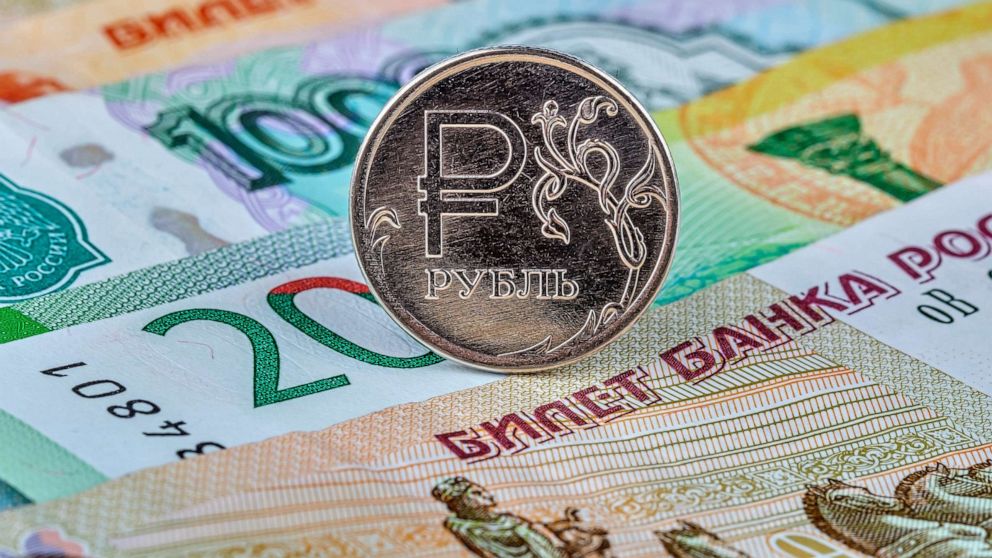
While Russia’s attack on Ukraine has many serious humanitarian consequences, there are also financial ones.
Russia has collectively borrowed approximately $480 billion; some of that is sovereign debt – what the Russian government has borrowed either from Russian investors in rubles or from other investors from around the world, in other currencies including the dollar, the euro, the yuan, etc. Some of that debt is corporate debt – what Russian companies have borrowed to raise money.
When Western investors think of a potential Russian debt default, they are focused on a very small percentage: about $20 billion.
Distressed debt investors such as Hans Humes, CEO of Greylock Capital, emphasize that the amount is small and that an initial default is already widely expected. If Russia were to default on some or all of its debt, there would probably be greater global market volatility on the news, but longer term, the greatest risks to the global economy and the U.S. economy are "the unintended consequences of sanctions placed against Russia and the resulting supply chain issues," he said.
“U.S. inflation is not going to be affected by a default in Russia. What is going to affect inflation in the U.S. are the sanctions with the overlay of supply chain issues,” Humes explained.
To some investors’ surprise, Russia made its first interest payments on dollar-denominated debt earlier this week. As experts point out, this is the first page in the first chapter of a long book.
Even in non-war times, a country defaulting on its debt is a process-heavy event; there are intense conversions between the borrower and the lenders and potential suits and countersuits are usually filed in the country where most of the bonds have been issued. Usually, some sort of compromise in price can be found. Right now, most of Russia’s debt is trading between $.05 and $.25 on the dollar, according to Charlie Robertson, chief global economist at Renaissance Capital.
In war times, there are myriad extra wrinkles. Due to the sanctions the West has placed against Russia, the country is isolated from most of the global banking system. The U.S. Treasury has offered Russia a loophole to pay its dollar-denominated debt until the end of May; it is unclear what happens after that.
There are also certain debt contracts that Russia must pay in either dollars or euros; some investors think that Russia may pay in rubles, while playing the victim and playing up the fact that it is locked out of the Western banking system. It is true that two thirds of Russia’s $630 billion in reserves has been frozen by the West, but if Russia were to pay in rubles for certain bond contracts, an automatic default would be triggered. As Jay Newman recently wrote recently in The Wall Street Journal, "If Putin owes you money, good luck collecting it."
Will a potential Russian debt default affect the average American’s 401K retirement plan? The consensus answer is “NO.”
The American banks that have Russian debt in their portfolios have very small amounts. The bonds are in specialty emerging markets funds and they are a small part of those funds. Additionally, American banks are reducing even these small amounts of exposure to comply with sanctions and avoid unnecessary risk.
System-wide, there are also serious stop gaps, some of which were put in place after Russia defaulted on internal, ruble-denominated debt in 1998 leaving hedge fund Long Term Capital Management exposed and sending shockwaves through the global market. The U.S. banking system has an additional number of guard rails in place as a result of the 2007-2009 credit crisis. In theory, the American banking system is at one of its most stable points in history.
In theory, a Russian debt default would have the most serious consequences on Russia itself; the ruble has lost more than half of its value since the war began. Russia’s GDP will drop -15% this year, according to Robin Brooks, chief economist at The Institute of International Finance, and a default on some or all debt would make that number worse.
The real worry for the global economy is not Russia’s debt levels or when or how it pays some or all of that debt back: it's centered around sanctions. Pre-war, Russia and Ukraine exported about 25% of the world’s wheat. Russia and Ukraine were the top five exporters of many kinds of seeds and cereals, from barley to corn to sunflowers; humans and animals consume these products in different forms. Russia is also the biggest exporter of fertilizer, so farming all around the world becomes more expensive without fertilizer ingredients coming out of Russia, according to RBC Capital Markets.
Additionally, Russia is one of the world’s largest energy exporters, which implies even higher food prices, among other costs, since truck drivers use diesel to transport groceries.