US reimposes Iran sanctions, setting up showdown with world that rejects them
President Donald Trump signed an executive order Monday, authorizing new sanctions on Iranian officials and entities, and those that buy or sell arms to them, because of the "snapped back" United Nations sanctions.
The rest of the world does not consider those U.N. sanctions in place, but part of Trump's cabinet assembled Monday to assert that the U.S. will enforce them.
"We don't need a cheering section to validate our moral compass. We do not find comfort based solely on numbers, particularly when the majority has found themselves in an uncomfortable position of underwriting terrorism, chaos and conflict. We refuse to be members of that club," said U.S. Ambassador to the U.N. Kelly Craft.
The move has been rejected by the United Nations and U.S. allies, like France, Germany and the United Kingdom, and adversaries, such as China and Russia -- who all remain part of the Iran nuclear deal -- setting up a showdown for when a U.N. embargo on conventional weapons expires next month.
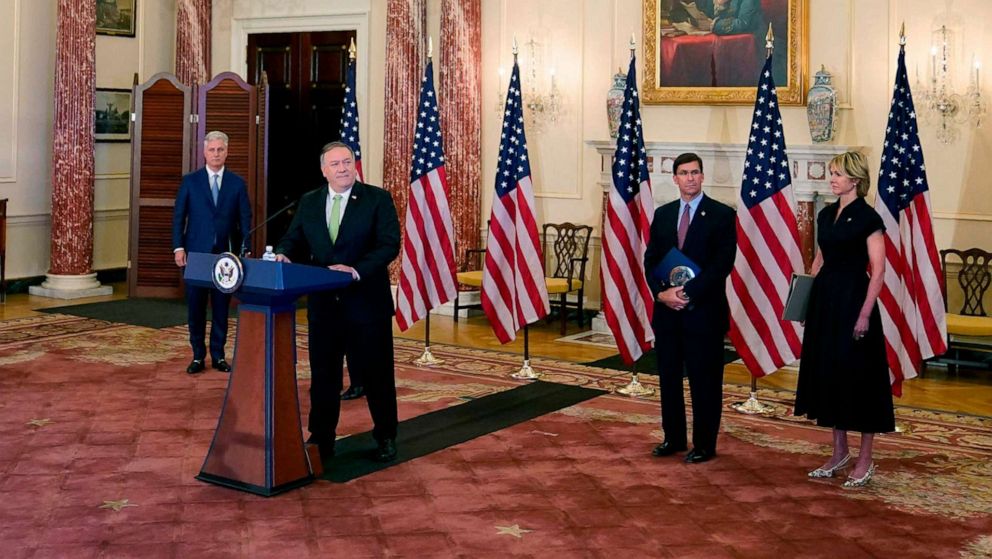
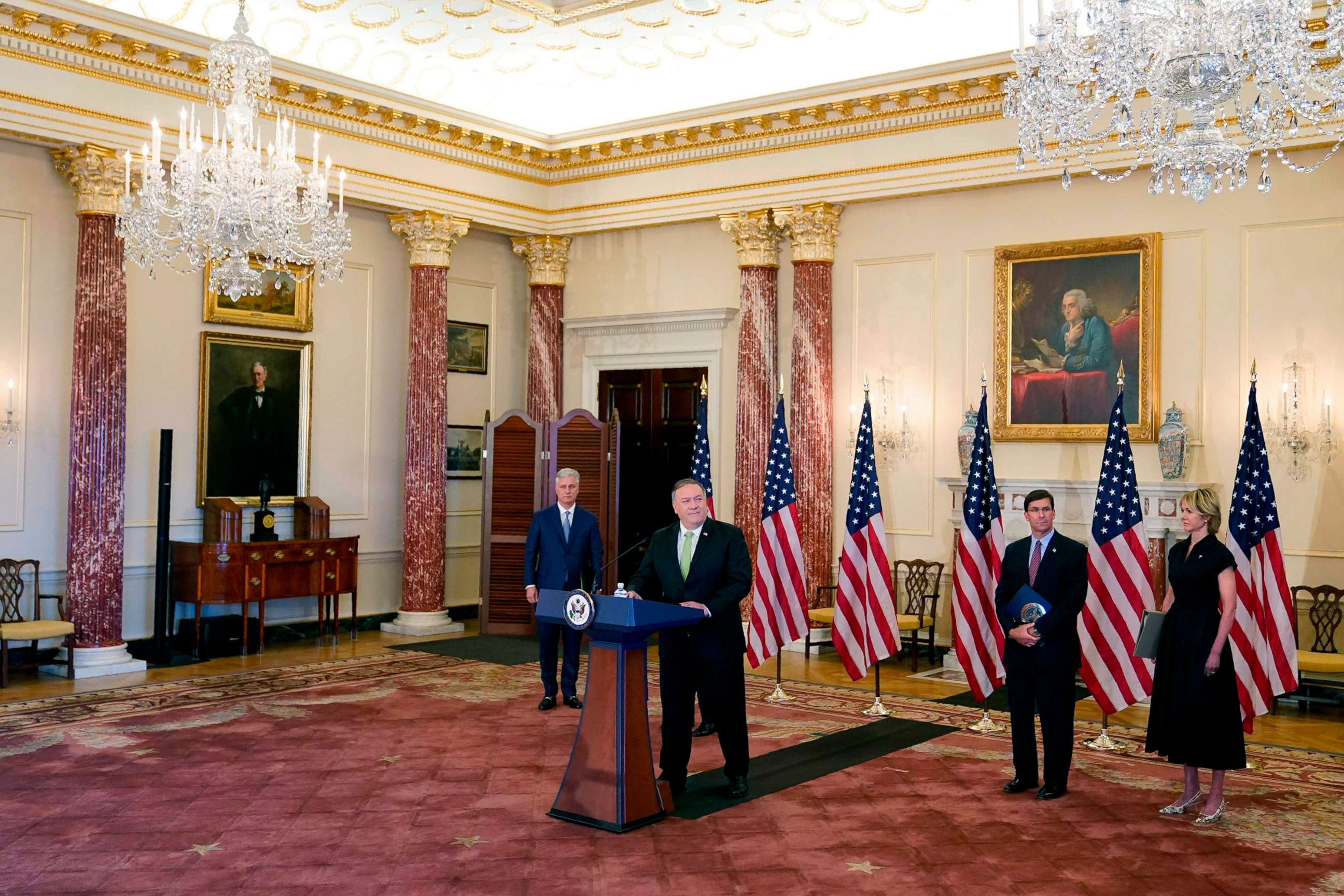
In a show of force, Craft was joined by Secretary of State Mike Pompeo, Treasury Secretary Steven Mnuchin, Defense Secretary Mark Esper, Commerce Secretary Wilbur Ross and national security adviser Robert O'Brien at the State Department to unveil the new sanctions.
"The country that's isolated today is not the United States, but rather Iran. By these actions, we have made it very clear that every member state in the United Nations has a responsibility to enforce these sanctions," Pompeo said, including U.S. allies. The European Union has its own arms embargo against Iran, so its members are unlikely to face the new U.S. penalties.
Instead, Monday's announcement targeted 27 Iranian officials and entities, as well as Venezuela's Nicolas Maduro -- already heavily sanctioned. The U.N. arms embargo doesn't lift until Oct. 18, when Russian and Chinese companies, among others, are expected to start conventional arms sales with Tehran.
Laying the groundwork for sanctioning those pending sales, the Trump administration announced sanctions on Iran's defense ministry and its Defense Industries Organization, a government agency that procures weapons for its armed forces, and its director.
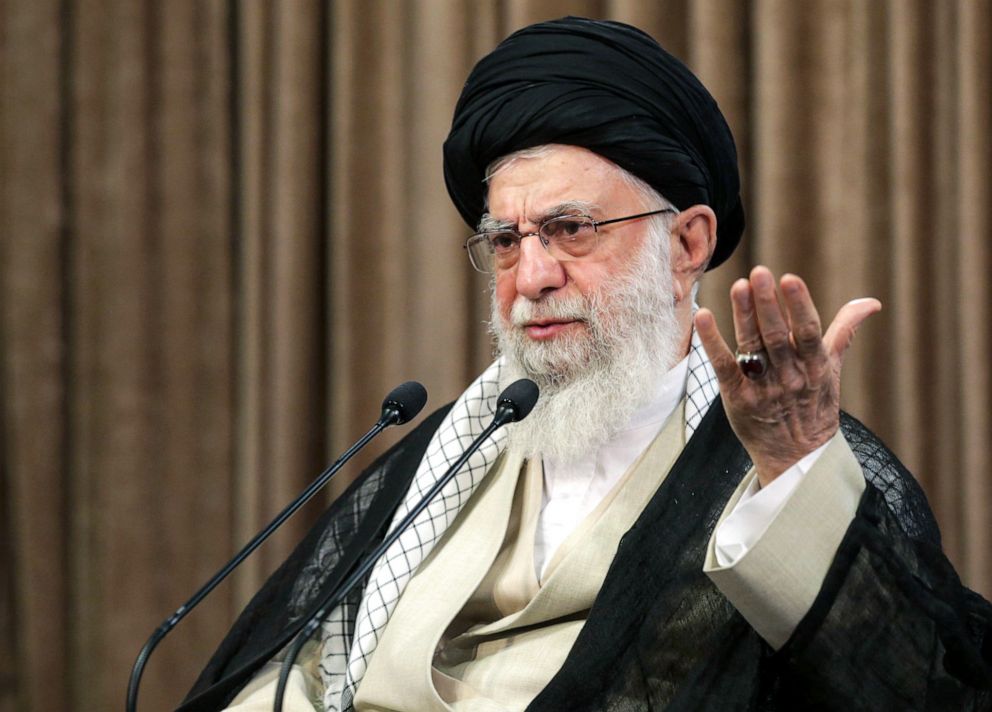
The U.S. Treasury sanctioned five new officials, a manufacturing firm, and its subsidiary for their reported role in Iran's ballistic missile program.
Pompeo said the sanctions will remain "until Iran comes to the table," which the Iranian government says it has no intention of doing.
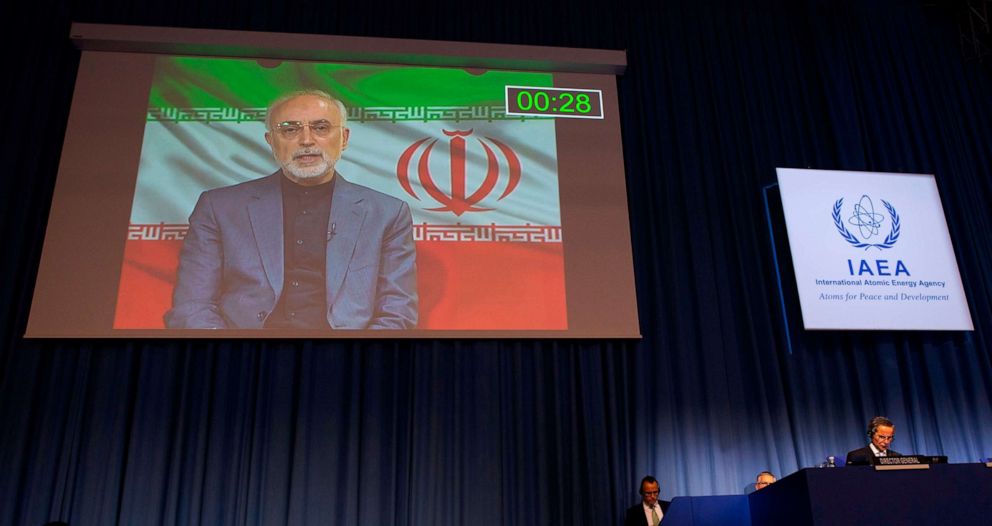
Iranian Foreign Minister Mohammad Javad Zarif dismissed the new sanctions as "nothing new" during an event with the Council on Foreign Relations Monday.
"I don't think that's anything new, and I don't think it will have any more significant impact on on Iran," he said, despite the deep impact sanctions have had on the Iranian economy in the last two and a half years.
Under existing authorities, the State and Treasury Departments also sanctioned six officials and three state-owned firms for their role in Iran's nuclear program, while the Commerce Department is also blacklisting five Iranian scientists from receiving U.S. exports.
Reuters reported Sunday that the Trump administration believes Iran has enough enriched uranium to create a nuclear bomb by year's end. Iran has violated its commitments on how much uranium it can enrich and at what level after the U.S. withdrew from the nuclear deal and reimposed sanctions -- although it's still below the 90% threshold needed for a bomb.
"The State Department's 'maximum pressure' campaign has not pressured Iran toward diplomacy and a new agreement. It has pressured them toward an increase in malign activity in the region and toward the development of a nuclear weapon," said Mick Mulroy, Trump's former top Pentagon official for the Middle East and a retired CIA officer who's now an ABC News contributor.
Pompeo declined to comment on the report, but he argued the decision to withdraw from the nuclear deal has made the U.S. safer by blocking funds to the Iranian government, notwithstanding their growing enriched uranium stockpile.
With fears that Iranian and U.S. forces in the region could clash in the coming weeks before the November election, the defense secretary said U.S. forces are at a "high state of alert" and maintain "preparedness to deal with anything."
"While the October deadline for the arms embargo looms large, a more important date is the November U.S. election, which will decide the fate of (Trump's) max pressure" campaign, said Behnam Ben Taleblu, senior fellow at the Foundation for Defense of Democracies.
ABC News' Matthew Seyler contributed to this report.