Webb telescope discovers stars forming in 'toe beans' of Cat's Paw Nebula

The James Webb Space Telescope has made yet another stunning discovery to round out three years of space exploration.
This time, the most powerful telescope ever launched into space uncovered a cluster of forming stars within the "toe beans" of the Cat's Paw Nebula.
The Cat's Paw Nebula, also known as NGC 6334, is located in the constellation Scorpius about 4,000 light-years away. It is a "massive" emission nebula and star-forming region, according to NASA. It is named for its large, round features that create the impression of a feline footprint.
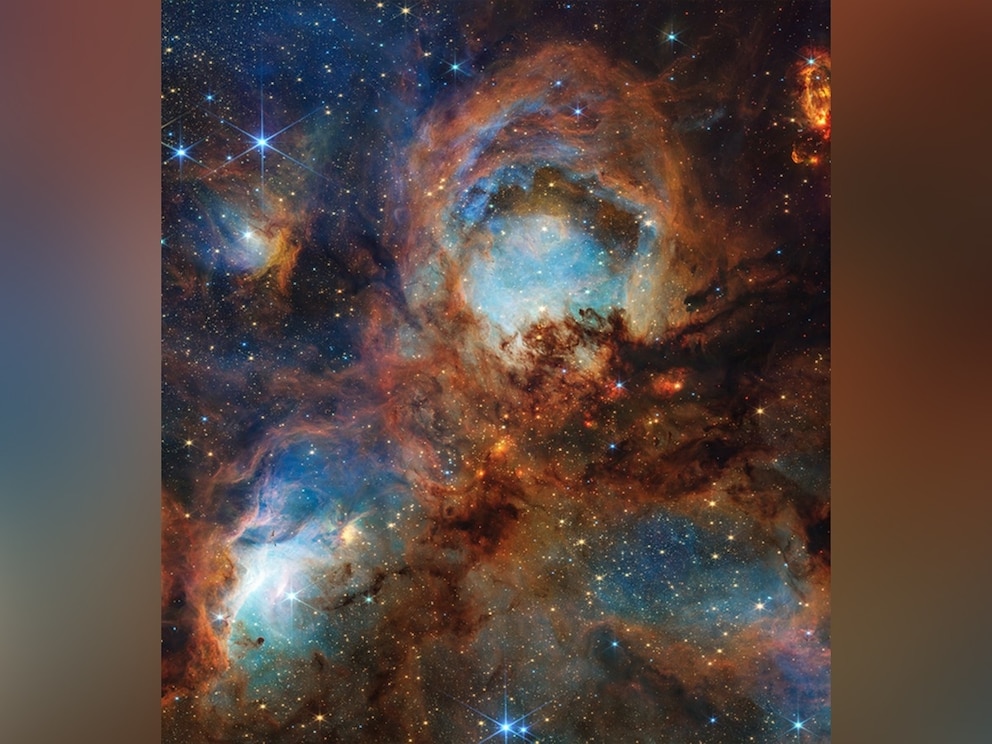
Within one of the "toe beans" of the feline footprint exists a subset of "mini toe bean-reminiscent" structures composed of gas, dust and young stars, according to NASA. The Webb telescope's NIRCam (Near-Infrared Camera) was able to capture a clear image of the forming stars.
"Three years into its mission, Webb continues to deliver on its design – revealing previously hidden aspects of the universe, from the star formation process to some of the earliest galaxies," said Shawn Domagal-Goldman, acting director of the Astrophysics Division at NASA Headquarters in Washington, in a statement.
The progression from a large molecular cloud to massive stars entails multiple steps, which are not yet well understood by astronomers, according to NASA. The Cat’s Paw Nebula enables astronomers to study the turbulent cloud-to-star process in great detail.
The process of star formation is somewhat fleeting, according to NASA. As massive young stars carve away at nearby gas and dust, their bright starlight produces a bright nebulous glow, represented in the image in blue.
The "disruptive" young stars have a brief but important role in the region's larger story, according to NASA.
In the photo, the orange-brown tiers represent stardust, while small patches represent seemingly vacant zones that indicate the presence of dense foreground filaments of dust that are home to still-forming stars, astronomers said.
The small, fiery red clumps seen scattered amongst the brown dust toward the center of the photo mark regions where massive star formation is underway, according to NASA.
Some massive blue-white stars, such as the one seen in the lower left toe bean, appear more sharply solved than others because any intervening material between the star and the telescope was dissipated by stellar radiation, the space agency said.
An "eye-catching" aspect is the bright, red-orange oval at the top right of the photo, which is likely dense area just beginning its star-formation process, implied by the low count of background stars, according to NASA.
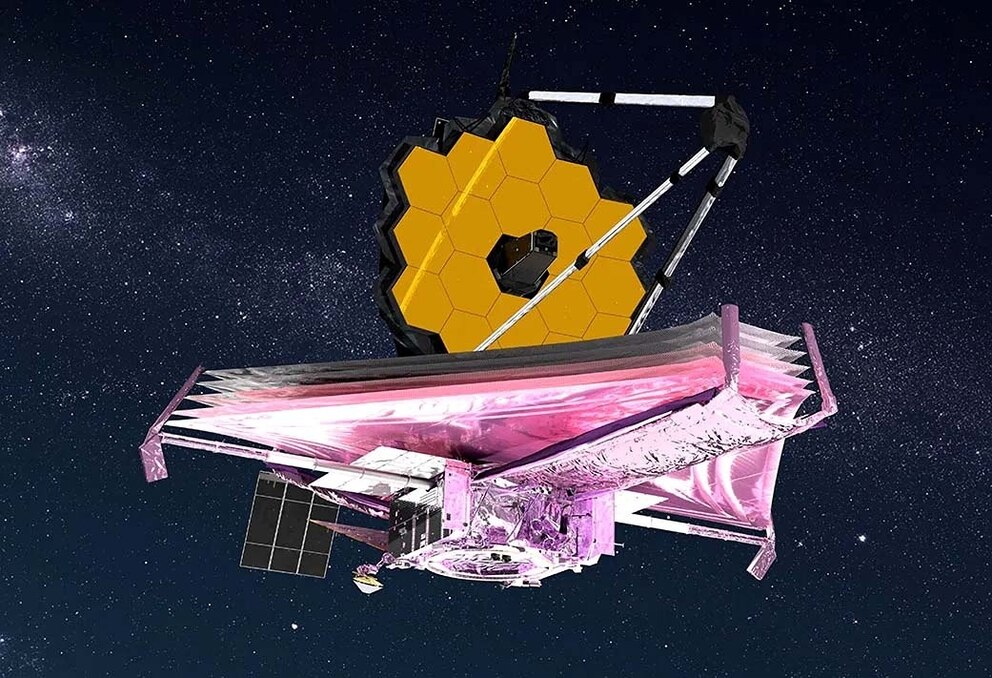
The Webb telescope launched in December 2021 and began scientific operations in July 2022, according to NASA. With its sharp resolution, it has the capability to peer farther into space than ever before and continues to reveal parts of the universe that were previously unknown by using infrared light observations.
The telescope "repeatedly" breaks its own records while also uncovering the unknowns of the universe, Domagal-Goldman said.
"Whether it’s following up on the mysteries of dark matter with NASA’s nearly complete Nancy Grace Roman Space Telescope, or narrowing our search for life to Earth-like planets with the Habitable Worlds Observatory, the questions Webb has raised are just as exciting as the answers it’s giving us," Domagal-Goldman said.