White House opioid commission asks Trump to declare 'national emergency' to combat overdoses
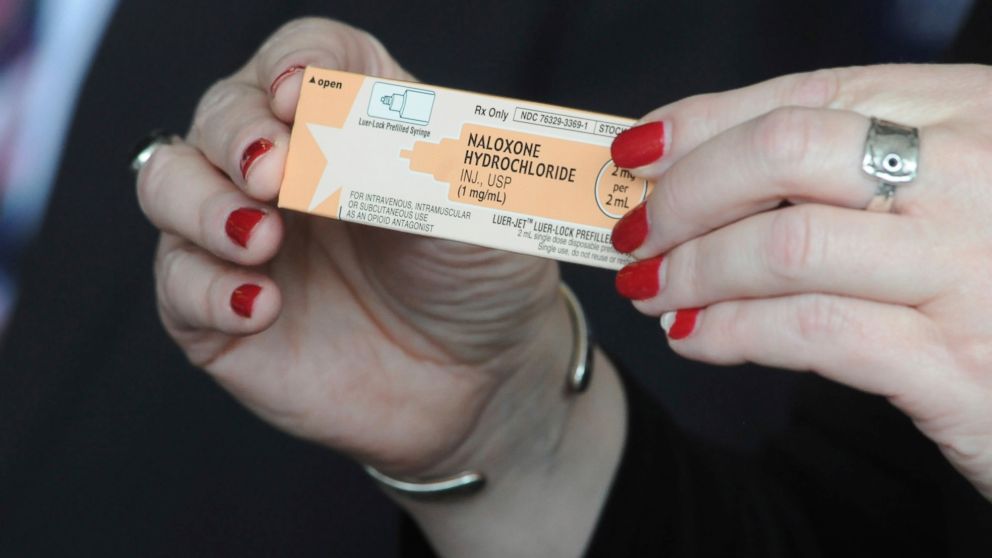
— -- The White House Commission on Combating Drug Addiction and the Opioid Crisis has asked President Donald Trump to “declare a national emergency” to help fight the deadly opioid epidemic.
“The first and most urgent recommendation of this Commission is direct and completely within your control. Declare a national emergency under either the Public Health Service Act or the Stafford Act,” wrote the committee, which is led by New Jersey Governor Chris Christie, in its interim report released on Monday.
“Our nation is in a crisis,” said the report. “Our citizens are dying. We must act boldly to stop it. The opioid epidemic we are facing is unparalleled. The average American would likely be shocked to know that drug overdoses now kill more people than gun homicides and car crashes combined.”
Gov. Christie led a public conference call with the commission on Monday to discuss their findings and vote on their interim report. Governor Charlie Baker of Massachusetts was not able to join Christie, North Carolina Governor Roy Cooper, former Congressman Patrick J. Kennedy and Professor Bertha Madras, Ph.D. on the call but the members present voted unanimously to move their report forward.
The report underscores the grim toll being taken by the crisis, saying that with the 142 deaths per day blamed on opioids, "America is enduring a death toll equal to September 11th every three weeks.”
The idea quickly gained support from Sen. Joe Manchin, whose constituents have been among the hardest hit.
“When I’m on the ground in my home state of West Virginia and when I hear the stories of those struggling with opioid addiction it’s obvious our country is in crisis,” Manchin said in a statement. “Declaring a national emergency will allow the Administration and Congress to act with the immediacy that’s needed to end this epidemic.
The commission hopes that by declaring a national emergency, the federal government will be able to do things like negotiate pricing on naloxone for governmental units and grant waivers to states to increase treatment availability.
Other recommendations in the report include mandating prescriber education initiatives, equipping more members of law enforcement with naloxone, developing ways to detect fentanyl, and combating the stigma that is often associated with addiction.
One member of the commission, former congressman Patrick Kennedy, has been outspoken about both his struggles with addiction and his passion for removing addiction stigma.
“These diseases are really shunned and shamed by society,” said Kennedy. “And I appreciate you Gov. Christie speaking out so well on trying to address this issue of stigma which underlies all the issues as to why we got into this situation that we're in today.”
Trump established the bipartisan commission in March and charged it with finding “ways to combat and treat the scourge of drug abuse, addiction, and the opioid crisis.”
Out on the campaign trail, then-candidate Trump frequently remarked on the epidemic that has crippled communities across the country.
“As I campaign across this country, I hear so many stories and pleas, from women especially, about drug addiction and opioid use,” said Trump at a rally in Chester Township, Pennsylvania. “Even the best-laid plans cannot always protect our youth, and increasingly, many adults, from the scourge of drugs. We lose thousands of our fellow Americans every year to opioid use. I will stop the drug inflow from our borders,” vowed Trump.
The commission has been criticized for missing deadlines for key reports. The interim report release on Monday came over a month late after missing two self-mandated deadlines.
Before the commission releases their final report, they plan on traveling across the country to meet with communities and learn from successful treatment programs.
“We're going to travel to meet with treatments across the country to try to replicate those on a national scale,” said Christie.
Their final report is scheduled to be released “later in the Fall of 2017.”
“I'm convinced that the president is committed to this, I look forward to his and his administrations reaction to the draft report,” said Christie. “And I look forward to continuing to work with the members of the commission to make sure that we're giving the president and his administration the very best information we can to deal with this crisis.”