This Is What Happens to Your Body When You Run a Marathon
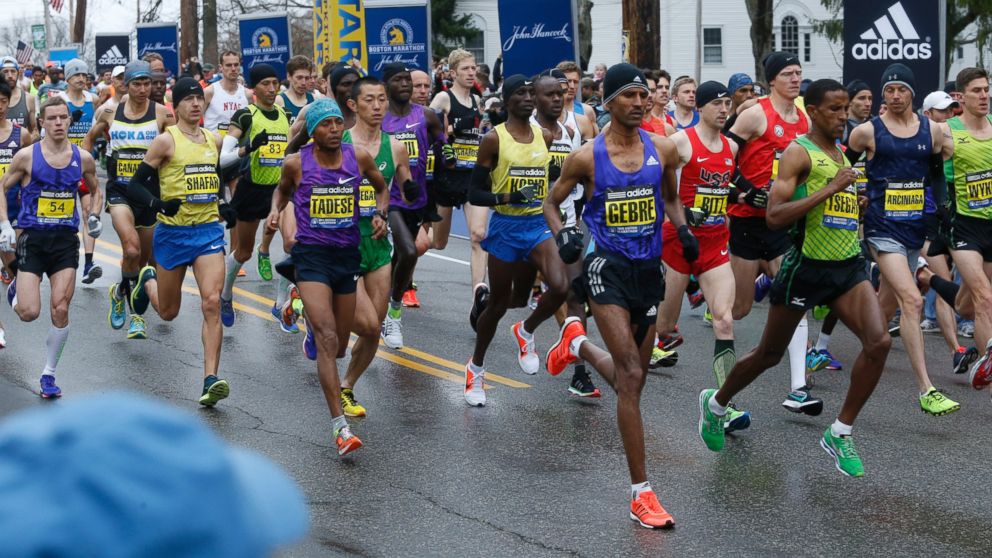
— -- The 35,000 runners who line up for today’s Boston Marathon can expect their bodies to take quite a beating from the 26.2-mile endurance test.
"Everyone has pain," said Dr. Lewis G. Maharam, the chairman of the International Marathon Medical Directors Association. "It's part of the deal."
Muscles take the brunt of the damage, he said.
Normally, the body only needs slow twitch muscle fibers to drive it forward. But for the marathon distance, the body recruits every single type of muscle fiber, including the fast twitch fibers normally only used for sprinting, he said. That uses up a lot of blood and almost all of the carbohydrate energy supplies stored in the muscles and blood.
“When you exhaust glycogen stores, the body’s preferred source of sugar, you start breaking down body fat and muscle protein,” he said. "That’s when you’re in danger of [hitting the wall]."
He added that can lead to psychological symptoms like confusion and disorientation.
But perhaps the hardest working muscle during a marathon is the heart, suggested Jason Karp, a Ph.D. exercise physiologist and author of "Running a Marathon for Dummies." If you’re really pushing the pace, you can get into “cardiac drift,” where there is a sharp spike in heart rate without any change in effort, breathing or calorie burn, he said.
“It's caused by a decrease in the heart’s stroke volume, the amount of blood pumped out per beat,” Karp said. “The heart compensates by beating faster.”
Runners who don’t hydrate properly will have thicker blood, placing extra stress on the kidneys, Karp noted. This can contribute to trouble regulating core temperature as the body is forced to choose between sending blood towards the working muscles or into a system of capillaries underneath the skin that act as a cooling system. And if the glycogen stores do fully deplete, the liver goes into overdrive breaking down protein to supply the body with an energy source, he said.
On the other hand, runners who drink too much are in danger of developing hyponatremia, an imbalance of electrolytes, Maharam said. High sodium concentrations in the blood can be so severe they lead to brain swelling.
“No one knows why, but hyponatremic runners lose their ability to remember numbers,” he said. “When you ask them where they live they can tell you the street but not the house number.”
The runners who make it to the finish line can expect some muscle soreness for up to a week, Maharam said.
“It’s by inflammation and microscopic muscle tears,” he added. “That same pounding can also cause joint pain and tightness in the tissues that connect bone to muscle.”
Running a marathon can compromise the immune system for several months afterwards, leaving marathoners susceptible to colds and infections. But most of the other effects will disappear after a drink of water and a good meal, Karp said.
So why do runners put their bodies through all this? Maharam said most runners he’s talked to expect some suffering but ultimately feel it’s worth it. And as one recent study in the journal Memory suggested, the pain of a marathon, like the pain of childbirth, is the kind of pain you forget.