Brain Implant Helps Paralyzed Man Control His Hand Again Using Just His Thoughts
— -- An Ohio man who was paralyzed from the mid-torso down after a diving accident six years ago has now regained "functional movement" of his right hand, according to results of a clinical study published online today in the journal "Nature."
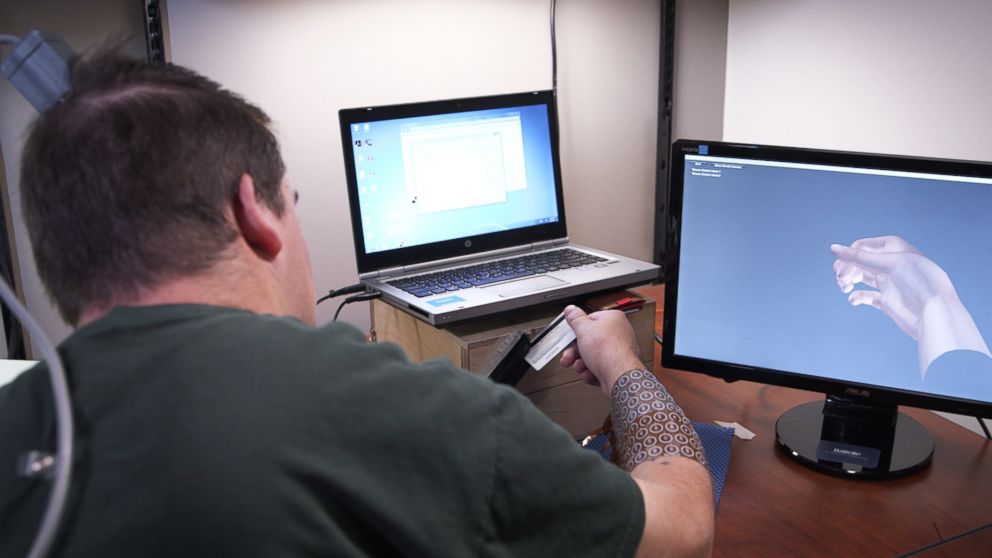
Ian Burkhart, 24, can now swipe a credit card, stir coffee and even play a video game similar to "Guitar Hero" -- all thanks to unprecedented "neural bypass technology" that essentially intercepts Burkhart's "thoughts and brain signals" and "bypasses his injured spinal cord," according to a statement from Batelle, the company that invented the experimental device called NeuroLife in partnership with the Ohio State University Wexner Medical Center.
A pea-sized microchip implanted inside Burkhart's brain picks up his brain waves, which are then decoded by computer software and routed to a sleeve on his hand that stimulates certain muscles on his arm and hand, the company said.
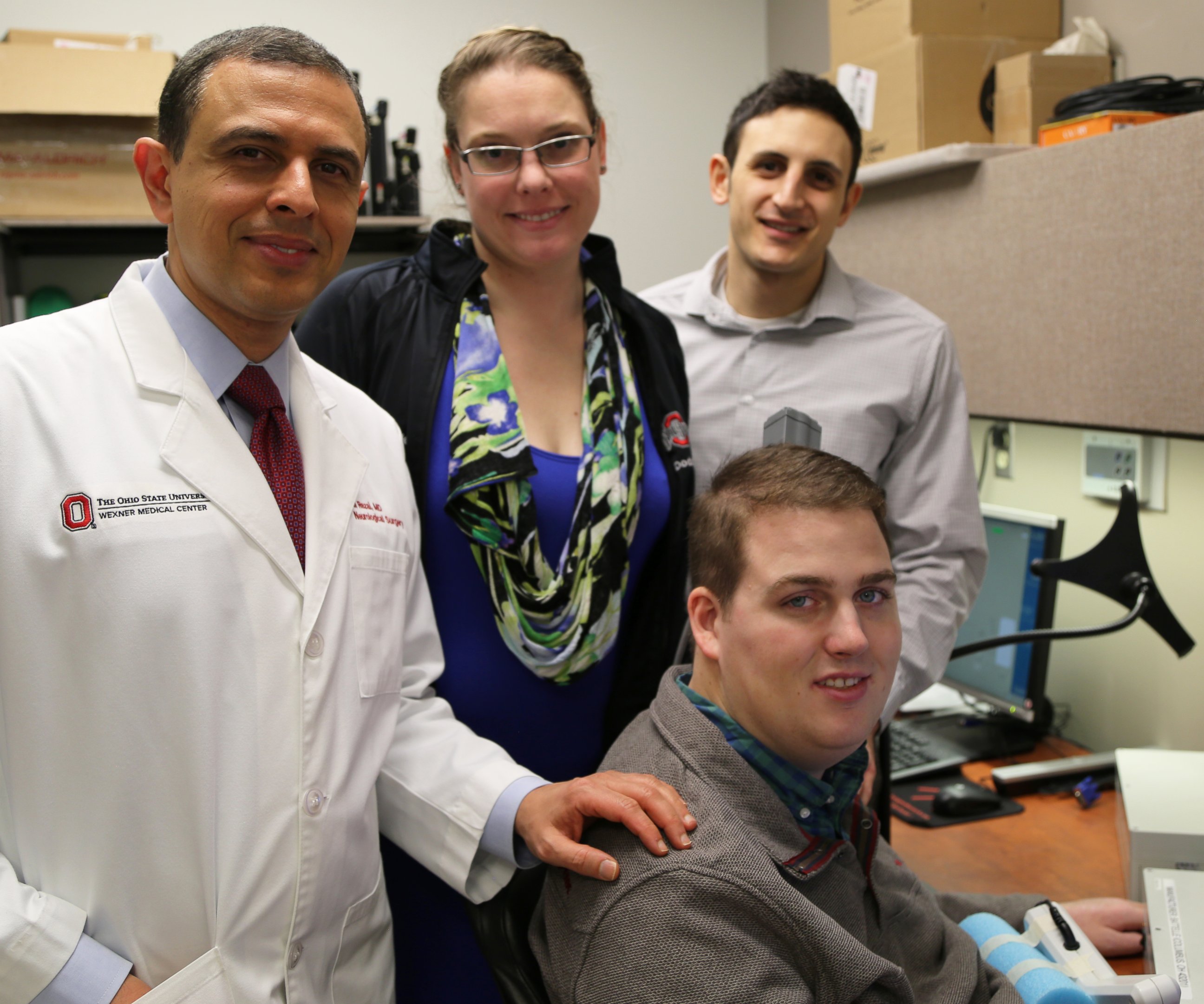
"We’re showing for the first time that a quadriplegic patient is able to improve his level of motor function and hand movements," Dr. Ali Rezai, a co-author of the study and a neurosurgeon at Ohio State’s Wexner Medical Center, said in a statement.
Burkhart actually first demonstrated the technology successfully in June 2014 when he was able to "open and close his hand simply by thinking about it," but the new study details the more "sophisticated movements" he's now capable of, thanks to technical improvements.
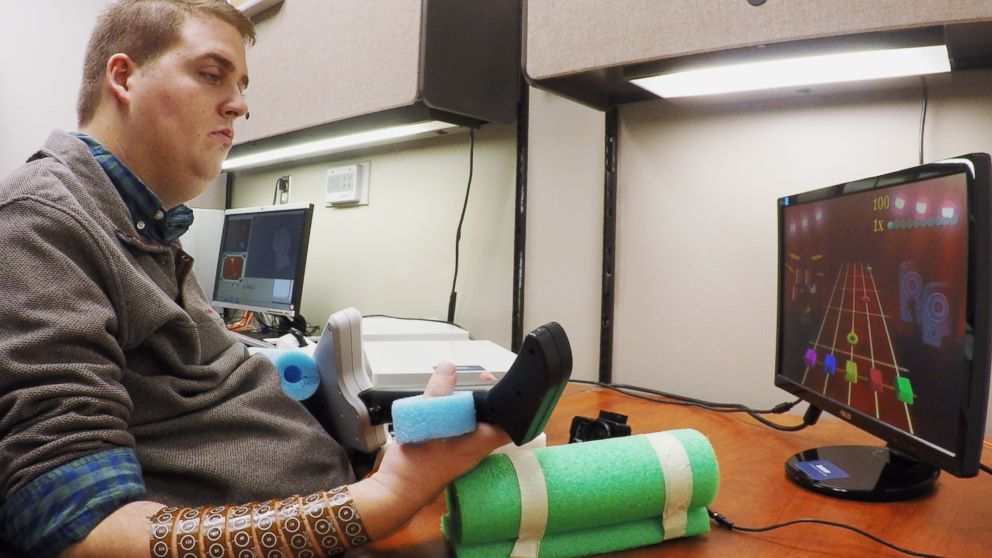
The 24-year-old can now pick up a spoon, hold a phone to his ear and do other finer-motor tasks with his hands and fingers "that really help give him the independence a lot of paralyzed people are looking for," according to Nick Annetta, electrical engineering task lead for Battelle’s team on the project.
"We've talked to a lot of patients in his condition, and of all the things they want back, most say it's not necessarily to be able to walk again but actually to use their hands again," Annetta told ABC News today.
Annetta said that the technology Burkhart is using is the first of its kind to reanimate the patient's actual muscle rather than a robotic limb.
But despite the "huge advancements" that Burkhart and the neural bypass tech have made in the past few years, it still might be a while before the tech gets approved by the U.S. Food and Drug Administration as a product that people with spinal cord injuries can obtain and take home, Annetta said.
He explained that since the device isn't developed enough nor approved to take home yet for studies, Burkhart can only use it during studies at the clinic, where he comes in twice a week for a few hours.
Despite this fact, Burkhart wanted to participate and give his time to this study because he felt it was his "obligation to society," he said in a statement.
“Participating in this research has changed me in the sense that I have a lot more hope for the future now,” Burkhart said. "I always did have a certain level of hope, but now I know, first-hand, that there are going to be improvements in science and technology that will make my life better.”