Why the CDC recommends that everyone over the age of 6 months get the updated COVID vaccine

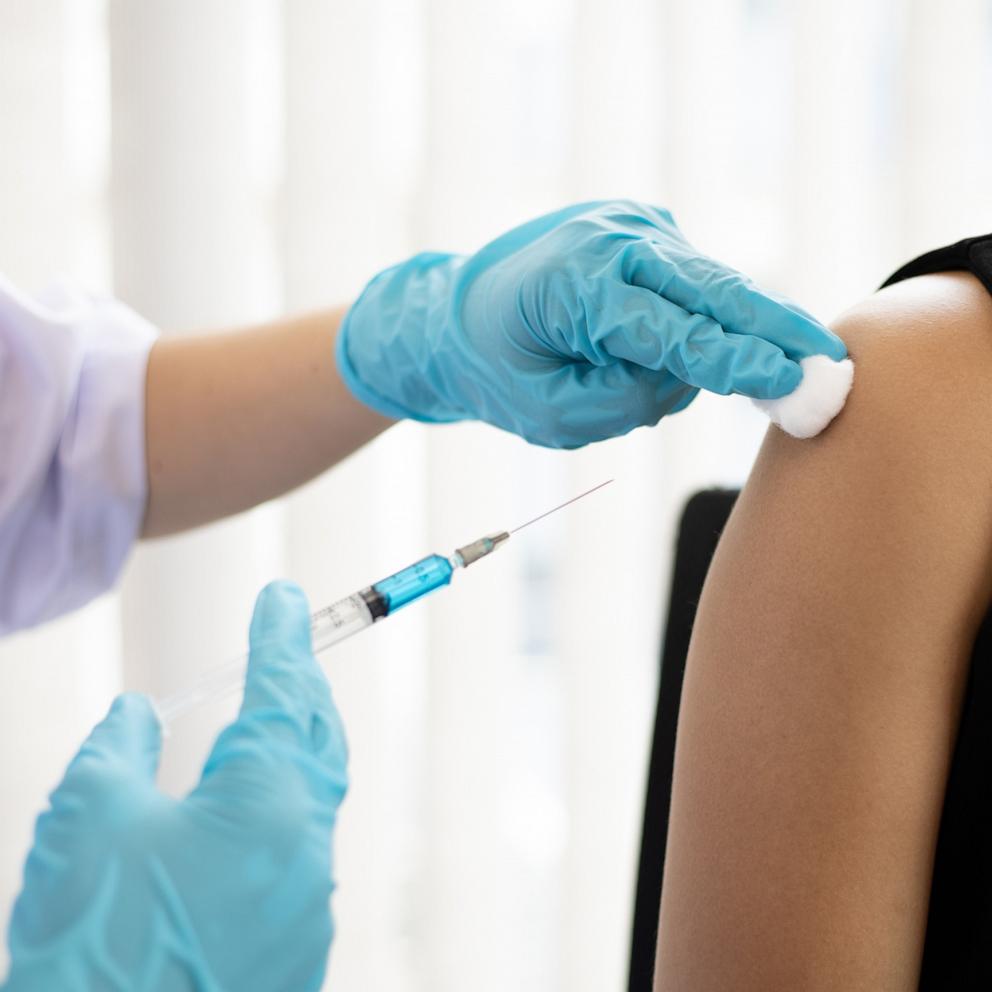
An independent panel of advisers at the Centers for Disease Control and Prevention is recommending that everyone over the age of 6 months get the updated COVID vaccine this fall.
"Even children and adults with no underlying conditions can still experience severe illness due to COVID," said Dr. Sandra Fryhofer, an adjunct associate professor of medicine at the Emory University School of Medicine.
Most infectious disease experts agree with the recommendations made by the federal health agency.
"I agree with the CDC recommendations because it is a simple recommendation to follow, and I believe that the benefit of the vaccine outweighs any risk at every age level," Dr. Todd Ellerin, chief of infectious diseases at South Shore Health, told ABC News.
"It’s consistent and harmonized with the flu shot and I think that really important. We need to emphasize that,” he added.
Dr. Donald Alcendor, a professor of microbiology, immunology and physiology at Vanderbilt University, said the sweeping recommendation "was the right thing to do."
"If you start to restrict recommendations to certain age groups or vulnerabilities and leave younger people out of it, you forget that young people can spread COVID and can get older people sick," he told ABC News.
Some of the CDC’s advisers pointed out that only about 20% of American adults received the COVID bivalent booster last fall. However, around 45% of those over the age of 65 – those most at risk – got the shot.
"It’s clear that the vaccines are most important for the elderly in the extremes of age, those with comorbidities like heart disease, diabetes, and the immune compromised," Ellerin said.
Dr. Pablo Sanchez, a professor of pediatrics at The Ohio State University College of Medicine, was the only member of the CDC advisory panel to vote against the new vaccine recommendation.
"The group that should get it are those who are at the highest risk ... those [who are] are greater than 65 years of age and younger individuals with risk factors," he told ABC News. "The healthy adolescent, the male 20-something year old who's already had COVID, may already have been vaccinated ... I'm not sure if that individual should get one or even needs one."
Over 96% of people over the age of 16 are estimated to have some level of antibodies from either past infections or previous vaccines, offering some degree of protection, according to the CDC. But that protection does not last forever, leaving some potentially at risk for severe illness.
"Immunity wanes after anywhere from three to six months. That will be different for different people. Immunity waning in 5-year-old versus a 75-year-old will be different ... the immune system is weakened with age," Alcendor said.
An updated vaccine may also offer some additional protection against infection.
"You may actually get a bonus effect which is prevention of infection. Some people may think of it as protection for the holiday period, or before taking that big trip, or going to a place where there might be others at risk,” Dr. Peter Chin-Hong, an infectious diseases specialist at the University of California, San Francisco, told ABC News.
A point of contention among the advisers was whether or not children should be recommended to receive the updated vaccine.
"A lot of pediatricians feel strongly about this. It is still one of the top 10 causes of death even though it’s not high numbers. All of these younger kids being born now, it’s why we give childhood immunizations, they haven’t seen the real virus before, so you want to give them priming to give a jumpstart on the rest of their lives,” Chin-Hong said.
One concern with the COVID vaccines is the rare potential for myocarditis, or inflammation of the heart muscle. Most cases get better on their own or respond to care quickly, according to the CDC. And the risk of myocarditis is higher when people get a COVID-19 infection versus a vaccine shot, according to published peer-reviewed studies and the CDC.
"There is a rare risk of vaccine-induced myocarditis, which is more pronounced in young men that are typically in older adolescent years or 20s. But the risk is extremely low, the outcomes are usually very good," Ellerin said.
The risk of myocarditis may be more pronounced if vaccine doses are scheduled closely together. Most studies show the second dose of the primary series, typically three to four weeks after the first, had the highest rates of myocarditis.
"Any sort of inflammatory syndrome from vaccines, you have a bunch of immune cells floating and you stimulate them to make more immune cells. That agitation can cause some of these side effects," Chin-Hong said.
It may help to wait to get an updated vaccine if you recently got one, experts say. The CDC recommends waiting at least two months between vaccines or consider delaying a shot three months after COVID symptoms started or a positive test.
Updated COVID-19 vaccines are now available in pharmacies across the country, with health officials urging the public to get all vaccines they are eligible for ahead of the winter respiratory virus season. Everyone older than 6 months is eligible for COVID and flu shots, and seniors are eligible for newly approved RSV vaccines.