Why some companies may not be offering coverage for GLP-1 weight loss drugs
As use of GLP-1s have increased in the United States, some companies have dropped coverage of the drugs for their employees.
Health insurer Cigna confirmed to ABC News that it stopped covering GLP-1s for weight loss through its own employee health plan on July 1. Additionally, PepsiCo also cut GLP-1 coverage for employees due to rising costs but will continue covering the drug for those who use it to manage diabetes.
"Prescription weight loss medications have become one of the fastest-growing costs in the PepsiCo Plans," stated an excerpt from a letter sent to affected employees that was shared with ABC News.
"Removing coverage for prescription weight loss drugs enables us to maintain a healthcare program that is sustainable and affordable for all PepsiCo employees, while continuing to provide a comprehensive, high value benefits package," the letter continued.
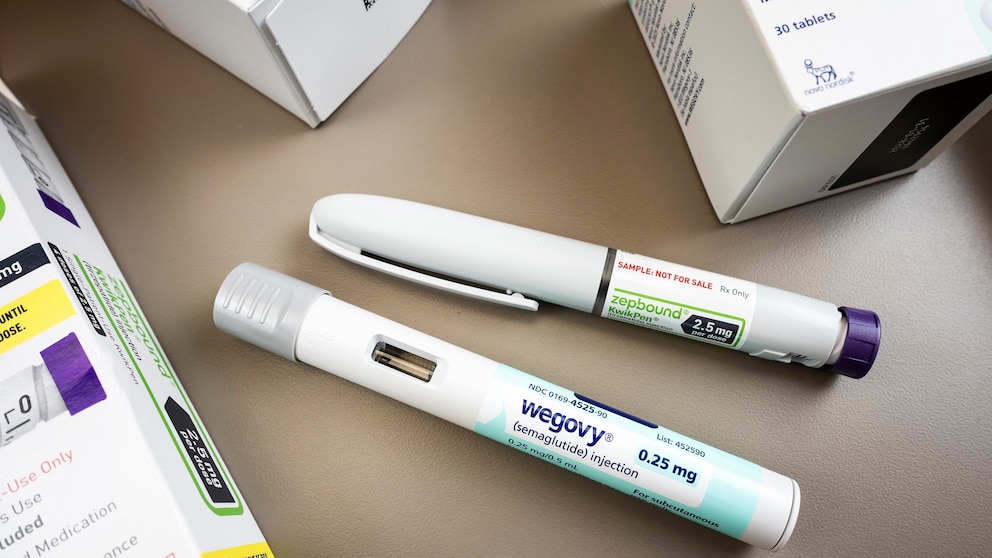
There has been a noticeable increase in the use of GLP-1s for weight loss since the first medication received approval from the Food and Drug Administration in 2014, and even more so following approval of Wegovy in 2021 and Zepbound in 2023.
About 11% of U.S. adults currently take GLP-1 medications specifically for weight loss, up from 3% in 2024, according to a Gallup News poll last month.
Although the medications can help control weight and provide other potential health benefits, they can also be costly. Research from KFF shows that many employers find use of GLP-1s is higher than expected and covering them significantly increased prescription drug costs, leading to considerations of scaling back coverage.
Dr. Sadiya Khan, Magerstadt Professor of cardiovascular epidemiology at Northwestern University Feinberg School of Medicine, told ABC News, "we know that these medications are very effective at reducing cardiovascular disease risk, but they're not very affordable right now."
What are GLP-1s?
Glucagon-like peptide-1 receptor agonists, known as GLP-1s, are a class of medications that mimic the natural GLP-1 hormone in the gut.
GLP-1 is released by the gut when someone eats and helps the body produce more insulin to lower blood sugar levels and slows digestion, all of which can help with weight loss.
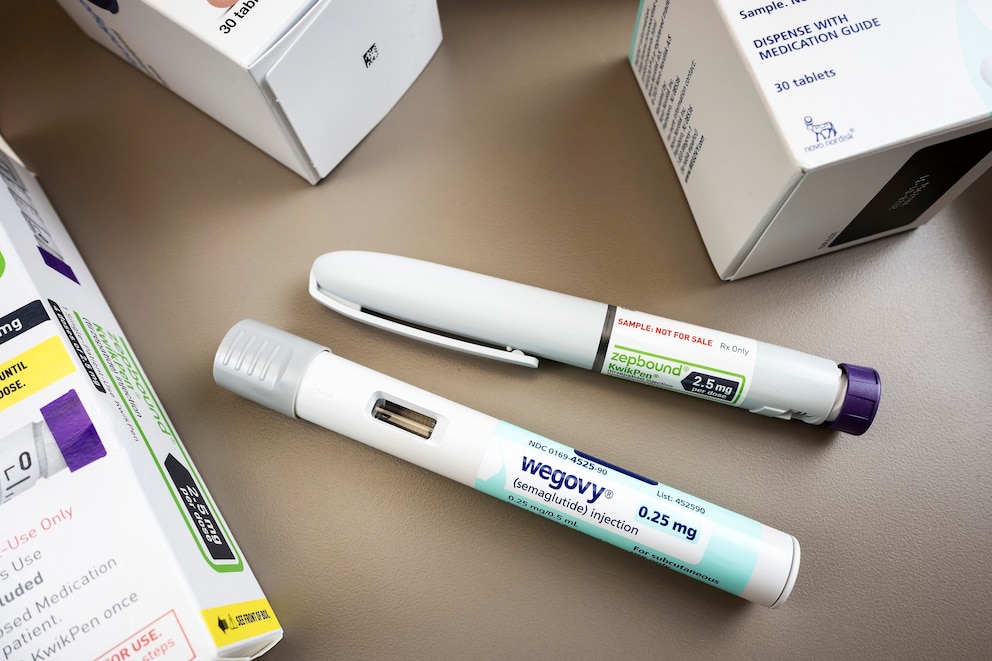
Some GLP-1s, and dual GLP-1s/GIPs, are FDA-approved for Type 2 diabetes, including the brand names Ozempic, Mounjaro and Trulicity, while others are FDA-approved for weight loss management including Wegovy, Zepbound and Saxenda.
Khan said that studies have shown GLP-1s and dual GIP/GLP-1 medications decrease cardiovascular risk by lowering blood pressure, reducing systemic inflammation and improve blood lipid profiles alongside weight loss.
"Over the last five years, I think that has become really the convincing and important data point because it is very commonly referred to as a weight loss drug, but we know that GLP-1s reduce cardiovascular disease risk," she told ABC News.
"I think that's really important because that changes the conversation especially as we think about employer coverage, maybe 'Oh well, it's just a cosmetic thing because it's just for weight.' Well, it's not. It's actually for improving your heart health in those in whom it's indicated and appropriate, and all of those caveats, of course," Khan continued.
'A business decision'
Public health specialists and health economists told ABC News that the decision to cover GLP-1s may be a business decision for employers.
"It's a business decision on multiple levels. It is not just about: Do we pay for this benefit or not, and how much does it cost us?" Paul Fronstin, director of health benefits research at the nonprofit Employee Benefit Research Institute, told ABC News.
Depending on health insurance coverage, the specific drug and manufacturers' cash-pay programs, the cost of GLP-1s can be as low as $25 a month out of pocket to more than $1,000 a month.
According to the pharmaceutical company Eli Lilly, the price of its drug Zepbound ranges from $499 to $1,086.37 per fill, but the amount a patient pays depends on their prescription drug insurance plan.
More affordably, starting last month, eligible Medicare beneficiaries were able to receive GLP-1s for obesity for $50 per month by prescription.
"It's a sudden increase in healthcare expenditure for employers," Dr. Xiaoning Huang, an assistant professor in the division of cardiology at Northwestern University Feinberg School of Medicine, told ABC News. "So, long-term, it is expensive and, for employers, you don't really see the benefits [until] like maybe 10, 20 years from now, especially if your employees are young. ... I think probably [employers] don't really see the financial benefits of covering this treatment."
However, some employers are continuing to cover GLP-1s, such as Bank of America, which reportedly spends $250 million a year on the drugs for its employees.
Fronstin said the company may see this benefit as an investment in their workforce.
"What do we need to do to recruit and retain workers so that we can have a successful business? Health benefits are part of that equation," Fronstin said. "It's not just good for worker health, but worker health improves productivity. It someday may reduce all their health spending, and it helps us be an employer that people want to come to and work for."
Fronstin adds that the size of a business can play an important role in determining what health coverage is offered, and if that includes GLP-1 coverage. According to the United States Chamber of Commerce, 99.9% of businesses in the U.S. are small businesses.
For smaller businesses, "it becomes a health plan decision, not an employer decision," he said.
Stopping and starting use
Fronstin said that if the price of GLP-1s decreases in the future, employers may offer coverage again, but it is unclear if that would occur.
"Because people are getting used to paying for it themselves, and as the price comes down, employers may say we don't have to cover this because people are already used to paying for it themselves" said Fronstin.
Not everyone who loses coverage may be able to afford paying for it out of pocket. Khan said that research is still being done on the effects of patients who were receiving benefits from GLP-1s stopping their use, but it is something that concerns her.
"I think an important piece to understand is that if someone has been taking it and has been getting benefit and it has lowered their risk of having a heart attack, stopping it because it's no longer covered is a really big deal," she said. "So, I think that's something that we should definitely be paying attention to."