Everything you need to know about cupping, a traditional Chinese medical technique
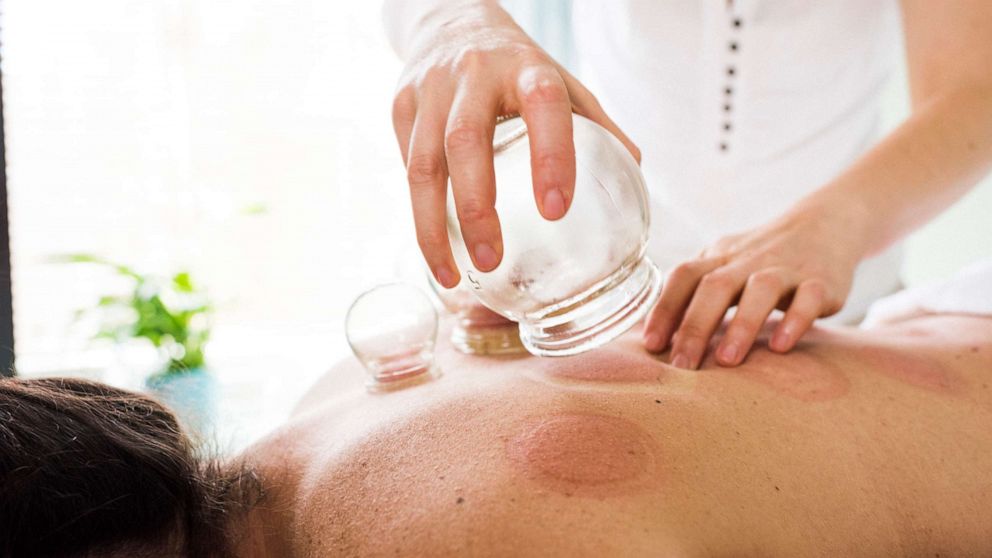
Cupping is a traditional Chinese medical technique popularized by athletes -- recall Michael Phelps at the 2016 Olympics -- that uses suction cups to release tension from muscles.
Some headlines have claimed that cupping is "ridiculous and possibly harmful," and many are wondering about the safety and effectiveness of the treatment method.
Here's everything you need to know:
What is cupping?
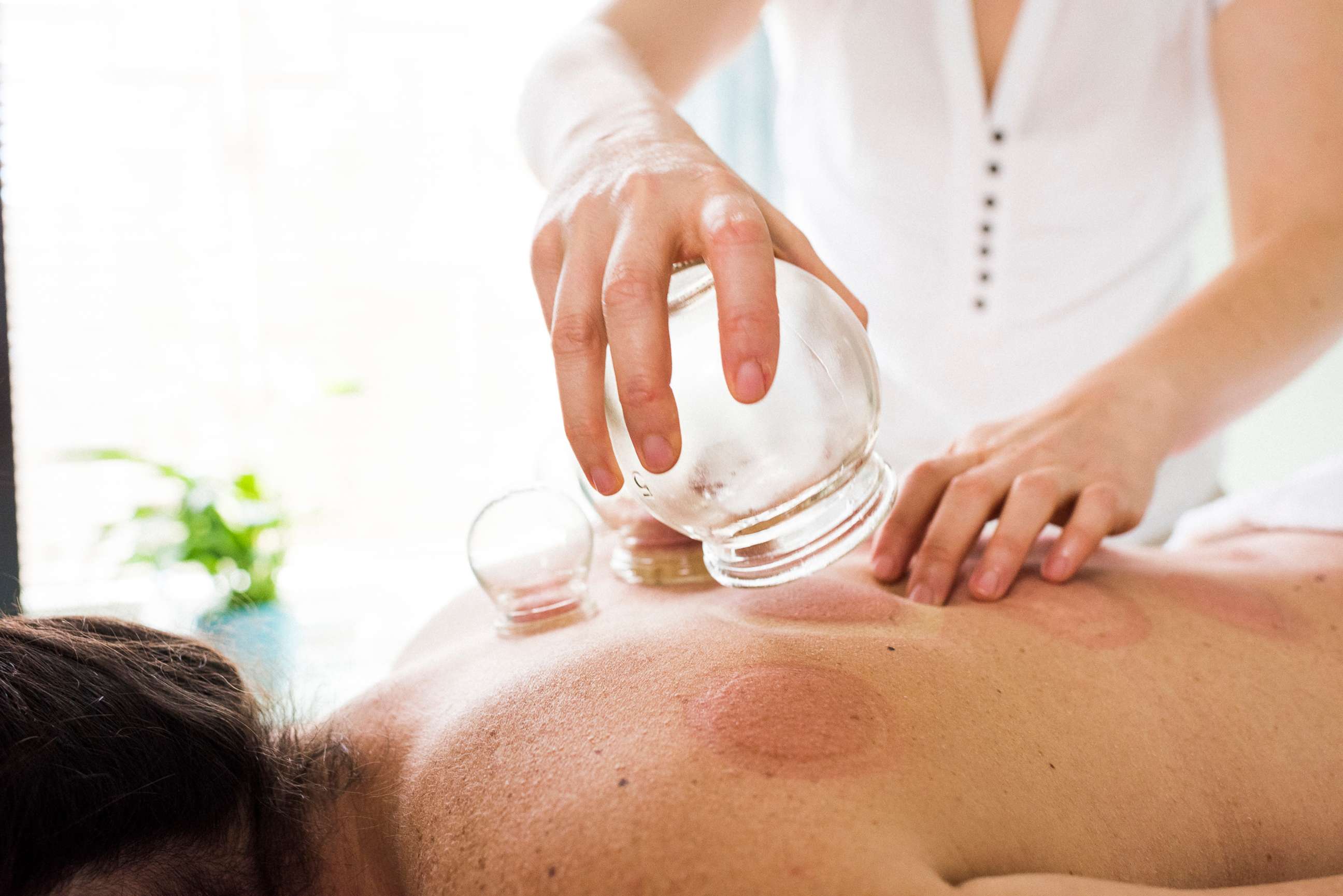
According to the NIH Center of Complementary and Integrative Health, cupping is a technique of "creating suction on the skin using a glass, ceramic, bamboo, or plastic cup." This suction is created either by applying a flame to the inside of the cup, or by attaching a suction device to the cup. There are variations of cupping, including "wet" and "dry." In "wet" cupping, the skin is pierced and blood collects in the cup.
How does cupping work?
Cupping provides a "myofascial decompression," loosening "the deep layer of Saran Wrap that encapsulates our muscles," ABC Chief Medical Correspondent Dr. Jennifer Ashton said on "Good Morning America." The suction in the cup pulls skin and underlying tissue upwards, and blood flow to the area is increased.
Is it safe?
Side effects of cupping are mainly skin related, according to the NIH. "Cupping leaves temporary bruises on the skin. Cupping can cause skin discoloration, scars, burns, and infections. It may worsen eczema or psoriasis." There is a risk involved with "wet" cupping, where blood pools into the cup. If equipment is not sterilized appropriately, there is an increased risk of transmitting diseases like Hepatitis B and C.
Is it effective?
The medical science behind cupping is unclear. "In western, peer-reviewed medicine, there is scant to no literature to support whether or not this works," Ashton explained, adding that "there have been some reports that people feel better. You just have to proceed with caution."
There are some short-term studies showing that for neck pain, cupping is more effective than standard medical care with painkillers and heating pads. There are poorer quality studies that show for lower back pain, cupping is more effective than painkillers.
Sejal Parekh M.D., a pediatrician from San Diego, writes for ABC News' Medical Unit.