FDA Says It Knew Scopes That Allegedly Spread 'Superbug' Could Transmit Bacterial Infections
— -- The revelation that contaminated endoscopes were cleaned according to manufacturer instructions but still allegedly caused seven people to become infected with a deadly drug-resistant bacteria has raised questions about whether the scopes are too difficult to clean.
Seven people have become infected with the drug-resistant "superbug" known as CRE at Ronald Reagan UCLA Medical Center after undergoing endoscopy procedures, and CRE may have played a role in two of its patients' deaths, hospital officials said Wednesday afternoon, adding that 179 people were exposed to the germ.
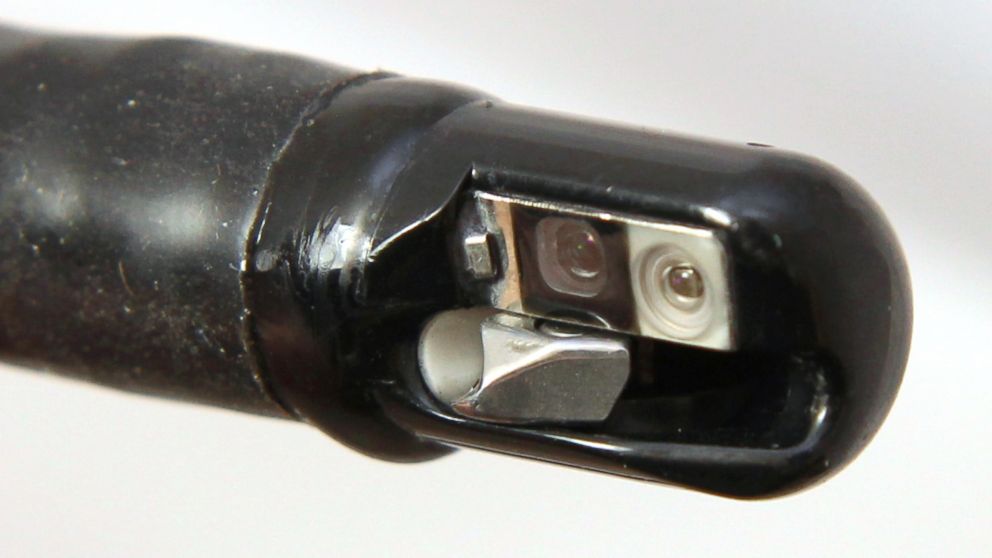
The scopes -- called duodenoscopes, which are inserted by mouth to access patients' small intestine, the pancreas and the liver -- were new and had only been in use since June, but they were cleaned in accordance with manufacturer guidelines, officials said yesterday. The hospital said they traced the bacteria back to two endoscopes manufactured by Olympus Corporation of the Americas.
The Food and Drug Administration told ABC News that it has been aware of cleaning issues and bacterial transmissions associated with duodenoscopes for more than a year.
"The CDC first alerted the FDA to a potential association of multi-drug resistant bacteria and duodenoscopes in fall 2013," an agency spokesperson told ABC News. "The FDA has been actively working with federal partners, manufacturers, and other stakeholders to better understand the issues that contribute to the infections and what can be done to mitigate them."
The FDA issued a safety communication about the duodenoscopes Thursday, explaining that they are used in about 500,000 procedures a year, but meticulous cleaning and disinfecting "may not entirely eliminate" the risk of transmitting infection. From January 2012 through December 2014, the FDA received reports of 135 patients suspected of contracting germs from reprocessed duodenoscopes, the agency said.
According to the CDC, almost every state has had a confirmed case of CRE, but state health departments are not required to notify the CDC about CRE infections.
Last month, a report revealed that 23 endoscopy patients at a Seattle hospital were infected with the antibiotic-resistant bacteria between 2012 and 2014. Eleven additional patients with CRE at the hospital died, but it's hard to say whether the superbug played a role in their deaths. Similar incidents have occurred in Pittsburgh and Chicago.
Duodenoscopes are made by various manufacturers. One lawyer told ABC News he may sue the endoscope manufacturer, Olympus, because he believes it was used on one of his clients who later died after contracting the superbug CRE at Ronald Reagan UCLA Medical Center and on another, a teen, who has been hospitalized on and off for three months after being infected with the bug.
Olympus did not respond to repeated requests for comments about this possible lawsuit, but the company said in a statement to ABC News that it is aware of reports involving its duodenoscopes, and it is working with the FDA, medical organizations and customers to address concerns. It is also making supplemental educational materials available to customers.
"While all endoscopes, including duodenoscopes, require thorough reprocessing after patient use in order to be safe, the Olympus TJF-Q180V requires careful attention to cleaning and reprocessing steps, including meticulous manual cleaning, to ensure effective reprocessing," the company said.
Dr. Michael Kochman, who chairs the American Gastroenterological Association's Center for GI Innovation and Technology, said possible transmissions associated with duodenoscopes came to light last year, and since then, his organization has been working on sponsoring a meeting between the FDA, the Centers for Disease Control and Prevention, infectious disease specialists, gastroenterologists, endoscope companies and others. The meeting is scheduled for March 21.
"The AGA is really pushing toward a stance of no toleration of device-associated infections," Kochman said, explaining that that may mean redesigning the scopes, finding new ways to clean them, or finding technologies to rapidly test the devices between each use. "It's a complex issue without an easy solution."
He said duodenoscopes appear to have nooks and crannies that can harbor bacteria, but to stop using them would be "a major, major step back for patient care." Procedures involving these scopes allow doctors to treat patients with deadly diseases and infections without surgery, he said. And using other methods would actually lead to more patient deaths.
"The value of the procedures performed utilizing these devices far outweighs the unfortunate events that have occurred," Kochman said.
Kochman said patients undergoing routine colonoscopies and upper endoscopy procedures have nothing to fear because duodenoscopes are not used.