New Google.org COVID-19 database could hold key to disease's mysteries
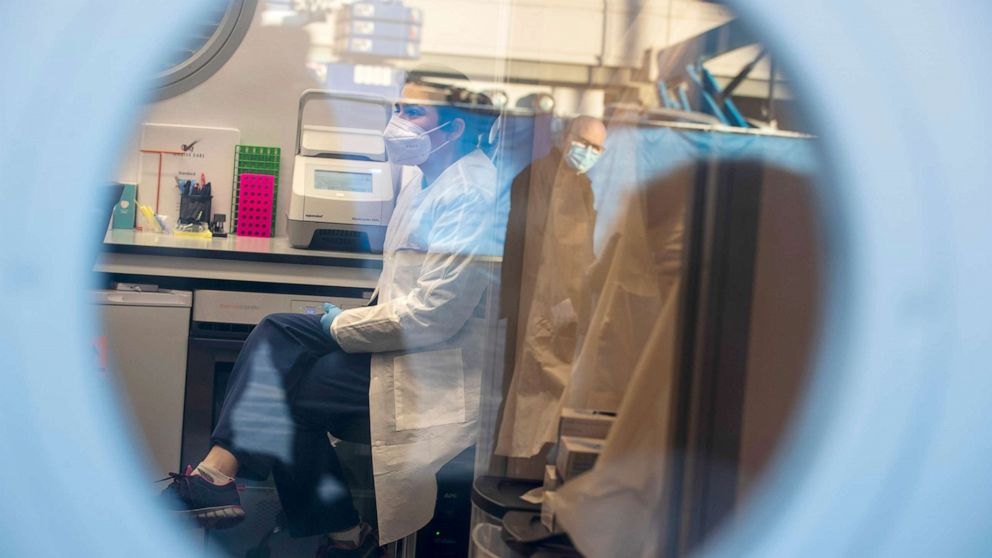
A year into the pandemic, COVID-19 still puzzles researchers, but the public release of a new database may help scientists solve some of the mysteries lingering around this devastating disease.
An international team of researchers from institutions including Boston Children's Hospital, Northeastern University and the University of Oxford has partnered with Google.org, Google's nonprofit subsidiary, to release Global.health, a platform that contains information about almost 10 million COVID-19 cases from over 100 countries.
The goal, researchers said, is to help scientists across the globe answer a wide range of questions, from measuring the impact of newly emerged virus variants on different age groups, including children, to understanding how likely a public response is to help curb spread in certain areas.
There are many databases tracking COVID information, such as the ones run by Johns Hopkins University and The COVID Tracking Project, but most of those track what's known as aggregate data, which includes case and death counts in particular regions.
"What's different about ours is its detailed line-list information," said Dr. John Brownstein, a Global.health researcher and a professor of pediatrics and biomedical informatics at Boston Children's Hospital. "It provides high-resolution data -- harder to get but super critical if we're going to do deep-dive epidemiological research."
This "line-list" data includes age range, gender, occupation, ethnicity, location, symptoms, travel history, preexisting conditions and outcome, whenever available.
"We have very local, individual data that together can help at a global scale," said Leslie Leland, a Google.org fellow who's working on the project. "There has never been a global line-list database for infectious disease. This helps provide better context that becomes important when trying to figure out transmission patterns or the effectiveness of policies."
The database may be particularly helpful for policymakers tasked with creating policies for lockdowns, mask wearing and social distancing.
"Data plays such a vital role in all that we're trying to do to curb this pandemic," Brownstein added.
The database could prove critical in understanding emerging COVID-19 variants because "we don't know if variants increase transmissibility or if the attack rate in different age groups is different," Brownstein continued. "Understanding that is super critical in making policy decisions."
The data on the Global.health platform is accessible to anybody with an e-mail address. Having an open database in particular makes it easier for researchers in low-resource areas to access data, said Leland, adding, "I feel it's important that the platform allows those areas with less access to funding and expertise to gain access to data and expertise they otherwise wouldn't."
The database initially grew out of an international network of volunteers who entered data into a Google spreadsheet, Brownstein explained. As the amount of data exploded, organizations like Boston Children's Hospital provided engineering support, and when the amount of data surpassed what could be managed in a Google spreadsheet, the team asked Google.org for both funding and engineering support, which was provided thorough a fellowship program.
"There are some silver linings to this pandemic -- there's global cooperation between scientists on a scale that we've never seen before," Brownstein said. "People have put their own personal career needs aside in response to the greater good."
The infrastructure that's been created will be helpful not only in battling COVID-19 but in accelerating responses to future pandemics.
"There was a real lack of infrastructure -- it just didn't exist," Leland said. "My hope is that when we look back, 10 years from now, Global.health will still be a key resource for not only tracking outbreaks but preventing diseases, and that people in very different countries can benefit from each other's data in an open and collaborative way."
Maia Ou, M.D., a resident physician in psychiatry at Zucker Hillside Hospital at Northwell Health, is a contributor to the ABC News Medical Unit.
This story has been updated to clarify that several organizations partnered with Google.org, not Google, in creating the Global.health platform.