Measles cases are rising in US as Texas outbreak grows. Should we be concerned?

Measles is continuing to spread across the United States as an outbreak in Texas rapidly grows and cases are confirmed in nearby states, according to health officials.
In western Texas, a measles outbreak doubled from 24 confirmed cases on Tuesday to 48 cases on Friday, according to the Department of State Health Services (DSHS). This marks the largest measles outbreak in the state in more than 30 years, according to a DSHS spokesperson.
All of the cases are in unvaccinated individuals or individuals whose vaccination status is unknown, and 13 people have been hospitalized so far. Gaines County is the epicenter of the outbreak, with 42 cases confirmed among residents, according to DSHS.
Meanwhile, in neighboring New Mexico, three unrelated cases of measles were confirmed last week in Lea County, which borders Gaines County, according to the New Mexico Department of Health (NMDOH).
"While a connection to the Texas outbreak is suspected, it remains unconfirmed," according to a news release from the NMDOH.
The Centers for Disease Control and Prevention has separately confirmed 14 cases in five states so far this year, which does not include the recent Texas or New Mexico cases or recently confirmed cases in Georgia.
Public health experts who work in the field of infectious diseases told ABC News they're concerned about the rise in cases and that it could lead to a far bigger outbreak among those who are unvaccinated or undervaccinated.

"This current measles outbreak is very concerning when it comes to the potential for measles to become a lot more widespread," said Dr. Alok Patel, a pediatrician at Stanford Children's Health, and an ABC News contributor. "What we're seeing right now is a crack in the foundation of a building, and we do not want this building to collapse, and so the minute you see a small outbreak of measles -- especially in an un- or under-vaccinated population -- this is a textbook example of how measles can quickly spread."
"A small measles outbreak could be the start of a public health catastrophe that is completely preventable," he added.
Vaccine exemptions among children in Gaines County -- the epicenter of the Texas outbreak -- have grown dramatically in the past few years.
Roughly 7.5% of kindergarteners had parents or guardians who filed for an exemption for at least one vaccine in 2013. Ten years later, that number rose to more than 17.5% -- one of the highest in all of Texas, according to state health data.
This mirrors trends seen nationwide. During the 2022-23 school year, 93% of children in kindergarten had met the vaccination requirements -- including for the measles, mumps and rubella (MMR) vaccine, according to a November 2023 CDC report. The report also found that exemptions from school vaccination requirements increased to 3% during the same period, which is the highest vaccination exemption rate ever reported in the U.S., according to the CDC.
"I'm very concerned as an infectious disease doctor, because it's part of a growing trend," Dr. Peter Chin-Hong, a professor of medicine and an infectious diseases specialist at the University of California, San Francisco, told ABC News. "It's just part of a general trend that we've been seeing [of] kindergarten vaccination rates falling to its lowest point. I'm worried about kids, of course, but I'm also worried about adults, particularly those who immunity has waned, and they rely on herd immunity to stay safe."
The experts said vaccine hesitancy, which is defined as delaying or refusing vaccination despite widespread availability, is a contributing factor to the outbreak.
Patel said he has had more conversations in his current practice about vaccines -- including the benefits, risks and whether or not they're necessary -- in the past six months than over the past five years.
He said he speaks about the safety and effectiveness of vaccines with parents who been exposed to misinformation. He adds that, in many ways, vaccines are a victim of their own success.
"People have seemed to have forgotten, or they just have never experienced, how dangerous these illnesses are and that is because of how well vaccines work," Patel said. "I think the most important thing that we can do as health care professionals is encourage that open dialog and not push or turn anyone away because they have questions or because they have fears."
Both Chin-Hong and Patel said they expect the number of measles cases, specifically linked to the Texas outbreak, to grow considering how quickly measles can spread.
Measles is one of the most contagious diseases known to humans. Just one infected patient can spread measles up to nine out of 10 susceptible close contacts, according to the CDC.
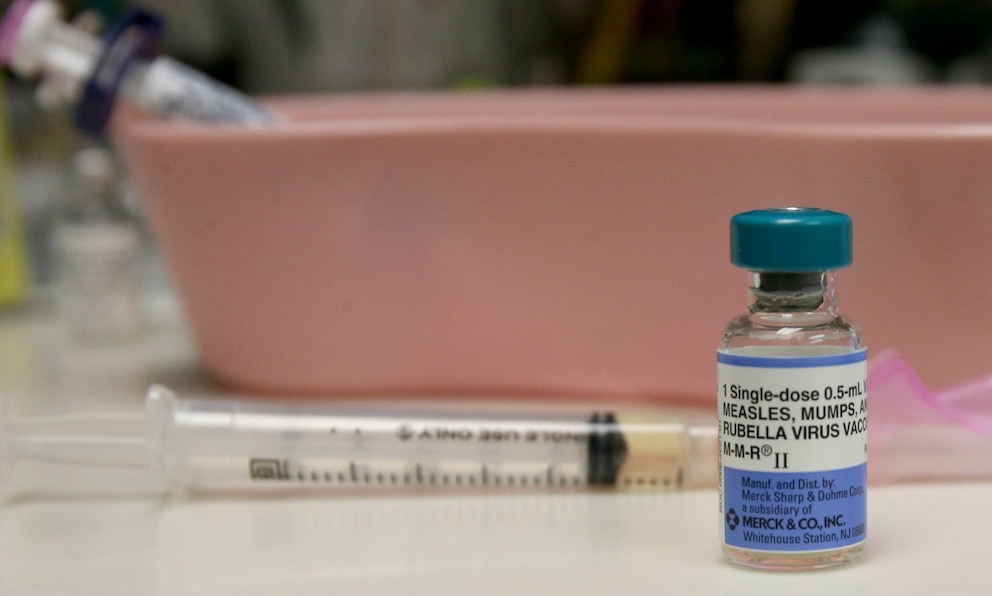
However, all measles cases reported locally or nationally have been among unvaccinated people or those with unknown vaccination status, showing the effectiveness of the MMR vaccine.
The CDC currently recommends people receive two vaccine doses, the first at 12 to 15 months and the second between 4 and 6 years old. One dose is 93% effective, and two doses are 97% effective.
"It's almost like it's a hard concept to communicate," Chin-Hong said. "I'm concerned about where we're going as a country, but an individual whose kids are fully vaccinated shouldn't have anything to [worry about]. The chances are going to be very, very low."
ABC News' Youri Benadjaoud contributed to this report.