Mom Uses IVF to Protect Daughter From BRCA Mutation
— -- Growing up, Lindsay Avner saw firsthand the devastating toll breast and ovarian cancer could take on a family. Her grandmother and great-grandmother passed away from cancer before she was born and her mother was treated for breast and ovarian cancer when she was just 12 years old.
She underwent testing at the age of 22 to find out if she had a mutation on the BRCA gene that is associated with an increased risk of breast and ovarian cancer. She ultimately tested positive for the BRCA1 gene mutation, meaning she had a 55 to 70 percent chance of developing breast cancer and approximately a 40 percent chance of developing ovarian cancer, according to medical literature.
For comparison, the risk of developing breast cancer is approximately 12 percent and the risk of developing ovarian cancer is just 1 percent in the general population.
After her diagnosis, Avner was proactive about her health. She told ABC News earlier about her decision to undergo a double mastectomy at age 23 to reduce her risk of breast cancer. She also started a non-profit called Bright Pink that focused on the prevention and early detection of breast and ovarian cancer in young women.
At age 30 she had eggs frozen in case she wanted to go through a second preventative surgery to remove her ovaries before she had children.
But last year she had to debate a new kind of preventative measure: undergoing IVF to stop the BRCA1 gene from affecting her future children.
Fertility doctors are now able to test embryos to detect any BRCA mutation in a process called "preimplantation genetic diagnosis." After a woman undergoes an IVF cycle, the resulting embryos can be tested for the BRCA gene mutation and the patient can then decide whether or not to implant that embryo.
Avner said her husband was the one who pushed her to take the test.
"He said, 'Are you out of your mind, you've seen cancer up close and personal,'" Avner told ABC News. "He was the one who was like 'We have this opportunity, you preached being proactive.'"
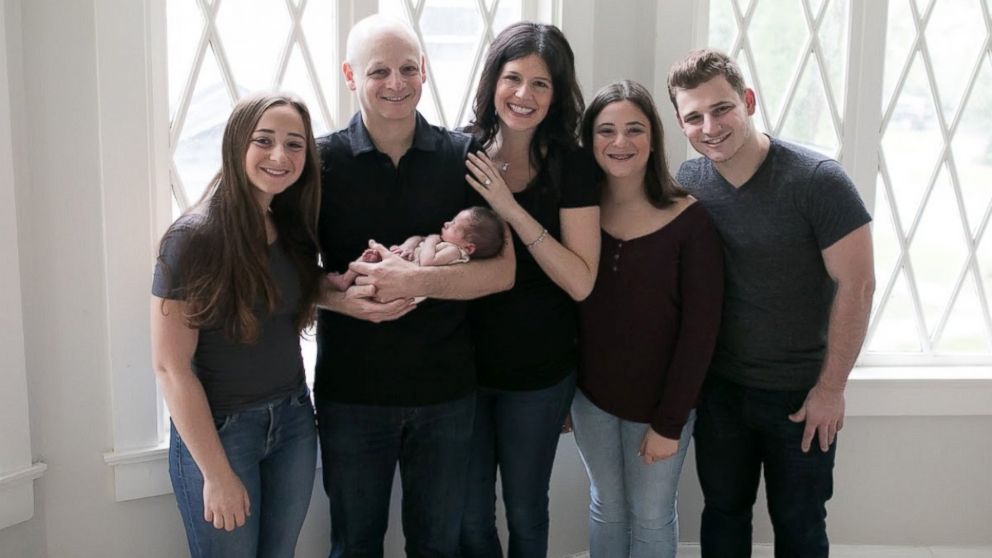
Avner's husband Gregg Kaplan and his three teenage children know the BRCA gene well. Kaplan's first wife was told she carried the BRCA mutation after being diagnosed with breast cancer. She later died from the disease and Avner said her three teenage stepchildren will likely be tested for the BRCA gene mutation in the future.
As they discussed fertility options, Avner recalled her husband saying, "Here is the greatest gift we can give our future child."
According to fertility doctors, the growing popularity of BRCA testing has led many young women to talk about their fertility options. It can be a fraught and complicated topic, since some women are not ready to have children and are still grappling with the BRCA diagnosis.
"We've known about the BRCA gene for about 20 years," said Dr. Elisa Port, chief of breast surgery at the Mount Sinai Hospital in New York. "This is the first generation of BRCA carriers who are of childbearing age for whom this technology and this intervention is feasible."
In addition to the financial expense and the emotional experience of having to wait to see if an implanted embryo successfully develops into a pregnancy, women with the BRCA gene may face additional fertility issues. Some studies have appeared to show that women with the genetic mutation have a decreased ovarian reserve, but the data is mixed, according to Dr. Matthew Lederman, reproductive endocrinologist and infertility specialist at the Division of Reproductive Endocrinology and Infertility of Mount Sinai Hospital.
"They're coming in younger knowing that they have BRCA mutation and they want to talk about freezing eggs and embryos," Lederman said.
After deciding to pursue IVF, Avner went through two cycles of egg retrieval.
"My egg reserve had dropped so dramatically" from age 30 to 33, Avner said. "At that time my doctor was like, 'I don't understand I want to do another test.'"
Avner said her doctor advised Avner to start IVF immediately in order to boost her chance of having a child. The couple ended up with just four viable embryos without the BRCA mutation.
"We were so blessed that the first embryo worked," Avner said. "Lucy was born on Sept. 30. She is insanely perfect, it is remarkable to look at her for many reasons...it's such a dream come true."
Avner, 34, said she hopes to have another child within the next 18 months and then will immediately have surgery to remove her ovaries. It's a preventative measure that she is thankful her daughter will not have to grapple with in her life.
"When we look at Lucy it's so hopeful," she said. "Eleven women in my family have died from breast or ovarian cancer...the buck stops here and it's so remarkable."