Pandemic helped cause biggest drop in US life expectancy since WWII, study finds
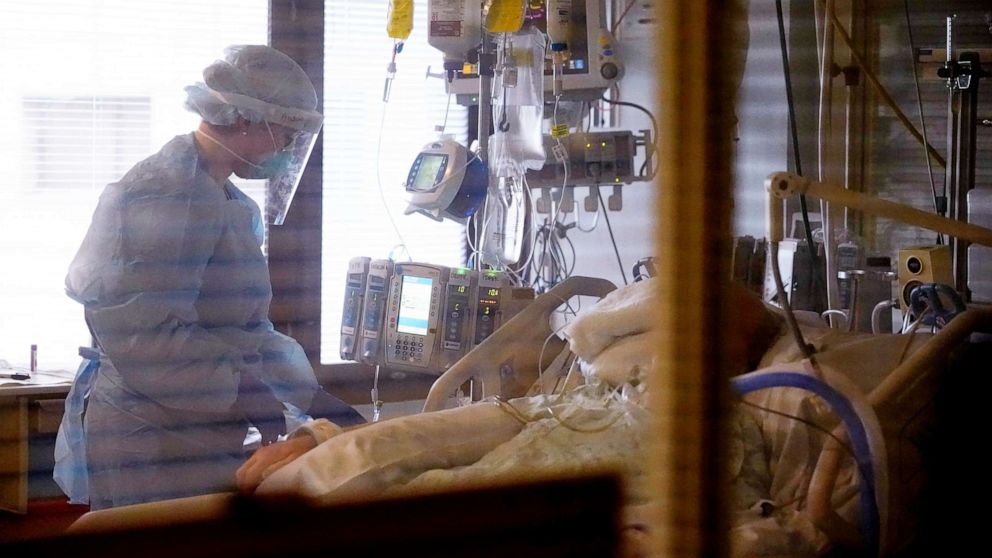
A new study estimates that life expectancy in the United States decreased by nearly two years from 2018 to 2020, primarily due to the coronavirus pandemic, marking the largest drop since World War II.
The study, published this week in the medical journal The BMJ, estimates that from 2018 to 2020, average life expectancy in the U.S. decreased by 1.87 years, from 79 to 77.
That marks the greatest drop in life expectancy in the U.S. since 1943, during World War II, and is 8.5 times the average loss seen when compared to 16 other high-income countries, according to the study. Life expectancy is a statistical measure of the average time a baby born today is expected to live.
"This study shows that the gap in life expectancy in the U.S. increased markedly between 2018 and 2020," the authors wrote. "The conditions that produced a U.S. health disadvantage before the arrival of COVID-19 are still in place, but the predominant cause for this large decline was the COVID-19 pandemic: in 2020, all cause mortality in the U.S. increased by 23%."
The study also found "large differences" in life expectancy based on race and ethnicity. On average, from 2018 to 2020, the drop in life expectancy was 3.25 years for Black people and 3.88 years for Hispanic people, compared to 1.36 years for white people, the study found.
"Progress since 2010 in reducing the gap in life expectancy in the U.S. between Black and white people was erased in 2018-20; life expectancy in Black men reached its lowest level since 1998 (67.73 years), and the longstanding Hispanic life expectancy advantage almost disappeared," the authors wrote.
Black and Hispanic people have been disproportionately impacted by the pandemic, experiencing more severe illness and death due to COVID-19 than white Americans. The disparity in life expectancy found in the study "draws attention to the root causes of racial inequities in health, wealth, and wellbeing," the authors wrote.
"A longstanding and widening U.S. health disadvantage, high death rates in 2020, and continued inequitable effects on racial and ethnic minority groups are likely the products of longstanding policy choices and systemic racism," they wrote.
Life expectancy is expected to recover, the authors said, though noted that there may be "lifelong consequences" for survivors.
The study used data from the National Center for Health Statistics, which is part of the Centers for Disease Control and Prevention, and the Human Mortality Database to compare changes in life expectancy among Black, white and Hispanic Americans in the U.S. and against peer nations. Data for other racial groups, including Asian, Pacific Islander and American Indian and Alaskan Native populations, was not available.
The results of the study are in line with prior research, the authors noted, including a CDC report published in February that found that U.S. life expectancy decreased by 1 year between 2019 and 2020, with even greater drops for Black and Hispanic people.
The COVID-19 pandemic caused approximately 375,000 deaths in the U.S. during 2020, according to the Centers for Disease Control and Prevention. It was the third-leading cause of death that year, behind heart disease and cancer.
More than 600,000 Americans have died from COVID-19 since the start of the pandemic.
ABC News' Sony Salzman contributed to this report.