What to know about rapid COVID at-home tests as White House prepares to mail them across US
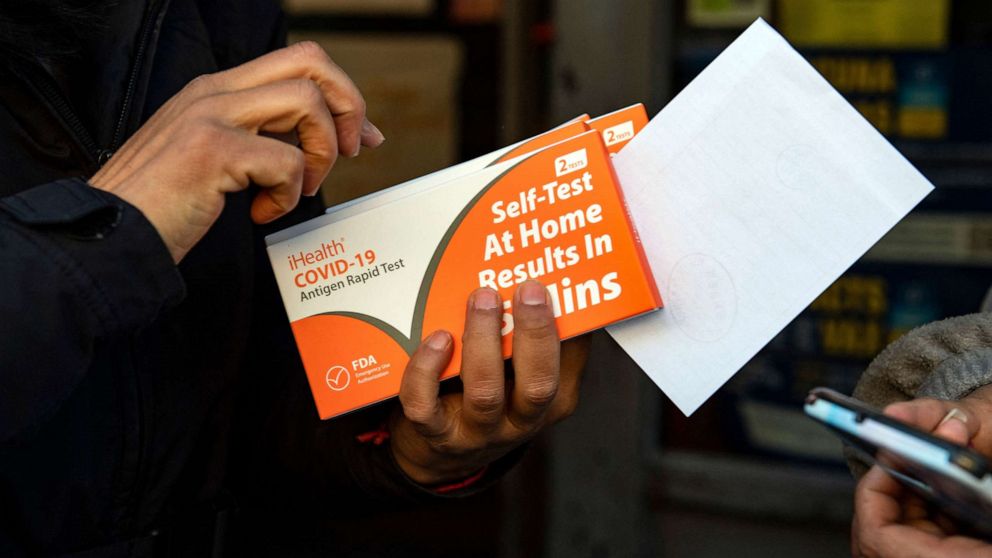
President Joe Biden plans to announce on Tuesday that his administration will distribute 500 million free at-home rapid tests to Americans beginning in January to combat the surging omicron variant.
Americans will be able to request the tests through a website that will launch next month and they will be delivered by mail.
ABC News spoke with two infectious disease experts about the difference between lab tests and rapid tests and how they work.
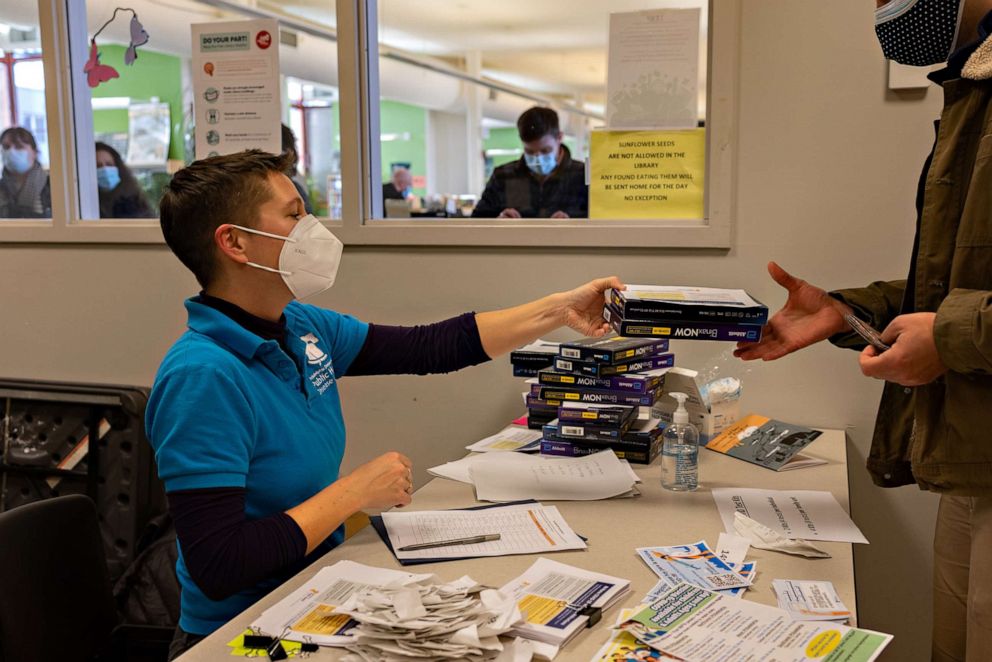
Rapid at-home tests are also known as antigen tests. They look for antigens, or proteins from the coronavirus.
This is different from polymerase chain reaction (PCR) tests, which are considered the "gold standard" when it comes to COVID-19 testing. They look for genetic material from the virus.
"They're really sensitive, meaning they can detect really low levels of the virus in a patient's sample," Dr. Matthew Binnicker, director of the Clinical Virology Laboratory at the Mayo Clinic, told ABC News about PCR tests. "They are not going to give a false positive if a patient has a different infection or no infection at all."
PCR tests are considered to be very accurate, but they have a longer turnaround time because they have to be sent to a laboratory and be analyzed by a medical professional. In the early days of the pandemic, some patients reported that they were waiting a week or longer for their results to return. This makes them impractical for use in widespread surveillance.
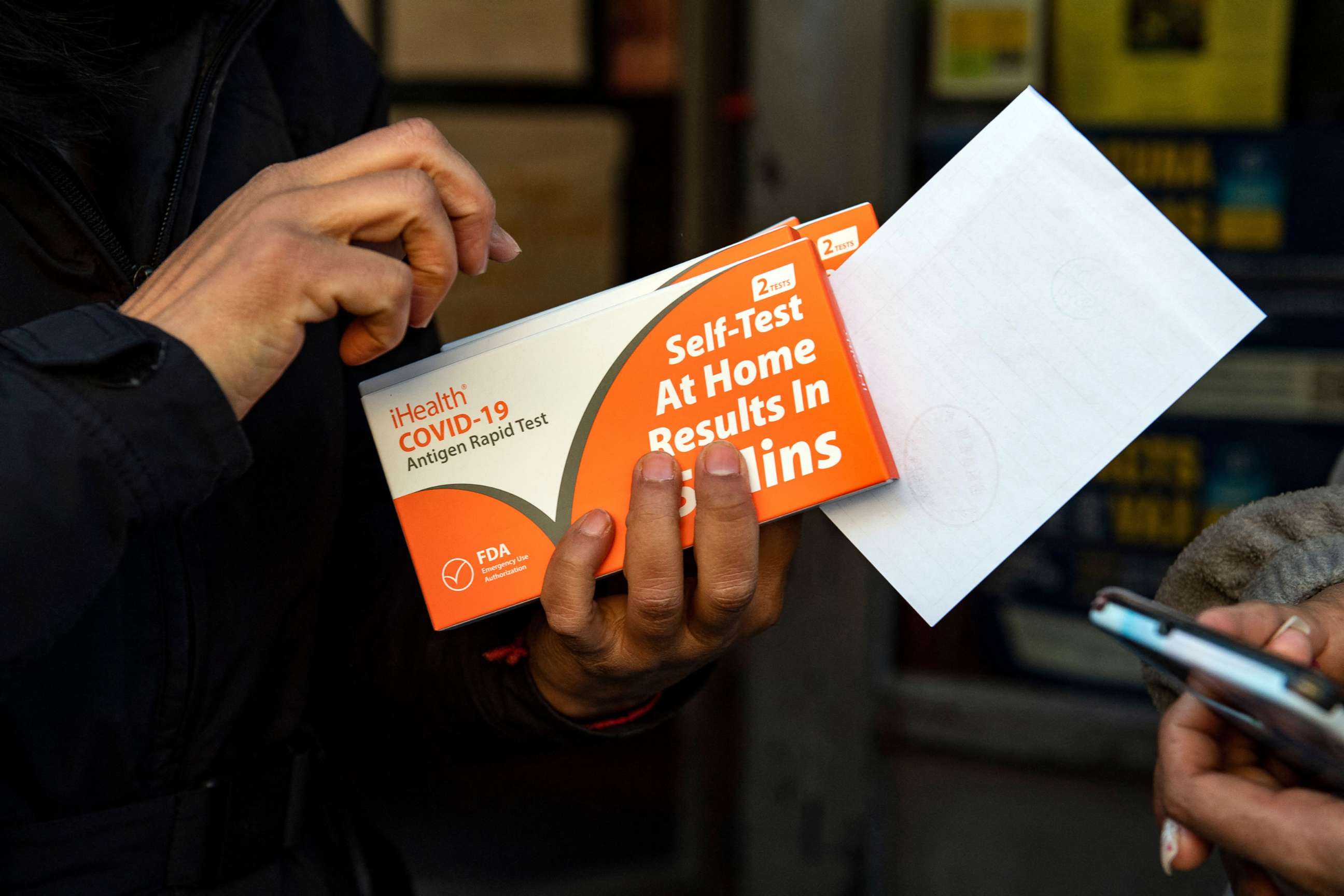
By comparison, rapid tests are not as sensitive, meaning it's possible for patients who are actually infected with COVID-19 to receive a negative result.
"They can be negative even if someone is infected. This is the biggest concern early on when someone has been exposed," Binnicker said. "It takes some time for the virus to replicate and incubate. When performed too early, the test can be falsely negative."
Dr. Stuart Ray, a professor of medicine at Johns Hopkins University, said this presents a challenge when it comes to the omicron variant.
"Levels of the virus may not be very high, so the result is negative, but the person is becoming more infectious," he told ABC News.
He added that temperature is important for rapid tests to work and when below certain temperatures -- about 50 to 55 degrees Fahrenheit -- the tests will not work.
"If you're thinking about a gathering where you'd like to test everyone before they go in to see grandma and grandpa, you might think you'd like to have them stand out on the porch and then do the test. Well, depending on the temperature, that may not work," Ray said.
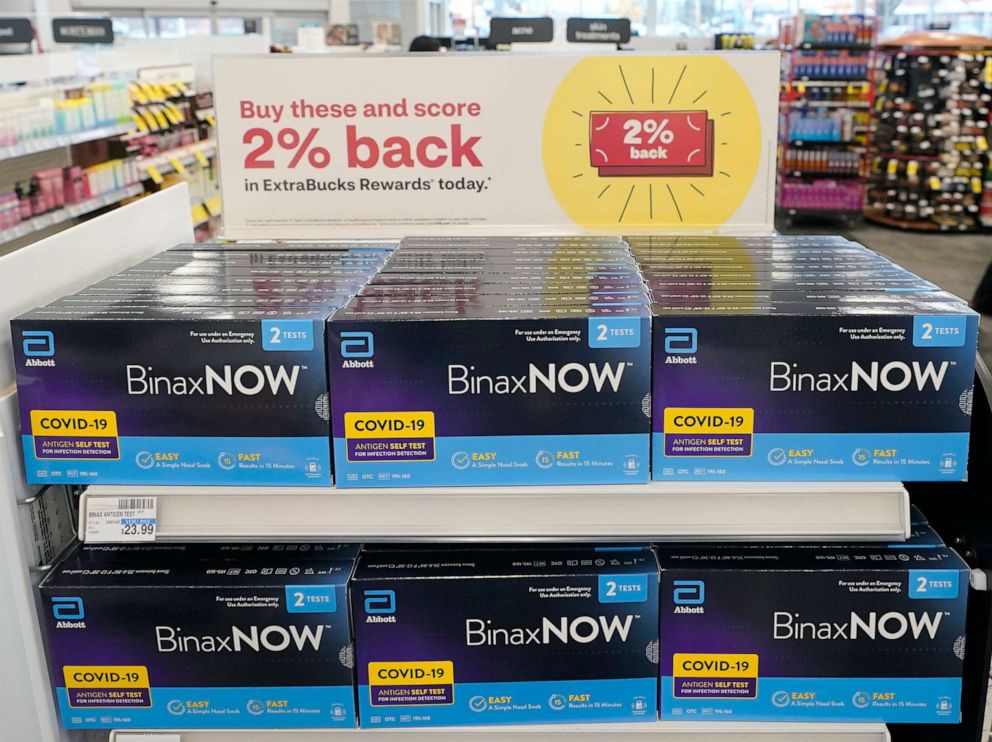
However, results for rapid tests can be returned in as little as 15 minutes, making them beneficial for screening in schools, airports and other public venues.
If a person is going to an event, the doctors recommend getting tested right before. If the result is negative, they say it does not mean the person is definitely not infected but that the virus has not been detected.
If a test is positive, they suggest getting a laboratory test to confirm the infection.
Doctors said the Biden administration's plan to administer free tests is a big step in helping combat the pandemic, but more information is needed.
For example, experts said it's unclear how many tests will be available per household and half a billion tests is a big number but will only go so far.
"One consideration is that you can set off sensitivity of the test by performing the test more frequently," Binnicker said.
"By performing the test on Monday, Wednesday, Friday, for example, you enhance your chances of picking up the infection. But that adds up to multiple tests."
Ray added, "It's a great start, but will not meet the needs of the population. We just have so many Americans and frequent testing is needed to really manage risk."