First Uterus Transplant in US Gives Hope to Women With Rare Condition
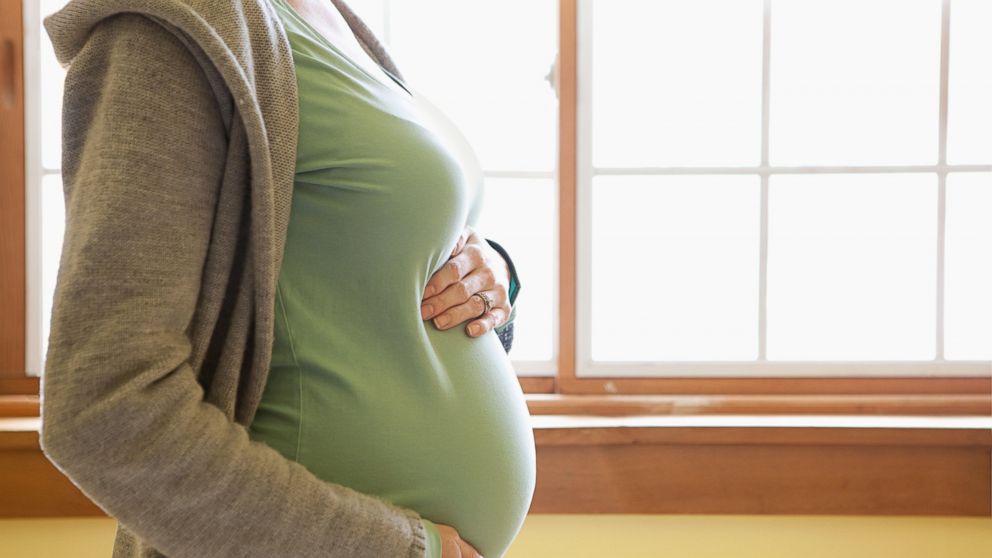
— -- For some women with a rare condition that has left them with little hope of bearing children, news of the first ever uterus transplant in the U.S. has offered hope that they may be able to carry children of their own.
The procedure was done on Wednesday as part of a study at Cleveland Clinic. Researchers and doctors specified that only women with Uterine Factor Infertility would be considered for the procedure. While this could include women who have had a hysterectomy, fibroids or scarring, the procedure has also given new hope to a group of women with the rare genetic syndrome called Mayer-Rokitansky-Küster-Hauser (MRKH).
MRKH syndrome, which affects 1 in 4,500 newborn girls, is a disorder that affects the reproductive system and can cause the vagina and uterus to be underdeveloped or absent from birth, according to the National Institutes of health.
Women with MRKH syndrome have functioning ovaries, so they can potentially have children through in vitro fertilization and surrogacy.
“Women who are coping with UFI [uterine factor infertility] have few existing options,” Dr. Tommaso Falcone, an obstetrician-gynecologist and Cleveland Clinic Women’s Health Institute chairman, said in a statement last year. “Although adoption and surrogacy provide opportunities for parenthood, both pose logistical challenges and may not be acceptable due to personal, cultural or legal reasons.”
Jacklyn Misch, 27, was diagnosed with MRKH at 16. She said she was initially horrified, but over the past 11 years had come to accept she would need to either adopt or go through IVF to have children. She said the news of the uterus transplant was exciting for women living with MRKH, especially for teen girls who are newly diagnosed.
"I looked at my husband last night when the article came out and said, 'This is so insane,'" Misch said. "For girls who are newly diagnosed, it will bring so much hope."
Misch, a former Miss Michigan and a spokeswoman for Beautiful You MRKH Foundation, said she was excited about it but also conflicted. Eleven years after her diagnosis, she and her husband have been expecting to start the IVF process soon to start her own family. She said she started crying when she first heard they were planning to perform uterus transplants in the U.S.
"I talked to my mom about this," Misch said. "It is a complicated emotion because I said I could have a baby bump now. I never in my life envisioned myself with a baby bump."

Kristen Peterson, 28, was also diagnosed with MRKH at 16 and said hearing the news changed the way she felt about having the syndrome.
"When you believe for 12 years that there is no option for you whatsoever to get pregnant, in an instant that changes," Peterson said. "The option changes it and it makes it feel there’s a possibility" for giving birth.
Peterson, who gives talks about MRKH to raise awareness, said the procedure is incredibly exciting, though she said she would have to think very carefully about pursuing it.
"I worked so hard to get to a place that I accepted the way I was born. There was a lot of emotions and counseling," Peterson explained. "The thought of doing a uterus transplant and having that hope and going through those feelings if it didn’t work ... I don’t know if I’m willing to do that."
Dr. Jennifer Ashton, ABC News' Chief Women's Health Correspondent and board-certified obstetrician and gynecologist, said the uterus transplant was a major breakthrough in women's health and huge advance for helping women with MRKH.
"The really important thing for this story is it speaks to the incredibly powerful drive that some woman have to carry their own baby," Ashton said. "Even though uterine surrogacy is legal in the U.S. for some women, it’s not enough, it’s not the same thing. This is, I think, a really exciting important step for women’s health in this country."
While the uterus transplant was carried out successfully, doctors said they want the patient to wait at least a year before attempting to get pregnant.