Why you still need to wear a mask after getting COVID-19 vaccine
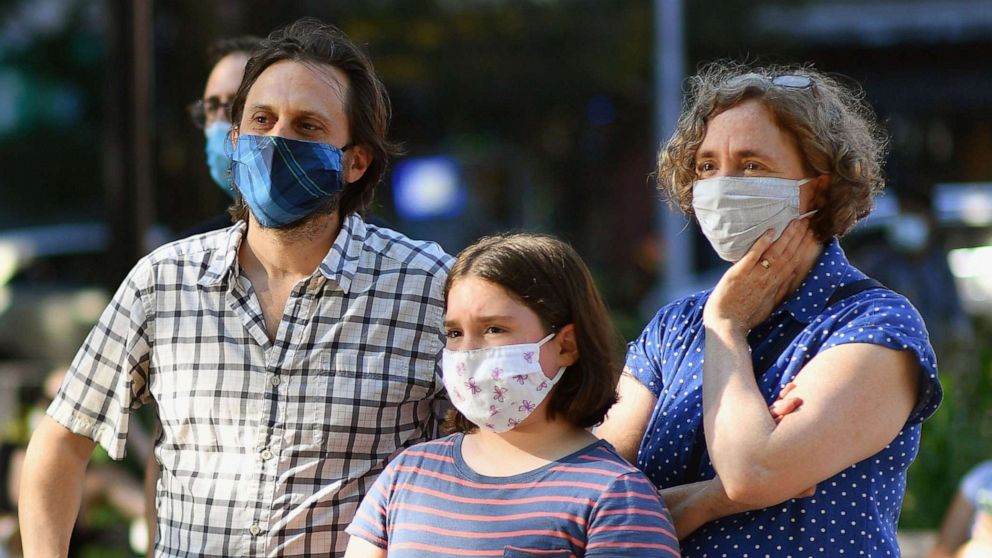
As the promise of a COVID-19 vaccine is fulfilled amid the rollout of the Pfizer/BioNTech and Moderna vaccines, the need to continue wearing masks, washing your hands and maintaining social distancing remains mission critical to protecting lives.
Public health measures have been the main tools at preventing infection and transmission of the virus. Wearing a face mask can reduce an individual's risk of infection by 70%. With emergency use authorization of the Pfizer/BioNTech and Moderna vaccines, there is an opportunity to further decrease the risk of illness due to COVID-19.
However, vaccines may give people a false sense of security that masks are no longer needed. Unfortunately, that is not the case.
Vaccination teaches the body how to successfully fight a virus without actually getting sick. This is in contrast to public health measures, which rely on decreasing exposure to the virus. To effectively contain this pandemic, reducing exposure to the virus and supporting vaccination campaigns must continue.
Here are reasons why you need to continue wearing a mask (and practice other recommended safety guidelines) during and after vaccination:
-Vaccination does not provide instant immunity. Pfizer/BioNTech and Moderna's vaccines require two doses administered weeks apart. Depending on the vaccine, it can take four to six weeks from initial dosing to achieve immunity and protection levels comparable to those in clinical trials. During this time it is still possible to contract an infection and fall ill.
-Vaccination trials did not track whether participants wore masks.While clinical trials have strict enrollment and monitoring criteria, it isn't clear whether those participating in the studies were provided guidance on mask usage. Given a lack of data, it is not clear whether vaccination efficacy had anything to do with vaccine trial participants adhering to public health safety measures, like wearing masks.
The real world does not mimic a controlled clinical trial. Factors such as how the vaccine is stored, transported, administered and the medical health of an individual can determine real-world effectiveness of the vaccine. Clinical trials evaluated healthy individuals with stable preexisting diseases. As mass vaccination campaigns ensue, operational logistics along with an individual's unique medical conditions may affect overall immunity levels.
The herd immunity threshold for COVID-19 is unknown. Herd immunity occurs when enough of the population is exposed to the virus, typically through vaccination, and limits the ability of the virus to spread. The percentage of population requiring immunization to achieve herd immunity varies by disease. For example, with measles, 95% of the population needs to be vaccinated in order to limit spread. According to the Centers for Disease Control and Prevention, the herd immunity threshold for COVID-19 has yet to be established.
The duration of vaccine immunity is unknown. The Food and Drug Administration requires a median two months of safety and efficacy data following completion of the vaccination regimen for emergency use authorization. The length of vaccine coverage is yet to be determined and will be monitored as vaccination campaigns are rolled out. The good news is that our immune system's memory cells, which identify infections and mounts an immune response, persisted beyond six months in certain patients infected with COVID-19.
It is unclear whether vaccines prevent transmission of COVID-19. In their clinical trials, Pfizer/BioNTech and Moderna, did not track cases of asymptomatic infections with COVID-19. This means the ability of the vaccine to decrease transmission was never evaluated. Future studies will need to evaluate whether vaccination decreases viral transmission before we can re-evaluate the role of public health measures.
As this pandemic rages on globally, with over 1.5 million dead, according to the World Health Organization data, the scientific community has realized its own impressive milestone. In 10 months, vaccines were created, tested and deployed with enviable efficacy rates of over 94%, and no serious adverse events. Much of that success relies on continued cooperation. It is imperative that every eligible individual gets vaccinated. Vaccination significantly decreases the risk of getting sick, but it does not signal the end of public health measures.
As we further understand this virus and the vaccine's efficacy, we must continue to follow public health measures aimed at decreasing exposure to coronavirus such as wearing a mask, washing hands and social distancing.
Jay Bhatt is an internist, an instructor at the University of Illinois School of Public Health and an ABC News contributor. Shazia Ahmed, M.D., is a private practice physician in Massachusetts and former chief medical officer of 2020 On-Site.