Winning Ohio Coach Survives Brain Tumor With 'Awake' Surgery
Nov. 13, 2013— -- Case Western Reserve head coach Matt Englander tells his baseball players that the harder the challenge, the more meaningful the win.
Two years ago his hands went so numb he couldn't even open a door handle and brain scans showed he had a tumor in the parietal lobe, just above his right ear.
In September 2011, surgeons at the Cleveland Clinic removed all of the tumor they could see using brain mapping technology, but in all likelihood it will eventually come back. So now he is in the game of his life.
"I would be lying if I said I didn't worry," Englander, 32, told ABCNews.com. "But you don't let it consume you. You don't forget it, but you start to realize life is more about the quality and the moments you enjoy and share."
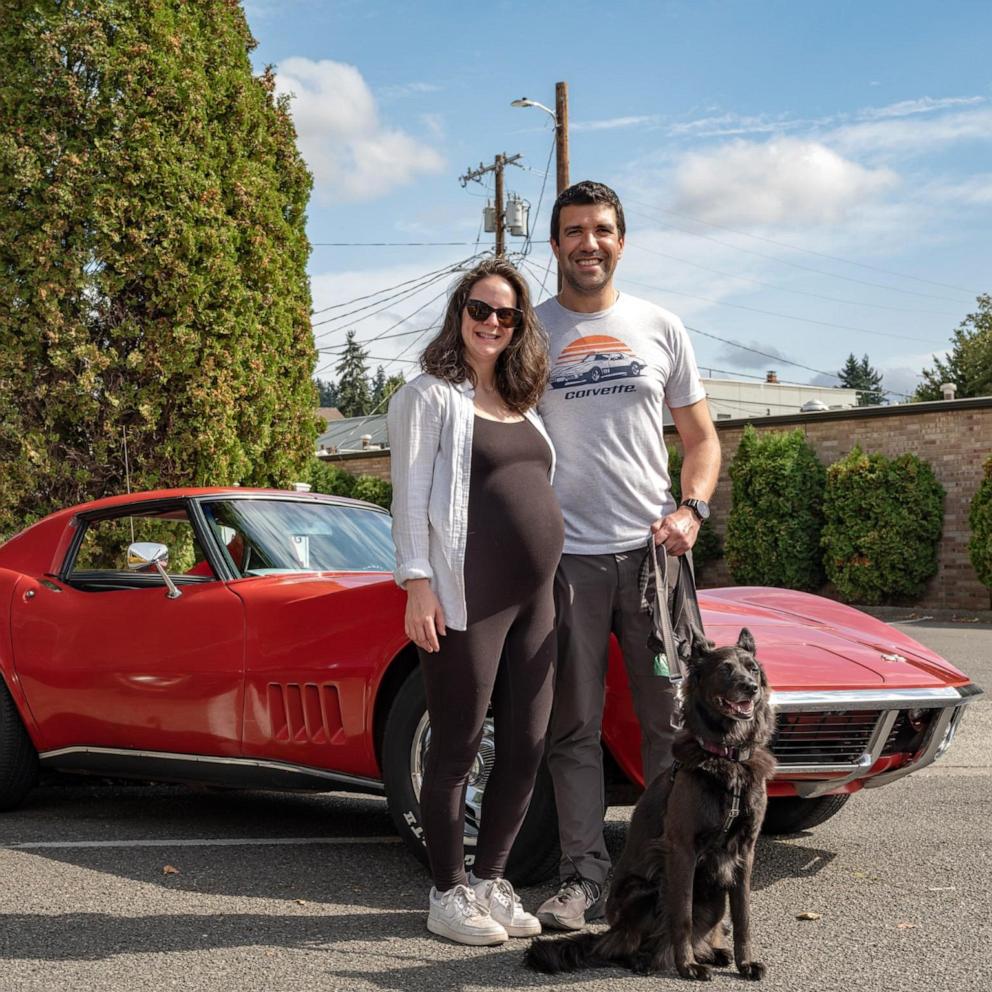
And, as a testament to Englander's stamina, just one week after sophisticated "awake" brain surgery using an intra-operative MRI, he conceived his son Quinton, who is now 9 months old.
Man opts for "asleep" brain surgery for Parkinson's disease.
Now, almost two years out from surgery, he just completed his seventh season, missing only five weeks of coaching during his illness.
Under his leadership, the baseball team has averaged 30 wins over the past three seasons as one of the top programs in the NCAA Mideast Region. This past spring, according to Case Western Reserve, the Spartans had the "best season in program history."
"His relentless personality shows in everything he does in life." -- senior pitcher Ray Kelly
Englander, who lives in Lindhurst, Ohio, didn't pay much attention to the first sign of his cancer in August 2011.
"At the end of a long day, my left hand went numb and I got kind of dizzy," he said. "It was my seventh straight 12-hour day and I thought I was dehydrated."
But a month later, as he was taking classes, Englander said, "I reached for the door handle and my ears rang and I went dizzy and my arm below my elbow on my right arm got numb. I didn't know what was happening."
Englander called his wife and father and was taken to the emergency room, where a contrast MRI found a tumor about the size of a golf ball.
"It really surprises you," he said. "Everyone looks on WebMD and they don't think the worst case is going to be them. It came out of left field."
Three weeks later he was at the Cleveland Clinic for surgery. Doctors determined he had an oligodendroglioma -- "a first cousin" to the brain tumor that killed Sen. Edward Kennedy, according to his neuro-oncologist Dr. Glen H.J. Stevens.
Family patriarch Sen. Ted Kennedy dies.
"It's a primary tumor from the brain itself," said Stevens. "The normal cells mutate and we don't know why."
Likely because of his youth, Englander had a grade 2 tumor, which is less aggressive, according to Stevens. "These tumors infiltrate the brain and no matter how much the surgeon removes, you can never remove all of the cells," he said.
Englander underwent a seven- to eight-hour surgery with an intra-operative MRI that mapped the brain so that vital structures surrounding the tumor would not be damaged. "It allows you to safely cut and differentiate tumor form non-tumor," Stevens said.
Englander was put to sleep, and then awakened so surgeons could map his brain and test his motor and language skills. But there was no pain. "It feels like someone pushing on your head -- you can feel the pressure," said Englander.
Doctors did a molecular analysis of Englander's tumor to give them prognostic markers for how he would respond to treatment.
"He had an IDH1 mutation, which was good thing," said Stevens. "And he had 1P and 19 Q deletions, which are good things."
"He will need no additional treatment -- no chemotherapy or radiation," he said. "Eventually something will need to be done. But we are trying to turn this tumor into a chronic disease that he can live with, just like diabetes or high blood pressure.
"The hope is that the tumor will behave long enough for a curative treatment in the future," Stevens said.
Englander has changed his lifestyle, eating a vegan and organic diet, giving up sugar, caffeine and alcohol. The biggest surprise after surgery was discovering that his wife Heather was soon expecting a baby.