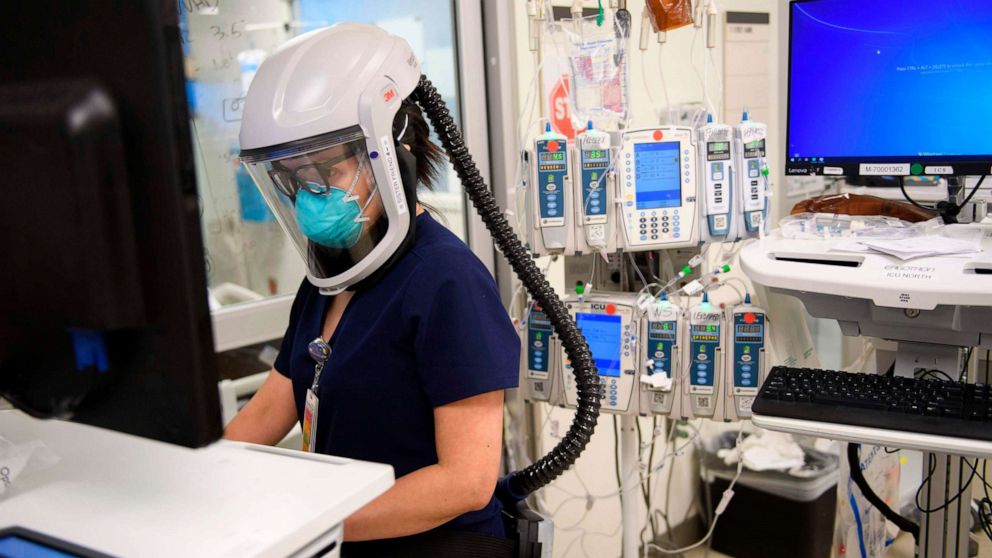
A pandemic of the novel coronavirus has now infected more than 90 million people worldwide and killed over 1.9 million of them, according to real-time data compiled by the Center for Systems Science and Engineering at Johns Hopkins University.
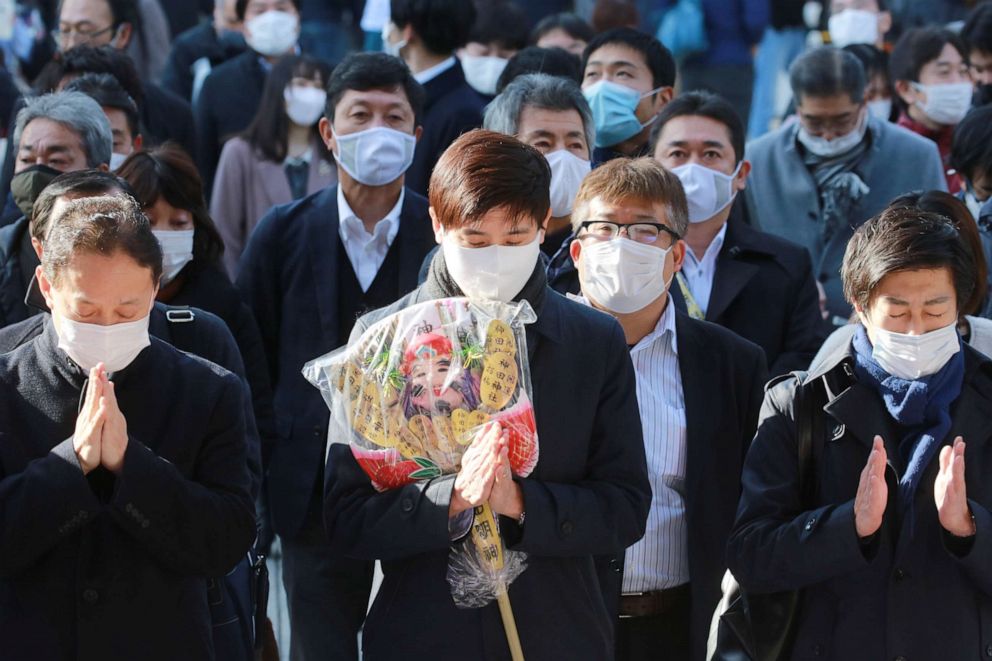
A pandemic of the novel coronavirus has now infected more than 90 million people worldwide and killed over 1.9 million of them, according to real-time data compiled by the Center for Systems Science and Engineering at Johns Hopkins University.
The game between the Miami Heat and the Boston Celtics Sunday night has been postponed after Miami announced it does not have the minimum eight players available because of ongoing COVID-19 contact tracing, ESPN reported.
Earlier Sunday, Heat guard Avery Bradley was placed into the health and safety protocol and was ruled out for Sunday night's game.
— Miami HEAT (@MiamiHEAT) January 10, 2021
The Celtics were set to play with the minimum eight players after nine players were ruled out, including seven because of the NBA's health and safety protocols.
The NBA postponed a Dec. 23 game between the Oklahoma City Thunder and the Houston Rockets after the Rockets didn't have the minimum number of available players.
The coronavirus pandemic has affected at least 90 million people worldwide, according to data from John Hopkins University's Coronavirus Resource Center.
There were an additional 10 million global cases reported over the last 15 days, the data showed.
As of Sunday, 1,931,571 COVID-19 deaths have been reported around the globe, Johns Hopkins said.
The United States leads the world with cases and deaths, according to the data.
As of Sunday, the U.S. has 22,293,281 cases, roughly a quarter of the total world cases, and 373,588 deaths, roughly 19% of the world's deaths, Johns Hopkins reported.
California's coronavirus surge continues to worsen, according to new data released Sunday by the state's Health Department.
The state recorded 49,685 new cases after administering a record 473,076 tests, the Health Department said. There were 468 new fatalities on Sunday, according to the Health Department.
All metrics were over 1% increases from the previous day, the health data showed. Since the start of the pandemic, California has 2,670,962 confirmed cases of COVID-19 and 29,701 deaths, the Health Department said.
As of Jan. 9, 734,405 coronavirus vaccine doses have been administered, according to the Health Department.
The United Kingdom saw another day of rising coronavirus cases, deaths and hospitalizations, according to the British government.
The nation recorded 54,940 new cases Sunday, bringing the total number of cases to 3,072,349, the health data showed. The seven-day average for new cases rose from 21,698 on Dec. 10 to 61,106 on Jan. 1, the British government said.
The U.K. saw 563 new COVID-19-related fatalities Sunday, according to the health data. The country has 81,431 total deaths since the start of the pandemic, the government said.
There are currently 32,294 people hospitalized in Britain. The seven-day average for new hospital admissions rose from 1,728 on Dec. 10 to 3,345 on Jan. 1, officials said.
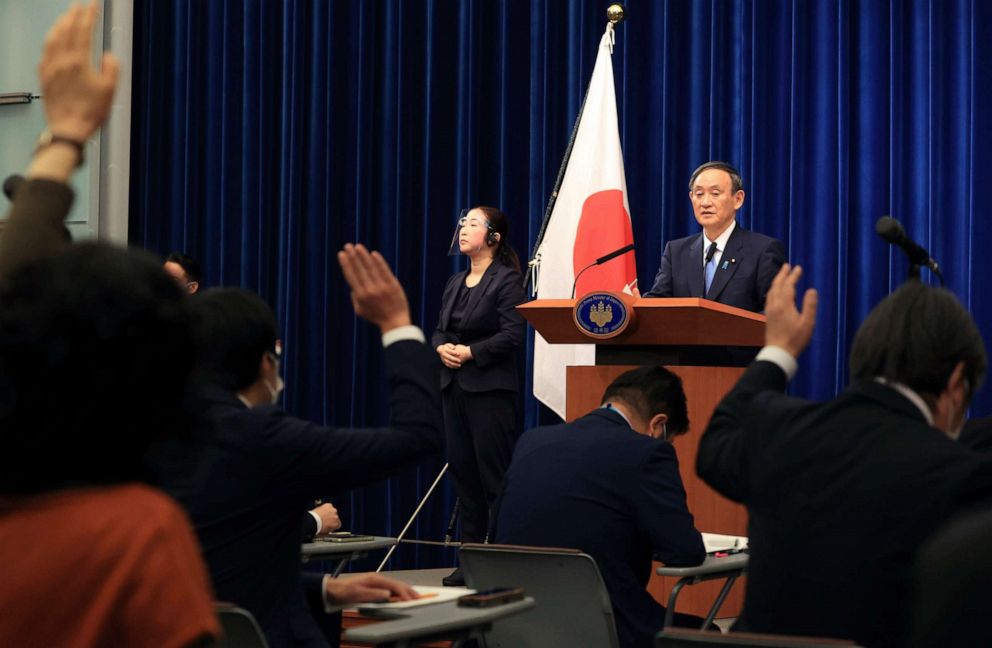
Tokyo and other areas of Japan may enter a state of emergency as COVID-19 infections continue to climb.
"The number of people infected with the novel coronavirus has not gone down, but rather has remained high in Tokyo and the neighboring prefectures," Japanese Prime Minister Yoshihide Suga said at a press conference Monday. "With that in mind, we thought we needed to send a stronger message."
Suga did not say when a state of emergency would go into effect but that the "details will be decided quickly." The announcement is expected to come before the end of the week.

Declaring a state of emergency would give the governors of those respective regions the authority to ask residents for cooperation in efforts to stem the spread of the virus. There are currently no legal ramifications for non-compliance.
Suga's predecessor, Shinzo Abe, declared a nationwide state of emergency relatively early in the pandemic in April, which lasted for a month. At that time, residents were asked to reduce person-to-person contact by 80% and to practice "jishuku," or "self-restraint," by staying at home and closing non-essential businesses.
Suga has said any upcoming state of emergency will be implemented in a "limited and focused" manner, leading some to speculate that the demands won’t be drastic. Restrictive measures could also disrupt preparations for the 2020 Summer Olympics in Tokyo, which was postponed to this year.

During Monday's press conference, Suga also pledged to speed up efforts to approve COVID-19 vaccines and to begin immunizing the country's senior citizens, health care workers and nursing home employees in late February.
COVID-19 infections soared in Tokyo over the holidays. On New Year's Eve, the Japanese capital reported over 1,300 newly confirmed cases for the first time in a single day. Nationwide, more than 245,000 cases have been confirmed since the start of the pandemic, including at least 3,645 deaths, according to the latest data from the Japanese Ministry of Health, Labour and Welfare.
Japan also recently detected several confirmed cases of the new, more contagious variant of the novel coronavirus that was first identified in the United Kingdom last month.
ABC News' Anthony Trotter contributed to this report.