A "ring of fire" solar eclipse will dazzle sky watchers this Saturday for the first time since June 2021.
This year, the solar eclipse will be directly visible in multiple states from Oregon, California, Nevada, Utah and Colorado in the West to Arizona, New Mexico and Texas in the south. It will also be visible in Mexico, Central America and South America, according to NASA.
"This is a really unique event and why we're so excited about it is that the next total eclipse happens in April 2024 but then not again until 2044, and the next annular eclipse seen in this part of the country is actually going to be in 2046. It's going to be a long stretch that we will not see this phenomenon again," Dr. Kelly Korreck, an astrophysicist and NASA program manager for the 2023 and 2024 eclipses, said in a Sept. 26 teleconference.

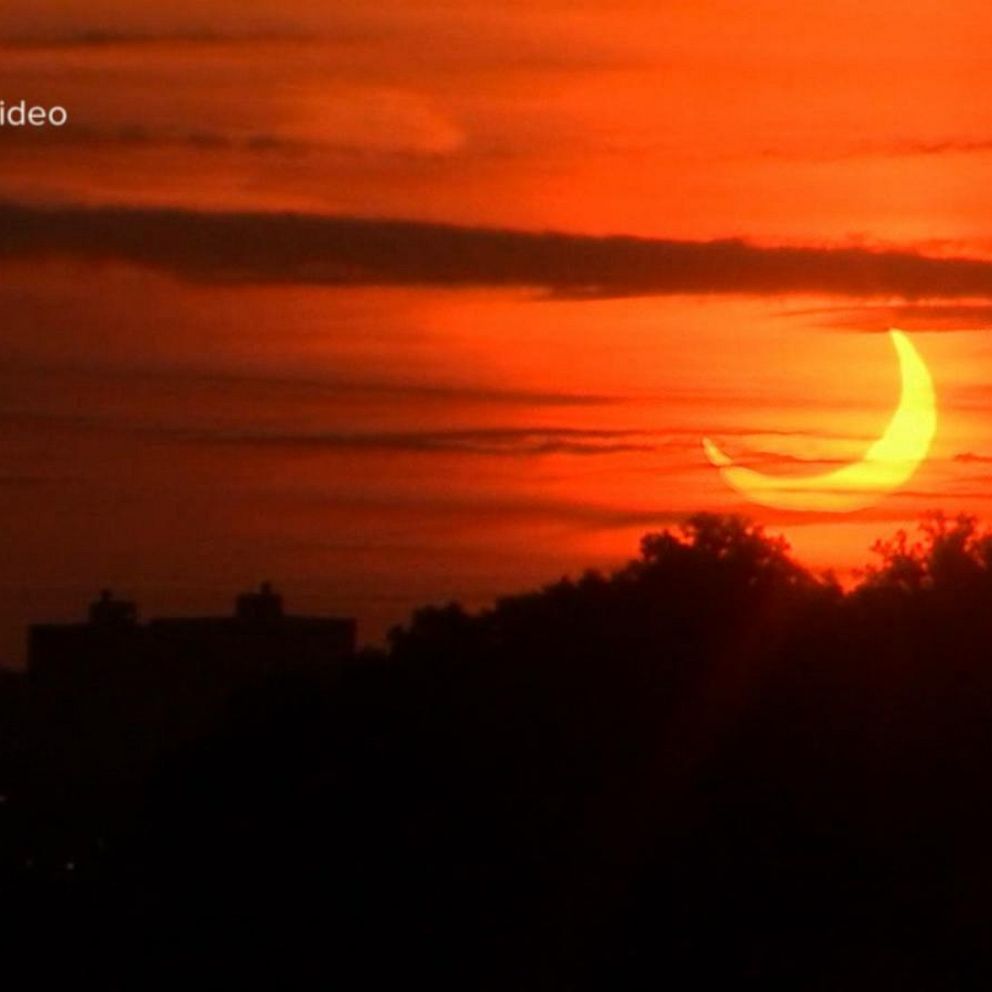
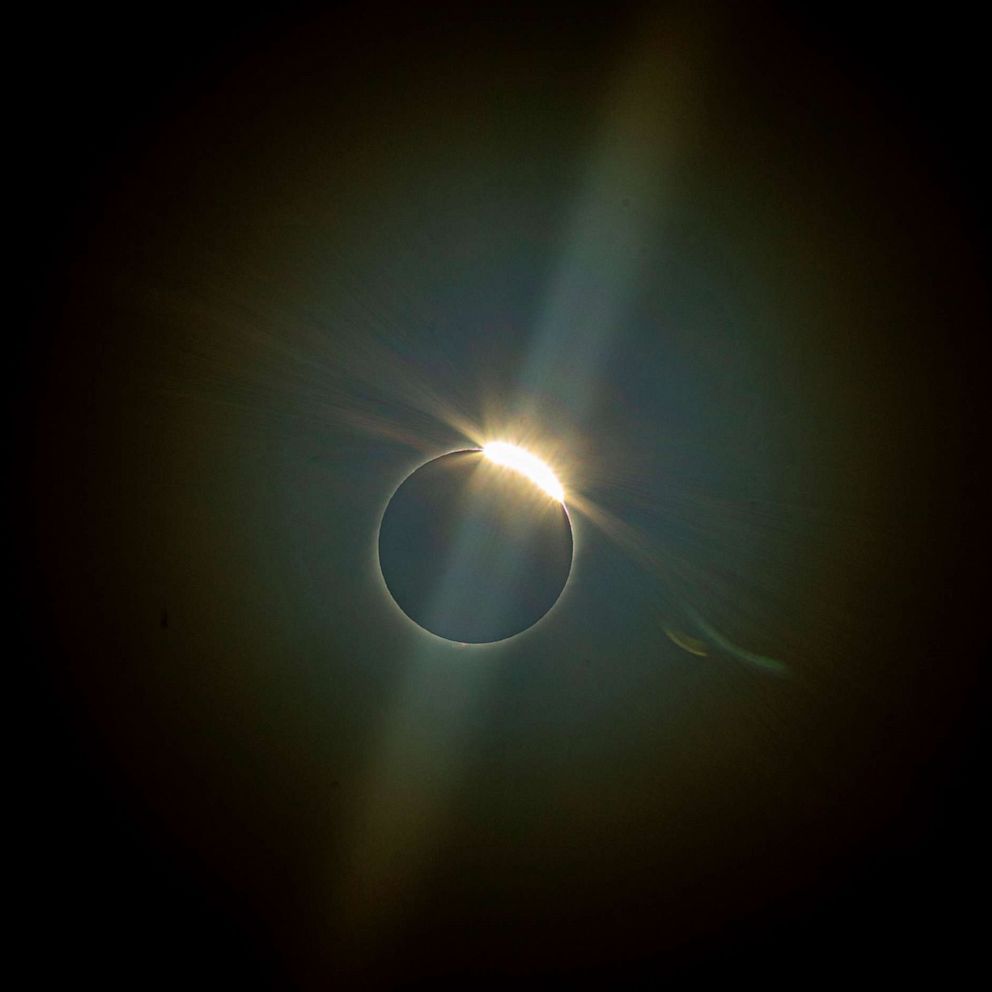
What is a "ring of fire" solar eclipse?
There are different types of solar eclipses, including a total solar eclipse, a partial solar eclipse, a hybrid solar eclipse and an annular solar eclipse, according to NASA.

The Oct. 14 eclipse will be an annular solar eclipse, which, according to the agency, is when the moon in its orbit crosses between the sun and the Earth and is at or near its farthest point from Earth. When this happens, the moon, sun and Earth line up but the moon looks smaller than the sun, allowing a "ring" of the sun's light to remain visible around the moon. This gives the annular solar eclipse its "ring of fire" nickname.
When will the "ring of fire" solar eclipse be visible?
According to NASA, the "ring of fire" annular solar eclipse will be visible "between 1 and 5 minutes for most places, depending on where you view it from." It will appear in Oregon first at approximately 9:13 a.m. PDT and will wrap up in Texas by about 12:03 p.m. CDT.
Who will be able to see the "ring of fire" solar eclipse?

According to NASA scientist Alex Lockwood, over 6.5 million people in the U.S. will be able to see the solar eclipse directly and another 68 to 70 million will be within a 200-mile viewing distance of the eclipse's path of annularity.
But nearly everyone in the lower 48 states should be able to see at least some of the upcoming solar eclipse this weekend.
"Everyone actually in the entire contiguous United States can witness a partial solar eclipse, if not the annular solar eclipse itself on this date for a few minutes," said Lockwood, who is also a strategic content and integration lead for NASA's Science Mission Directorate.
How do you watch the solar eclipse?
Before heading out to see the solar eclipse, people need to make sure they have the proper solar eclipse glasses to watch the "ring of fire" phenomenon safely. Doing so without the correct eye protection is extremely dangerous.
"You need certified ISO 12312-2 compliant solar eclipse glasses," Lockwood said. "There are plenty of safe sellers of these glasses online and we encourage folks to find a safe pair."

NASA notes that viewing an annular solar eclipse with other tools, such as binoculars, a camera lens, sunglasses or a telescope, that do not have a "special-purpose solar filter secured over the front of the optics will instantly cause severe eye injury."
Although they may look similar to dark or tinted sunglasses, eclipse glasses are not the same and adhere to the ISO 12312-2 international standard. There are also handheld solar viewers that are compliant with the standard that can be used to view the "ring of fire."
Eclipse glasses that are scratched, torn or damaged in any way should not be used and children should be supervised when using solar viewers, according to NASA.
Another way to view the annular solar eclipse is through an indirect viewing method like a pinhole projector, which projects the sun's image onto a nearby surface and can allow you to see the sun without facing it. NASA cautions viewers not to look at the sun directly through a pinhole projector device.
For anyone who wants to watch the annular solar eclipse online, NASA will be broadcasting live coverage on Oct. 14 from 11:30 a.m. to 1:15 p.m. EDT on NASA TV, NASA's website, and on NASA's social media platforms, including Facebook, X and YouTube. You can also track the annular solar eclipse's path on NASA's tracker.
When will the next solar eclipse appear?
The next solar eclipse will occur in about six months on April 8, 2024, according to NASA. The April solar eclipse however, will be a total solar eclipse, where the moon will completely align over the sun, blocking the sun's visibility and causing the sky to darken.