Domesticated cats may have arrived in the West much later than previously thought: Study

Domesticated cats may have arrived in the West much later than previously thought, according to new research published on Thursday.
Cats began their relationship with humans quite early, with evidence -- including a human buried with their cat in Cyprus -- pointing to ancient Egyptians domesticating cats about 10,000 years ago, Claudio Ottoni, a paleogeneticist and associate professor of molecular anthropology at the University of Roma Tor Vergata, told ABC News.
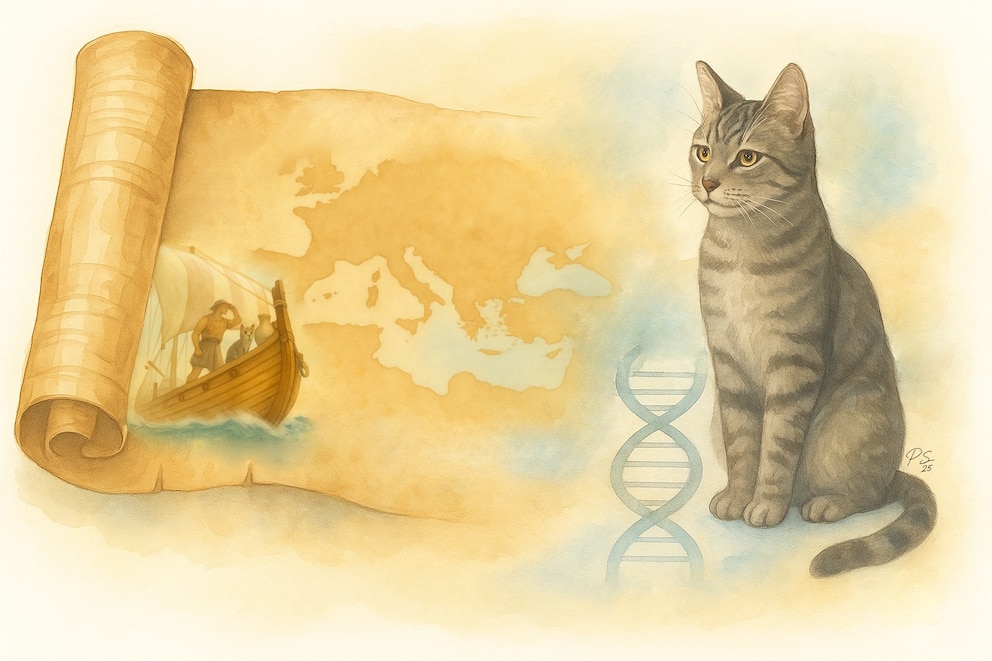
While previous research has indicated that cats arrived in Europe during the Neolithic expansion of Near East farmers about 6,000 years ago, new analysis indicates that pet cats arrived thousands of years later as a result of following Roman soldiers amid their quests, according to a paper published in Science on Thursday.
Researchers analyzed archeological samples of ancient cats from Europe and Anatolia during the Neolithic period to obtain DNA sequencing, enabling them to reconstruct entire genomes to compare to modern cats, Marco di Martino, a post doctoral candidate at the University of Roma Tor Vergata and lead author of the paper, said in an interview with ABC News.

By looking at the mutations in the DNA, they were able to contextualize the evolution of the species and how geography played a role, Di Martino said.
When looking at the cat remains that were thought to have arrived to the West about 6,000 years ago, the researchers realized they were looking at European wild cats, not domesticated cats, which evolved from African wildcats, according to Ottoni.
That discovery changes the entire timeline on when domesticated cats were thought to have arrived on the continent, Ottoni noted.
"We couldn't find any any domestic cats, even in other parts of the European continent, until 2,000 years ago," Ottoni said. "So this is a big change in the story."

The earliest genomes were instead found in several sites across the Roman Empire -- in Italy, Serbia and Austria as well as Roman Imperial sites in England.
This lead the researchers to believe that the cats dispersed "very quickly" across the European continent, Ottoni said.
Historical analysis of cats, compared to dogs or livestock, are lacking because there are not many cat remains in the archaeological context -- mostly because cats were never used as a food source on a wide scale and because it can be hard to identify the remains of such a small predator, according to Ottoni.
"Compared to other domestic species, cats are quite overlooked," he said.
Dogs likely began relating to humans during the Paleolithic era, more than 15,000 years ago, which could help to explain why the species is so much more reliant and attached to humans, earning the nickname "man's best friend," the researchers noted.
In addition, dogs were more "useful" to humans, Ottoni said. They were also bred for multiple functions, such as hunting or protection, which could explain why there are several different breeds and sizes of dogs and much less variability among cat species, he added.
"If you think of a dog, we have very small dog breeds and very big dog breeds," he said. "In cats, we don't have such big variation in terms of size."
The new research furthers the hypothesis that the domestication of cats was long, complex and much more recent than dogs, according to Ottoni.