Jellyfish chips may become your new favorite snack thanks to these physicists
This is an Inside Science story.
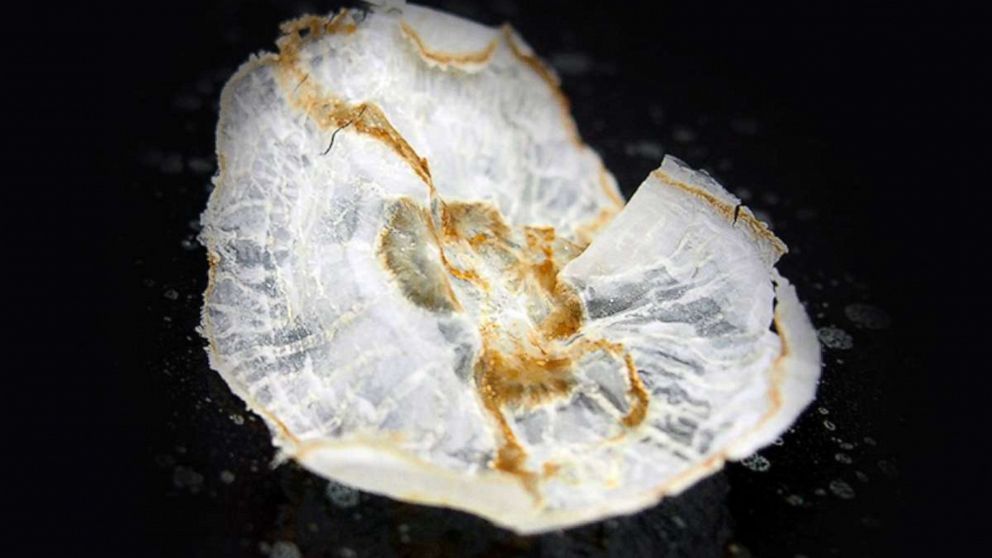
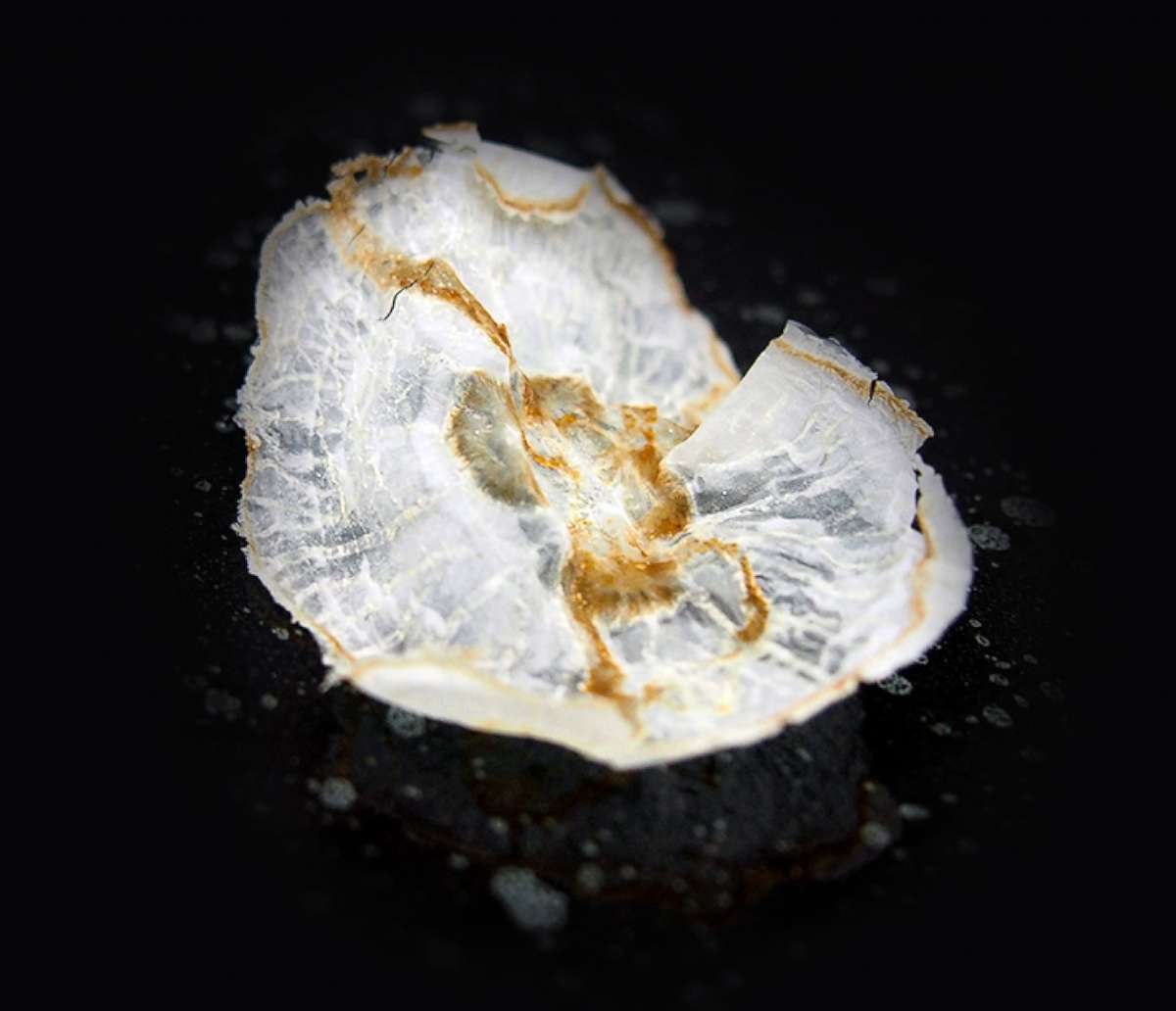
(Inside Science) -- Crisp, salty, snack. These might not be the first three words that come to mind after someone says "jellyfish." But physicists have devised a preparation method that transforms gelatinous jellyfish into crisp chips -- and it may help make jellyfish a more common food.
Certain species of jellyfish are presently eaten in various cultures, primarily in Asia. They may be prepared in a variety of ways, but fresh jellyfish can easily spoil at room temperature. Jellyfish can be prepared in a traditional method where they are soaked in a salty solution for 20 or more days and then dried. That preparation process leaves the jellyfish with a texture that the researchers describe as being like a pickled cucumber. A new method, however, was first developed in 2017. It not only offers a more rapid way of preparing jellyfish but also produces a new, crisp texture that might appeal to additional consumers.
Now, in a paper recently published in the International Journal of Gastronomy and Food Science, Mie Thorborg Pedersen, a researcher at the University of Southern Denmark, and Thomas Vilgis, a researcher at the Max Planck Institute for Polymer Research, in Mainz, Germany, have applied concepts from physics to explain why different preparation methods produce such different results.
Viligis says he was excited to apply the polymer physics he had worked on for a long time to the edible example of jellyfish.
They hope similar approaches may help them and others develop new food preparation techniques.
The researchers analyzed the traditional process that involves soaking the jellyfish in water with table salt and alum. The latter component contains aluminum and is used in tanning and making vaccines. Their insights helped them develop a quicker version of the 2017 method.
Justin Barone, a material scientist at Virginia Tech, in Blacksburg, described their method as an interesting application of basic physics concepts. He studies biopolymers such as the ones found in food.
"They are saying here's a simple system but it's a food and it exactly mimics things we teach in a classroom," said Barone.
While the traditional method looks like it is pickling the jellyfish, their investigation suggests that it is actually more like a tanning process. Jellyfish bodies have a similar composition to skin, with both containing collagen and elastin. They observed that the preparation process does not work when the alum is replaced with vinegar as is done when pickling vegetables. They found that, like in tanning, the process depended on the size of metal ions in the solution.
The researchers explain that the crunchy texture produced by the traditional method emerges because the flesh of the jellyfish remains a gel. Teeth bite into the collagen-elastin fibers, which deform and eventually snap and break apart.
In contrast, the new method produces a crisp texture, more like a potato chip, where little deformation is possible and even a small force can create cracks that rapidly propagate through the jellyfish chip.
The researchers argue that this is the result of the gel being transitioned to a "glassy state." Just like how submerging a rubber ball in liquid nitrogen might make it easy to shatter, dropping a jellyfish into the right solution can change the structure of its flesh.
They begin by soaking the jellyfish in ethanol, allowing the molecular chain to relax. But some molecules, called mucoproteins and mucopolysaccharides, entangle and form a rubberlike solid.
Removing the ethanol leaves less water than the traditional method, and the formed structure transitions into the glassy state. It is left in the form of a dense, linked network where the molecules can't easily move past each other but must break under the force for chewing. This results in a crispy, ready-to-eat jellyfish chip.
Rama Bansil, an emeritus professor at Boston University who teaches a class on the physics of food, believes that this research is an example of the many opportunities to apply physics to food science.
"I see a lot of potential," said Bansil. "And I am glad that someone took the application all the way to a food."
In 2013 a report from the Food and Agriculture Organization of the United Nations proposed developing jellyfish products for food and medicine as a possible method of coping with jellyfish blooms -- a method it characterizes as "If you cannot fight them ... eat them." The researchers are continuing their systematic research of the technique and Pedersen is hoping to work with a local restaurant to have the jellyfish chips on their menu this summer.
Vilgis suggested that similar principles of applying physics to food could be useful in approaching goals like reducing the amount of salt in bread or sausages. He believes understanding the science behind the structure of the food will supply a more direct solution than using trial and error to find a way to change the recipe and still achieve desired qualities, like texture.
Inside Science is an editorially-independent nonprofit print, electronic and video journalism news service owned and operated by the American Institute of Physics.