• Video
  • Shop
  • Culture
  • Family
  • Wellness
  • Food
  • Living
  • Style
  • Travel
  • News
  • Book Club
  • Newsletter
  • Privacy Policy
  • Your US State Privacy Rights
  • Children's Online Privacy Policy
  • Interest-Based Ads
  • Terms of Use
  • Do Not Sell My Info
  • Contact Us
  • Recalls and Product Safety Alerts
  • © 2026 ABC News
  • News

Massive black hole that 'should not even exist' has been discovered
0:35
Massive black hole that ‘should not even exist’ discovered
Jingchuan/Beijing Planetarium via the China Academy of Sciences/AFP via Getty Images
ByElla Torres
November 29, 2019, 5:47 PM

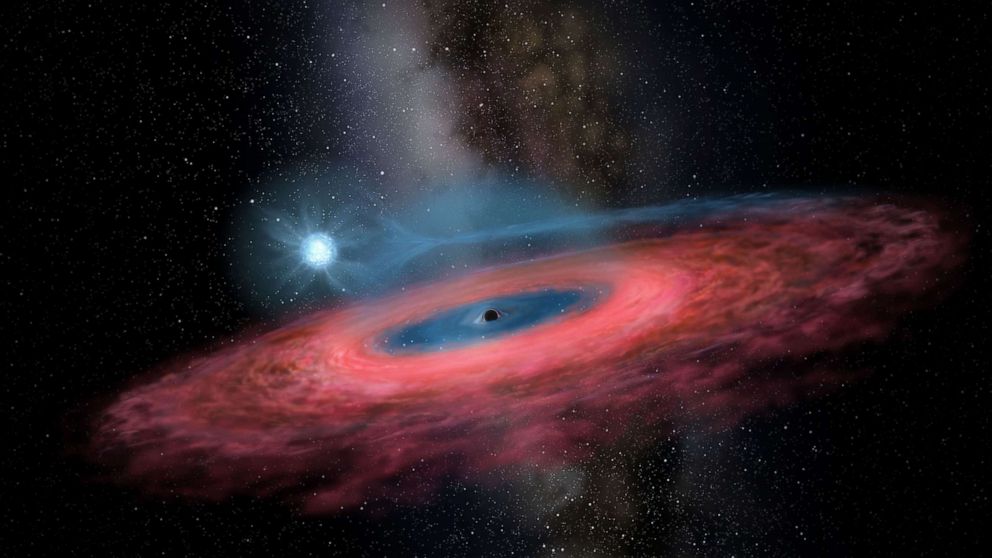
A black hole with a mass 70 times greater than the Sun was discovered, leaving scientists stunned.

"Black holes of such mass should not even exist in our Galaxy, according to most of the current models of stellar evolution," Professor Jifeng Liu, who led the team at the Chinese Academy of Sciences that made the discovery, said in a statement.

Scientists previously believed that the mass of an individual stellar black hole could not be more than 20 times that of the Sun. These stellar black holes are different than so-called supermassive black holes, which are found at the center of galaxies and can be billions of times the mass of our Sun.
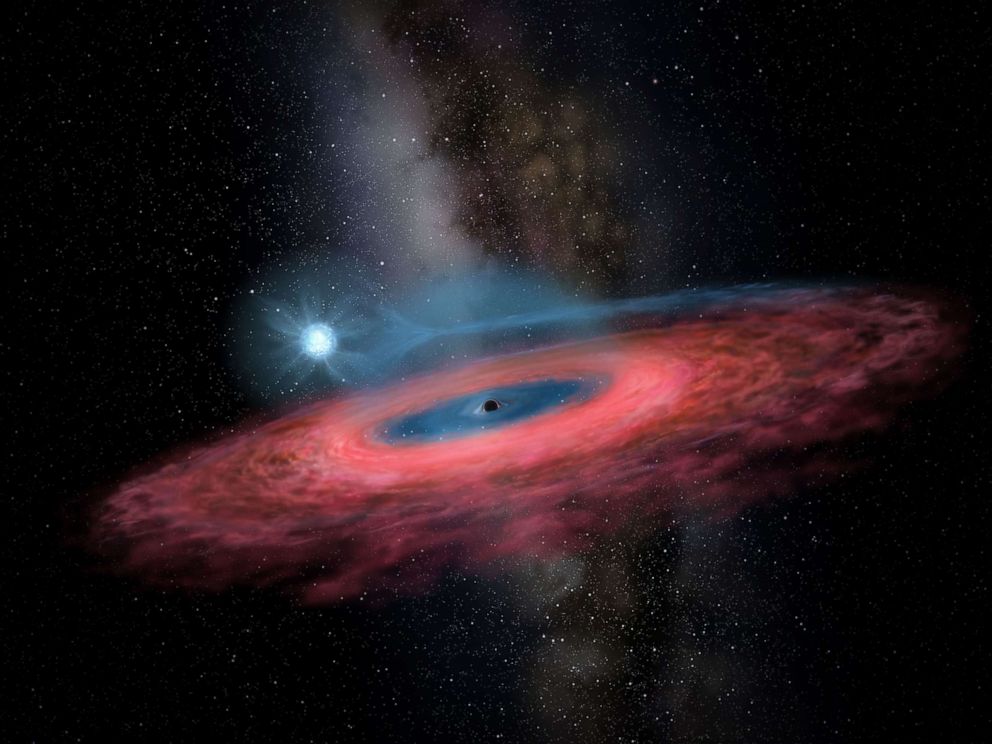
A rendering by artist Yu Jingchuan of the accretion of gas onto a stellar black hole from its blue companion star, through a truncated accretion disk.
Jingchuan/Beijing Planetarium via the China Academy of Sciences/AFP via Getty Images

Related Articles

(MORE: Scientists discover the 'most massive neutron star ever detected' )

The newly discovered black hole, named LB-1, is located 15,000 light-years from Earth, according to a press release from the Chinese Academy of Sciences.

Searching for black holes has only become possible in the last few years, thanks to recent developments in telescopes and detectors.

But even with the new technology, the academy said it is still "like looking for the proverbial needle in a haystack."
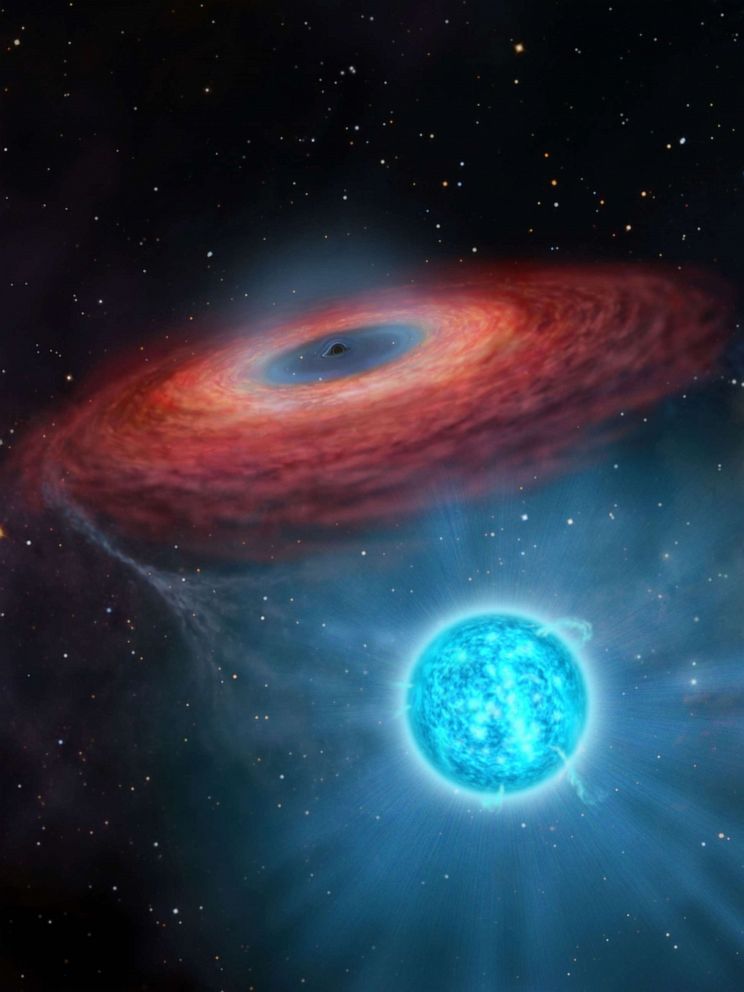
A rendering by artist Yu Jingchuan of the accretion of gas onto a stellar black hole from its blue companion star, through a truncated accretion disk.
Jingchuan/Beijing Planetarium via the China Academy of Sciences/AFP via Getty Images

Related Articles

(MORE: Newly discovered comet likely an 'interstellar visitor,' NASA says )

The telescope that spotted LB-1 -- Spain's 10.4-m Gran Telescopio Canarias and the 10-m Keck I telescope in the United States -- also found a star eight times heavier than the Sun that orbited the newly discovered 70-solar-mass black hole, every 79 days.

Scientists said the discovery would force them to "re-examine our models of how stellar-mass black holes form."

"This remarkable result ... really points towards a renaissance in our understanding of black hole astrophysics," David Reitze, the director of the Laser Interferometer Gravitational-Wave Observatory in Washington, said in a statement.


Up Next in News—

Hero teen lifeguard speaks out about viral rescue of 10-year-old boy

July 30, 2026

How Apple's new leasing program works: Details

July 29, 2026

New video released in shooting of Chiefs offensive coordinator's wife

July 29, 2026

Ex-husband testifies in trial of mom accused of killing her 3 children

July 28, 2026

Shop GMA Favorites

ABC will receive a commission for purchases made through these links.

Sponsored Content by Taboola

The latest lifestyle and entertainment news and inspiration for how to live your best life - all from Good Morning America.
  • Contests
  • Terms of Use
  • Privacy Policy
  • Do Not Sell My Info
  • Children’s Online Privacy Policy
  • Advertise with us
  • Your US State Privacy Rights
  • Interest-Based Ads
  • About Nielsen Measurement
  • Press
  • Feedback
  • Shop FAQs
  • ABC News
  • ABC
  • All Videos
  • All Topics
  • Sitemap
  • Recalls and Product Safety Alerts

© 2026 ABC News
  • Privacy Policy— 
  • Your US State Privacy Rights— 
  • Children's Online Privacy Policy— 
  • Interest-Based Ads— 
  • Terms of Use— 
  • Do Not Sell My Info— 
  • Contact Us— 
  • Recalls and Product Safety Alerts— 

© 2026 ABC News