• Video
  • Shop
  • Culture
  • Family
  • Wellness
  • Food
  • Living
  • Style
  • Travel
  • News
  • Book Club
  • Newsletter
  • Privacy Policy
  • Your US State Privacy Rights
  • Children's Online Privacy Policy
  • Interest-Based Ads
  • Terms of Use
  • Do Not Sell My Info
  • Contact Us
  • © 2026 ABC News
  • News

Scientists discover oldest material on Earth -- stardust trapped in a meteorite
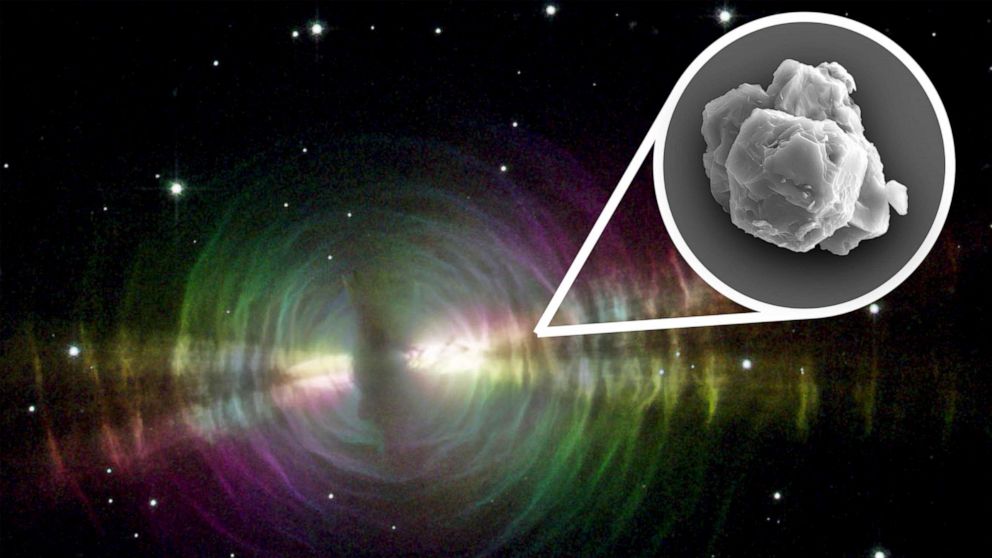
5:11
Inside Science’s key stories to watch in 2020
ESA/Hubble/NASA, inset: Janaina N. Avila
ByErin Schumaker
January 14, 2020, 5:20 PM

Scientists have analyzed stardust from a meteorite that fell to Earth 50 years ago, and according to their calculations, the 5- to 7-billion-year-old stardust is the oldest solid material ever found on Earth.

"This is one of the most exciting studies I've worked on," Philipp Heck, lead author of a new paper, which was published Monday in the Proceedings of the National Academy of Sciences, said in a statement.

Related Articles

MORE: NASA is enlisting elephant seals to help them study climate science

"These are the oldest solid materials ever found, and they tell us about how stars formed in our galaxy," he said.
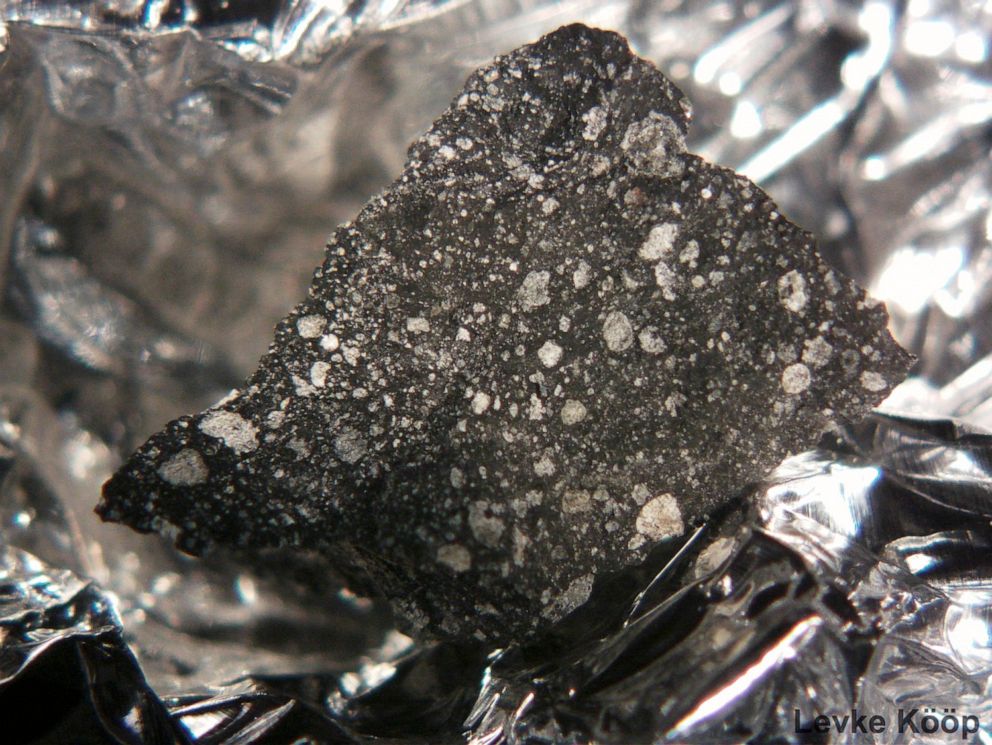
A piece of the Murchison meteorite which contains pre-solar grains from stardust which are older than our solar system.
Courtesy Levke Koop

When stars die, the gas and dust that comprise them fly off into space, eventually forming new stars, planets, moons and meteorites.

Related Articles

MORE: 2 billion-year-old water in South Africa may hold answers to Mars mysteries

Inside the meteorite, which crash landed in Australia in 1969, were what are known as presolar grains, formed before the sun was born. Trapped inside the meteorite, they give scientists a picture of history before the solar system was formed.
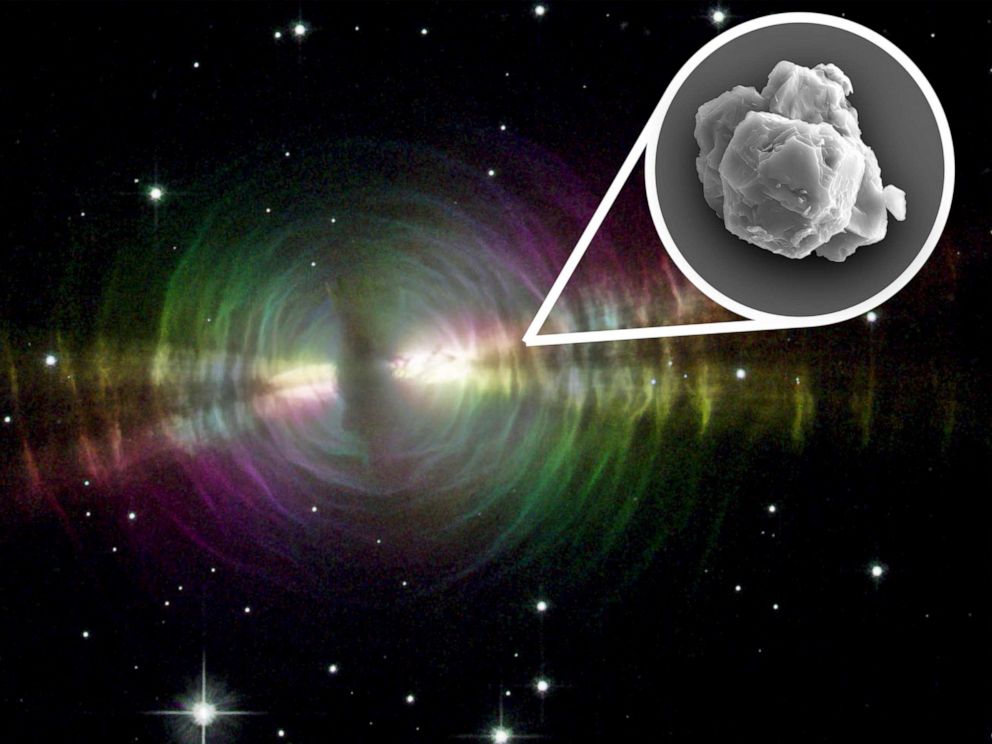
Presolar grains from stardust (inset), like the ones found in the Murchison meteorite, are older than the solar system.
ESA/Hubble/NASA, inset: Janaina N. Avila

In comparison to the stardust, the sun is 4.6 billion years old, and the Earth is 4.5 billion years old.

"I always wanted to do astronomy with geological samples I can hold in my hand," said Heck, who is also a curator at Chicago's Field Museum and an associate professor at the University of Chicago.

Related Articles

MORE: Scientists are asking the public to help name Saturn's 20 newly discovered moons

"Stardust is the oldest material to reach Earth, and from it, we can learn about our parent stars, the origin of the carbon in our bodies, the origin of the oxygen we breathe. With stardust, we can trace that material back to the time before the sun," he said.


Up Next in News—

Gas prices are up across the country. Here's where you'll find the most expensive -- and cheapest -- gas

May 2, 2026

Police officers hailed as heroes after New York house explosion

May 1, 2026

Artemis II astronauts on their out-of-this-world mission: 'Adventure of a lifetime'

April 30, 2026

'Rogue' AI agent went haywire at tech company. The CEO is still 'bullish' on the technology

April 29, 2026

Shop GMA Favorites

ABC will receive a commission for purchases made through these links.

Sponsored Content by Taboola

The latest lifestyle and entertainment news and inspiration for how to live your best life - all from Good Morning America.
  • Contests
  • Terms of Use
  • Privacy Policy
  • Do Not Sell My Info
  • Children’s Online Privacy Policy
  • Advertise with us
  • Your US State Privacy Rights
  • Interest-Based Ads
  • About Nielsen Measurement
  • Press
  • Feedback
  • Shop FAQs
  • ABC News
  • ABC
  • All Videos
  • All Topics
  • Sitemap

© 2026 ABC News
  • Privacy Policy— 
  • Your US State Privacy Rights— 
  • Children's Online Privacy Policy— 
  • Interest-Based Ads— 
  • Terms of Use— 
  • Do Not Sell My Info— 
  • Contact Us— 

© 2026 ABC News