Total Solar Eclipse: Your Questions Answered
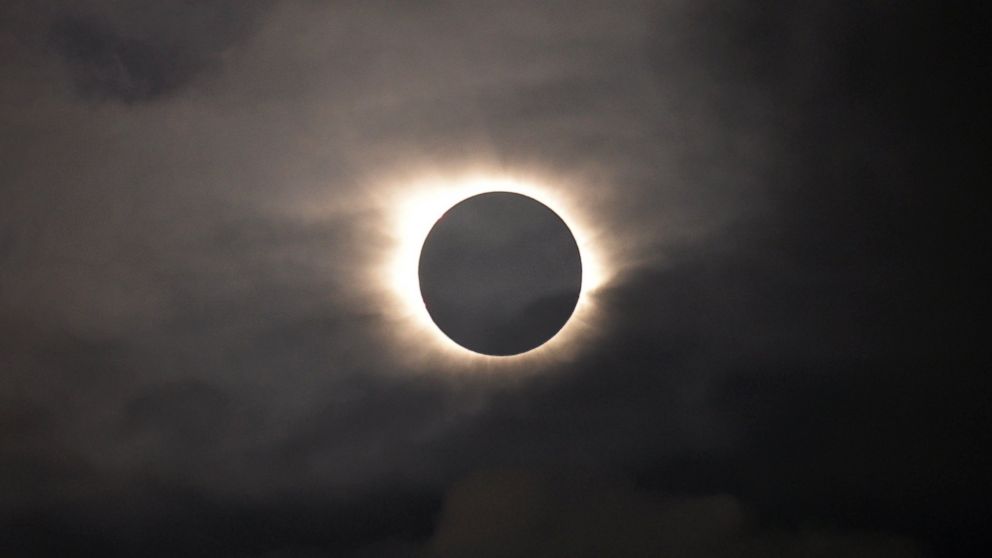
— -- A total solar eclipse will be visible, weather permitting, in the southeast Pacific before it moves across the international dateline, and turns into a partial solar eclipse that is expected to be visible to people in parts of Hawaii and Alaska today.
A total solar eclipse is a celestial event that happens about once a year. While this eclipse will largely take place over the ocean, it's still possible to enjoy the incredible view no matter where you are in the world.
Here's what you need to know about this solar eclipse.
What Causes a Total Solar Eclipse?
While the moon passes between Earth and the sun every month, the phenomenon of a solar eclipse occurs when the celestial bodies are perfectly aligned, with the moon blocking the sun and darkening the sky.
Where Can I Watch?
Bad news: Unless you're vacationing in southeast Asia, you're out of luck.
The solar eclipse will occur on March 9 in Sumatra, Indonesia, and will then cross the international date line, moving northeast across the Pacific Ocean and ending on the afternoon of March 8 local time just short of Hawaii.
People in parts of Alaska, Hawaii, Guam and American Samoa will be able to enjoy a partial solar eclipse, according to NASA.
There's some good news, though, if you're one of the billions of people without a front-row seat. NASA plans to livestream the period of the total eclipse, which is predicted to happen from 8:38 p.m. to 8:42 p.m. ET tonight.
What's the Best Way to View a Solar Eclipse?
If you're lucky enough to see it a person, make sure to wear protective eyewear. Under no circumstances should an eclipse be viewed directly through binoculars or a telescope, according to NASA, as the lens could intensify the sun's rays and injure the viewer's eyes.
When Is the Next One in the United States?
The next solar eclipse that will be visible in the continental United States is set for Aug. 21, 2017, according to NASA.