• Video
  • Shop
  • Culture
  • Family
  • Wellness
  • Food
  • Living
  • Style
  • Travel
  • News
  • Book Club
  • Newsletter
  • Privacy Policy
  • Your US State Privacy Rights
  • Children's Online Privacy Policy
  • Interest-Based Ads
  • Terms of Use
  • Do Not Sell My Info
  • Contact Us
  • Recalls and Product Safety Alerts
  • © 2026 ABC News
  • News

Total Solar Eclipse: How to Watch the Spectacle No Matter Where You Are
0:40
Fast facts about solar eclipses
Romeo Durscher/NASA
ByALYSSA NEWCOMB
March 07, 2016, 6:40 PM

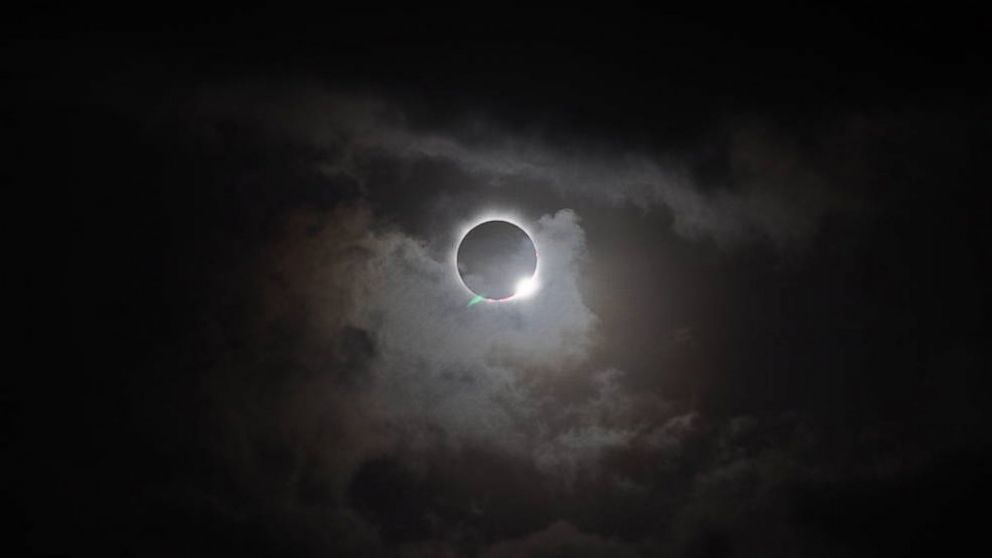
— -- Get ready for a total solar eclipse when the moon obscures the sun, darkening the skies and casting a spectacular shadow.

The bad news: Chances are you're one of the billions of people who won't have a front-row seat to the spectacle in the sky this week.

A total solar eclipse will be visible to people in parts of southeast Asia, while people in parts of Alaska, Hawaii, Guam and American Samoa will be able to enjoy a partial solar eclipse, according to NASA.

Related Articles

New Horizons: 5 Discoveries the Space Probe Made on Its Journey to Pluto

Related Articles

Pluto Flyby: New Horizons Carrying Ashes of Astronomer Who Discovered Dwarf Planet

Related Articles

New Horizons: A Look At Its 9-Year Path to Pluto

While the moon passes between Earth and the sun every month, the phenomenon of a solar eclipse occurs when the celestial bodies are perfectly aligned, with the moon blocking the sun. The solar eclipse will occur on March 9 in Sumatra, Indonesia, and will then cross the international date line, moving northeast across the Pacific Ocean and ending on the afternoon of March 8 local time just short of Hawaii.

NASA plans to livestream the period of the total eclipse, which is predicted to happen from 8:38 p.m. to 8:42 p.m. ET Tuesday night.

If you're lucky enough to see it a person, make sure to wear protective eyewear. Under no circumstances should an eclipse be viewed directly through binoculars or a telescope, according to NASA, as the lens could intensify the sun's rays and injure the viewer's eyes.

The next solar eclipse that will be visible in the continental United States is set for Aug. 21, 2017, according to NASA.


Up Next in News—

French lawmakers adopt social media ban for kids under 15

July 21, 2026

Trial begins for mom accused of killing her 3 children

July 20, 2026

Officer speaks out after rescuing driver trapped in burning car

July 20, 2026

Taylor Farms recalls lettuce in 27 states amid cyclosporiasis outbreak: What to know

July 20, 2026

Shop GMA Favorites

ABC will receive a commission for purchases made through these links.

Sponsored Content by Taboola

The latest lifestyle and entertainment news and inspiration for how to live your best life - all from Good Morning America.
  • Contests
  • Terms of Use
  • Privacy Policy
  • Do Not Sell My Info
  • Children’s Online Privacy Policy
  • Advertise with us
  • Your US State Privacy Rights
  • Interest-Based Ads
  • About Nielsen Measurement
  • Press
  • Feedback
  • Shop FAQs
  • ABC News
  • ABC
  • All Videos
  • All Topics
  • Sitemap
  • Recalls and Product Safety Alerts

© 2026 ABC News
  • Privacy Policy— 
  • Your US State Privacy Rights— 
  • Children's Online Privacy Policy— 
  • Interest-Based Ads— 
  • Terms of Use— 
  • Do Not Sell My Info— 
  • Contact Us— 
  • Recalls and Product Safety Alerts— 

© 2026 ABC News