New study reinforces skin-to-skin contact is critical for premature babies

For babies born prematurely, early skin-to-skin contact may have significant health benefits, according to a new study.
The study, published Thursday in the Journal of the American Medical Association, found that premature babies who were held close to their mother or father's skin right after birth showed better communication, social skills and more positive interaction with their mothers at 4 months compared to those who were placed in an incubator.
Crucially, premature babies benefit the most from skin-to-skin contact right after birth, the study suggested.
"If we combine the immediate medical care of the very premature babies with a relatively simple intervention such as skin-to-skin contact, it has effects on the infant's social skills," one of the study's lead authors, Jonas Wibke, senior lecturer and associate professor at Karolinska Institutet's Department of Women's and Children's Health, said in a statement.
The study's findings support previous data on the benefit of skin-to-skin contact and reinforce recent guidelines from the World Health Organization recommending immediate skin-to-skin contact after birth, which keeps babies warm and calm, regulates their heart rate and breathing, improves feeding and decreases infections.
Prematurity is now the leading cause of death among children under age 5 globally, with the WHO reporting around 15 million babies born preterm worldwide, or more than 1 in 10 births.
These babies often struggle with interacting smoothly because their nervous system is not fully developed, making their behaviors and cues less clear.

In the new study, researchers from Sweden studied 71 preterm babies who were born between 28-33 weeks. These children were divided randomly into two groups: They either received standard care in an incubator or rested on their mother's or father's chest for the first six hours after birth.
Their social development at four months old was assessed by looking at video interaction between the mother and the child by two separate psychologists. Researchers found that on a five-point scale, infants with early skin-to-skin contact had an average score closer to four, compared to just over three for infants cared for in an incubator, the study noted.
While the new study is "interesting and important," it hasn't yet been tested in a more diverse group of people in the United States, according to Dr. Jade Cobern, a pediatrician in the neonatal intensive care unit at Johns Hopkins, who was not involved in the study.
Additionally, the study was conducted "in a high-income setting with high-quality neonatal care," which isn't available everywhere, Cobern noted.


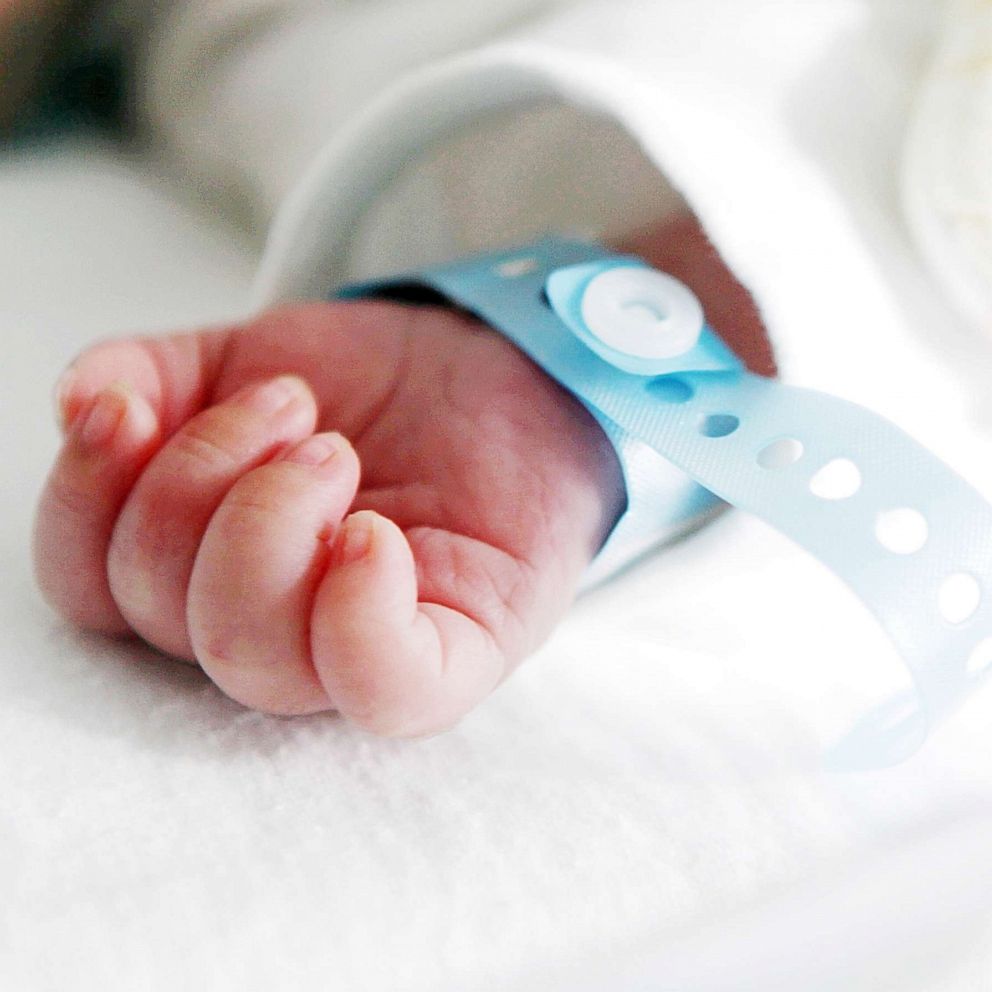
Unlike most previous studies where the mother is the primary caregiver, in this study, fathers provided more skin-to-skin contact to premature babies than mothers, emphasizing the role of both parents, especially if the mother is not available.
"The study has identified fathers as a previously untapped resource that really has an important function in having immediate skin-to-skin contact with their infant if the mother is not available," Siri Lilliesköld, a Ph.D. student at Karolinska Institutet's Department of Women's and Children's Health, and a lead author of the study, said in a statement.
Cobern said parents of premature babies should talk to their child's health care providers about bonding and what is "best and safe for their baby," especially regarding skin-to-skin contact in the NICU.
Although immediate contact isn't always possible, Cobern said that "most, if not all" providers try to integrate skin-to-skin contact as early and as safely as possible, recognizing the importance of bonding for any baby's health.
Khushali Jhaveri, M.D., a board-certified internal medicine physician, is a hematology/oncology fellow at Moffitt Cancer Center and a member of the ABC News Medical Unit.