Climate change threatens to make running marathons even harder, research shows

When the tens of thousands of runners hit the streets this Sunday for the New York City Marathon, they'll be competing in weather conditions a bit warmer than experts say is optimal for peak performance. While the "sweet spot" for competitive running varies by gender and ability, researchers believe the ideal marathon running conditions are somewhere between 39 degrees and 50 degrees Fahrenheit.
But according to a new analysis by Climate Central, climate change is threatening the optimal conditions that help elite runners break world records and amateurs achieve their personal bests.
The report from the nonprofit science research group found that as our planet continues to warm due to human-amplified climate change, ideal marathon conditions will become increasingly rare for many events worldwide.
According to Climate Central's research, 86% of the 221 global marathons reviewed are less likely to have ideal weather on race days by 2045 because of climate change. Of those races, all seven Abbott World Marathon Majors will be affected, including the famous New York City and Boston Marathons.

For elite male runners, the Tokyo Marathon currently offers the world's best odds for ideal race-day conditions, but the Climate Central analysis found that it's also facing the sharpest decline in the odds of perfect weather by 2045 as global temperatures rise.
This year's Tokyo and Berlin marathons were hit by heat waves that Climate Central said were made two to three times more likely by climate change. Those heat waves pushed the race-day temperatures well above the window for peak performance. And by 2045, the chances of an ideal weather day for the Tokyo Marathon will decrease from 69% to 57% for the elite men. For Berlin, the odds go from 40% to 29% for the elite women.
Overall, from 2025 to 2045, for the elite men, the likelihood of optimal temperatures on race days declines in Tokyo, Boston, London, New York and Berlin. For the elite woman, they are facing a reduced chance in London, New York, Chicago, Berlin and Sydney.
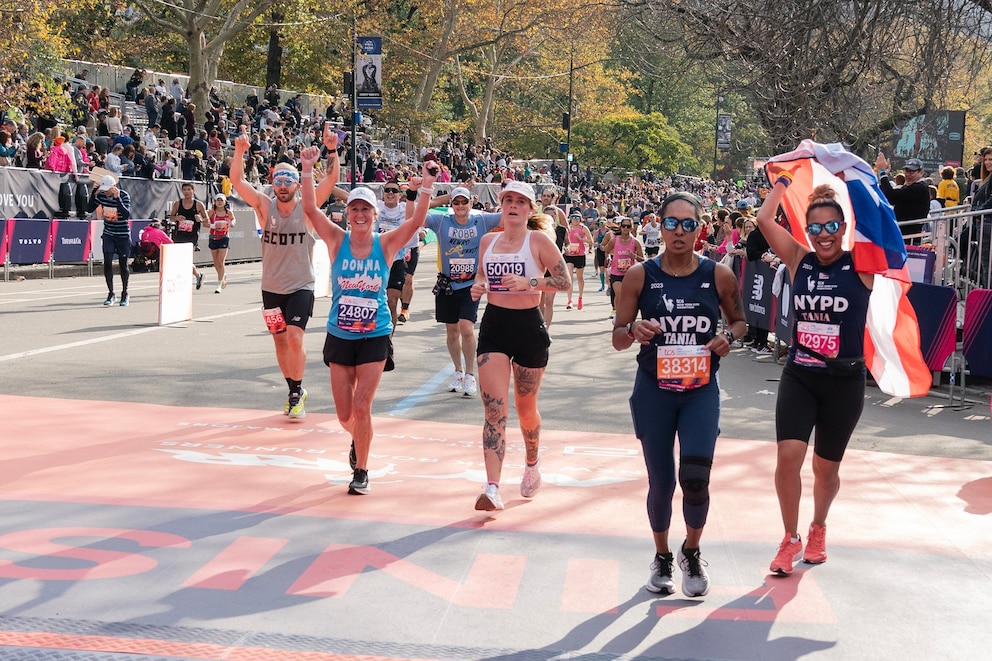
Climate Central notes that while elite female runners are "uniquely resilient, maintaining optimal performance at higher temperatures than elite men and other runner types," ideal race-day conditions for these elite women athletes are still projected to decrease in the decades to come.
"Climate change has altered the marathon. Dehydration is a real risk, and simple miscalculations can end a race before it begins," said Catherine Ndereba, a former Marathon World Record Holder, two-time World Marathon Champion, four-time Winner of Boston Marathon and two-time Winner of Chicago Marathon.
Ndereba added, "We're not just training to run anymore; athletes have to adapt how they deal with the conditions, including in how they eat and hydrate."
Climate Central recommends that race organizers consider starting the events closer to sunrise, but the organization stresses that only meaningful climate action and reducing the use of fossil fuels can safeguard marathons' future.